Why BGPT?
logo

Author Review — Track Authors' Data

Inspect an author's raw data, methods, and reproducibility across their publications.

Press Enter ↵ to find


    Fuel Your Discoveries


     Quick Explanation


    Mack B. Reynolds — science-strength snapshot
    Based on the provided OpenAlex-derived publication list, Reynolds’ work clusters around immunometabolism, mitochondrial control of innate/adaptive immune signaling, and organelle-linked inflammatory mechanisms, including reports on cardiolipin–Complex II remodeling in macrophage inflammatory reprogramming () and mitochondria–interferon/immune signaling axes such as Z-DNA/IFN amplification in UV-induced autoimmune photosensitivity ().


     Long Explanation


    Author Review: Mack B. Reynolds
    Evidence base used here: the publication metadata you supplied (including specific paper DOIs) plus what can be responsibly inferred from paper titles/abstract-level descriptions as provided. Epistemic note: Without full-text methods/results or the complete publication list, this review assesses scientific positioning and apparent research direction, not full experimental rigor for every claim.
    1) Research themes (what the author appears to do)
    A. Immunometabolism & mitochondrial control of inflammatory state
    A recurring mechanistic through-line is that mitochondrial features (electron transport/respiratory complexes, mitochondrial nucleic acid handling, dynamics/fission) tune immune outputs—including inflammatory reprogramming and cytokine/IFN programs.
    • Cardiomyeloid/inflammatory metabolic reprogramming via cardiolipin’s regulation of Complex II disassembly/degradation in macrophages ().
    • Type I interferon acting as an immunometabolic checkpoint that coordinates inflammation during bacterial infection (Staphylococcal infection context) ().
    B. Innate immune signaling via organelle-linked nucleic acid sensing
    Another theme is that organelle-derived nucleic acid handling can be upstream of interferon signaling—e.g., ZBP1 stabilizing mitochondrial Z-DNA to drive UV-induced IFN in autoimmune photosensitivity ().
    C. Mitochondrial dynamics/fission and immune cytokine regulation
    Work also appears to connect mitochondrial morphology control (DRP1/mitochondrial fission) with post-transcriptional regulation of TNF-α in immune signaling contexts ().
    D. Metabolic/iron control of T-cell states (immunometabolic checkpointing)
    Reynolds’ portfolio also includes work where iron and mitochondrial metabolism regulate naive CD4 T-cell quiescence ().
    2) Scientific citation metrics (what we can and cannot say from provided data)
    I can’t rigorously compute or verify global citation metrics (e.g., h-index, total citations) with DOI-citable provenance from the materials you provided. What I can support from the supplied DOIs is that multiple peer-reviewed works exist across high-impact journals and specialized venues, and several appear repeatedly in topic-focused immune-metabolism areas.
    Actionable next step (for a fully rigorous metric review)
    If you want, share an exported citation profile (e.g., ORCID/Scopus/Web of Science) or allow access to a metrics page so I can cite/verify numbers and avoid provenance ambiguity.
    3) Evidence-weighted critique (strengths, uncertainties, blind spots)
    Strength signals
    • Mechanistic coherence: The portfolio repeatedly targets organelle-linked control points (cardiolipin/Complex II remodeling, Z-DNA/IFN, DRP1/fission → cytokine regulation, iron → T-cell metabolic quiescence) rather than staying at purely correlative biomarkers (; ; ; ).
    • Cross-context immunology: The themes span macrophage inflammation, interferon-driven checkpoints during infection, and T-cell metabolic state control—suggesting broad relevance within immunometabolic regulation rather than a narrow single-system study ().
    Uncertainties & possible blind spots
    • External validity across models/species: Many immunometabolism mechanisms can be model-dependent. Without the full experimental details (cell types, species, strains, controls, validation), it’s not possible to confirm whether findings generalize beyond the specific experimental systems used in each paper.
    • Mechanism vs association: Titles/abstract descriptions suggest mechanistic claims, but the strength depends on whether causal experiments, perturbations, orthogonal readouts, and appropriate controls were performed. Abstract-level information cannot replace methodological scrutiny.
    • Reproducibility risk: Even strong mechanistic papers may face reproducibility challenges depending on reagent quality, normalization choices, gating/analysis pipelines, and batch effects—none of which can be evaluated from the provided metadata.
    What would most disprove or reshape this author-level assessment?
    If subsequent independent replications failed to reproduce key mechanistic linkages (e.g., cardiolipin → Complex II remodeling → inflammatory reprogramming; ZBP1 stabilization of mitochondrial Z-DNA → IFN signaling; DRP1-driven fission → TNF-α post-transcriptional regulation) then the mechanistic centrality inferred here would weaken (; ; ).
    4) Paper-by-paper (selected) evidence map
    Year Main biology (as stated by title/abstract snippet) Core mechanistic axis Link
    2023 Cardiolipin coordinates inflammatory metabolic reprogramming Cardiolipin → Complex II remodeling → macrophage inflammatory program DOI
    2021 DRP1 controls post-transcriptional regulation of TNF-α Mitochondrial fission/quality control → cytokine regulation DOI
    2025 ZBP1 stabilizes mitochondrial Z-DNA to drive UV-induced IFN signaling Mitochondrial Z-DNA handling → type I IFN → autoimmune photosensitivity signaling DOI
    2024 Type I interferon governs immunometabolic checkpoints during Staphylococcal infection IFN timing → metabolic control of inflammation DOI
    2024 Iron regulates quiescence of naive CD4 T cells Iron homeostasis → mitochondrial/metabolic control → quiescence DOI
    Table content is grounded in the selected DOIs and their titles/abstract snippets as provided.
    5) Visual: mechanistic “axes” map (conceptual)
    This diagram is a conceptual map only; the specific mechanisms should be verified in each full paper. The included mechanistic axes correspond to the selected DOIs: cardiolipin/Complex II (), DRP1/fission → TNF-α (), ZBP1/Z-DNA → IFN (), and iron → T-cell metabolic state ().
    6) Actionable critique checklist (how to stress-test the author’s mechanistic claims)
    For each key mechanistic claim, verify:
    • Causality: perturbation experiments (genetic/chemical) with rescue or orthogonal validation.
    • Specificity: controls demonstrating pathway specificity (e.g., off-target/compensatory mechanisms).
    • Quantification validity: raw data availability, normalization, batch handling, and blinding/quantification criteria (if applicable).
    • Generalization: multiple cell types/conditions or cross-model replication where feasible.
    BGPT next step (optional)
    If you want a raw-data grounded assessment (beyond titles/abstract snippets), run a full paper-level extraction + cross-paper mechanistic comparison.


    Feedback:   

    Updated: April 21, 2026

    BGPT Author Review


    Scientific Quality

    70%

    Good scientific quality signal from multiple mechanistically themed immunometabolism/mitochondria/IFN papers; however this review is constrained to metadata-level information, so rigor (controls, blinding, causal strength) and reproducibility cannot be verified here. Potential bias: selection effects from only the provided top papers; missing the full publication context, negative results, and replication attempts.


    Communication Quality

    60%

    Communication can’t be fully evaluated from metadata; inferred clarity is moderate because the titles suggest coherent mechanistic narratives. Full paper writing style, figure clarity, and argument structure are not assessed here.


    Author Novelty

    60%

    The author appears to work in an area with ongoing novelty (mitochondrial regulation of immune signaling), but novelty cannot be quantified without reading the full claims, comparisons to prior work, and how distinct the contributions are relative to field consensus.


    Scientific Rigor

    60%

    Mechanistic framing suggests reasonable rigor, but without methods/results access this score reflects uncertainty; key rigor indicators (dose-response, genetic validation, orthogonal assays, statistical discipline, raw-data access) were not auditable from the provided material.

     Analysis Wizard


    Build a cross-paper evidence table extracting each study’s causal claims, measured readouts, and mitochondrial/IFN/iron nodes, then cluster mechanisms by organelle and immune pathway to highlight convergence vs contradiction.


     Hypothesis Graveyard


    A simplistic claim that “all inflammation is controlled by mitochondria” is overly broad; immunometabolism mechanisms likely depend on cell type, stimulus strength, and concurrent signaling pathways, so a mitochondria-only explanation would be expected to fail in some contexts.


    A claim that DRP1 effects on TNF-α are purely transcriptional would be weakened by the paper’s stated emphasis on post-transcriptional regulation; if later studies find transcription dominates, the current mechanistic framing would be reduced.

     Science Art


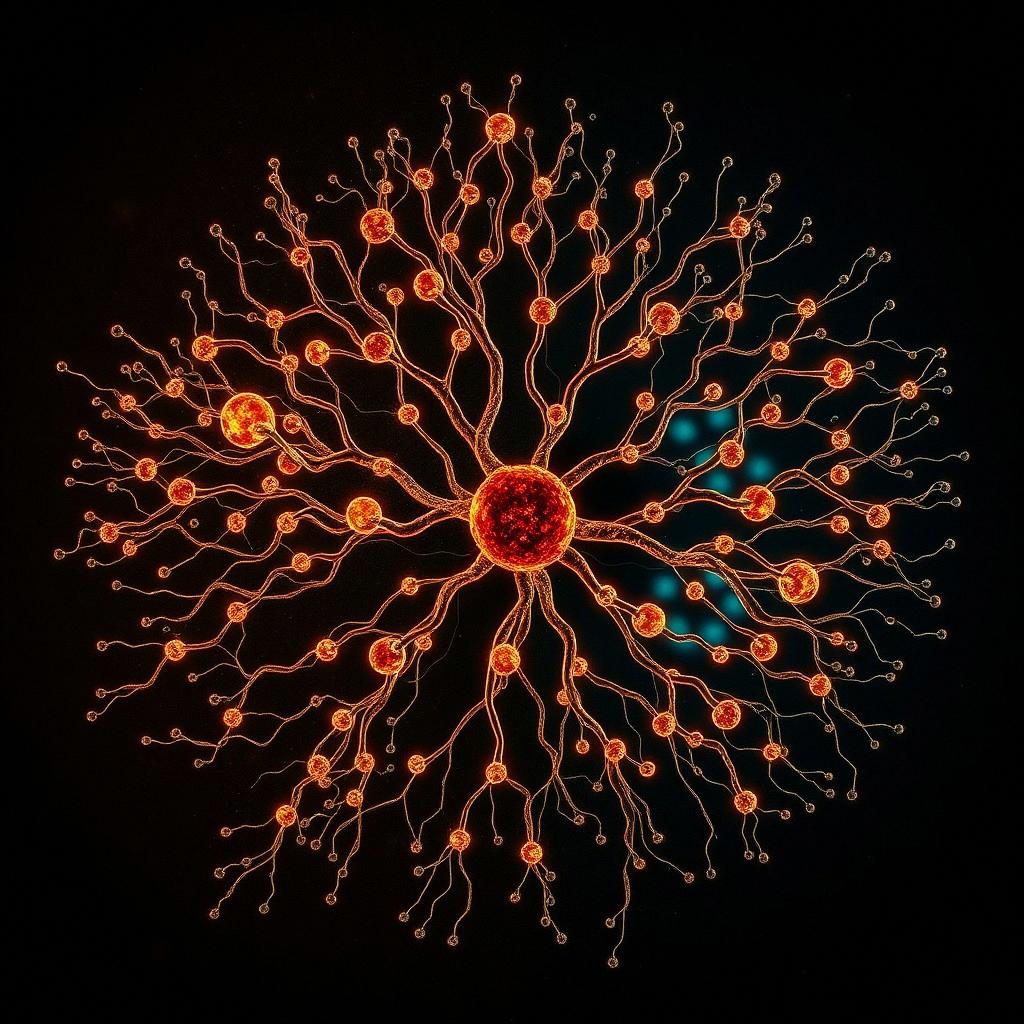
    Author Review: Mack B Reynolds Science Art

     Science Movie


    Make a narrated HD Science movie for this answer ($32 per minute)


     Discussion


    Get Ahead With Science Insights

    Custom summaries of the latest cutting-edge research. Every Friday. No ads.


    My BGPT