Why BGPT?
logo

Review papers with raw data transparency

Quickly verify claims by accessing the underlying experimental data and figures.


Press Enter ↡ to solve


    Fuel Your Discoveries


     Quick Explanation


    What this 2012 paper does: It profiles microRNAs (miRNAs) in matched colorectal tumor/non-tumor tissues and in blood from sporadic CRC patients vs healthy controls, reports a dysregulated miRNA panel, and links those miRNAs to CRC-relevant pathways via predicted targets (TargetScan).


     Long Explanation


    Paper Review (2012): Role of microRNAs in the pathophysiology of sporadic colorectal cancer

    DOI: 10.1186/1471-2458-12-S2-A22 Type: patient specimen miRNA profiling + target prediction (TargetScan)

    1) Visual digest (what the paper claims it did)

    • Specimens: 30 matched colorectal tumor vs non-tumor tissue pairs; 47 blood samples from sporadic CRC patients; 30 blood samples from healthy controls.
    • Measurement: Affymetrix GeneChip miRNA 2.0 microarrays (total RNA extraction from tissue and blood).
    • Bioinformatics: differential expression plus predicted targets/pathway interpretation using miRNA bioinformatic tools, explicitly mentioning TargetScan for target prediction.

    2) Sample composition (counts)

    3) Reported dysregulated miRNA panel

    The paper reports a set of significantly dysregulated miRNAs with p < 0.05, but the provided excerpt does not include effect sizes (fold-changes).

    4) Target prediction β†’ pathway mapping (mechanistic link is computational)

    The excerpt states that TargetScan predicted involvement of key genes APC, KRAS, PI3K, SMAD, and MMPs, which are then described as participating in processes like inflammation, proliferation, apoptosis, angiogenesis, extracellular matrix remodeling, and EMT.
    Critical skepticism: the mechanistic bridge here is prediction-based (TargetScan) rather than direct biochemical/causal validation within this excerpt. Therefore, the mechanistic statements should be interpreted as hypotheses generating targets, not established causality. (This inference follows from the excerpt explicitly describing TargetScan β€œpredicted targets,” not experimental validation; the excerpt does not provide reporter assays, perturbation outcomes, or protein-level checks.)

    5) Predicted target gene set (from excerpt)

    6) Blood vs tissue relationship claim (needs explicit statistics/validation beyond excerpt)

    The excerpt concludes that circulating blood miRNAs are reflective of tissue miRNA profiles and suggests further blood-profile work to elucidate potential noninvasive biomarker roles.
    What is missing for a strong biomarker inference (based on excerpt alone):
    • No sensitivity/specificity/ROC metrics are included in the provided excerpt.
    • No explicit normalization/internal-control strategy for circulating miRNA quantification is included in the provided excerpt.

    7) Study design strengths vs key blind spots (skeptical checklist)

    Dimension What the excerpt supports Blind spot / skeptical concern
    Clinical sampling Matched tumor vs non-tumor tissues (n=30 pairs) plus blood from CRC patients (n=47) and healthy controls (n=30). The excerpt does not specify age/sex distributions, staging, medications, or comorbiditiesβ€”key confounders for circulating miRNAs.
    Statistical threshold Reports dysregulated miRNAs at p<0.05. No multiple-testing correction method is stated in the excerpt; with microarrays, FDR control is crucial to reduce false positives. (Cannot confirm whether it was used because it is not shown in excerpt.)
    Mechanism TargetScan predictions link miRNAs to CRC pathways/genes. Predicted targets are not the same as experimentally validated direct miRNA–mRNA interactions; causal directionality remains uncertain from excerpt alone.

    8) How this paper fits in the broader miRNA-CRC biomarker landscape (only anchored to provided sources)

    The provided dataset also includes later CRC miRNA work emphasizing that circulating miRNA signatures can be evaluated against risk models using prospective cohorts and ROC/AUC-style performance metrics (example: a seven-miRNA plasma β€œmiR-score” for CRC risk prediction, tested across discovery and prospective validation sets).
    Critical tie-back: compared with that later evidence framework (explicit prediction performance), the 2012 excerpt does not include the quantitative biomarker performance details needed to judge clinical utility.

    9) Actionable critique: what would most strengthen the conclusions?

    • Multiple-testing control details (FDR) for microarray differential expression, since p<0.05 alone is insufficient under heavy testing load. (Not stated in excerpt.)
    • Quantitative blood↔tissue concordance (correlation metrics) and blood biomarker evaluation (ROC/AUC) with explicit preprocessing/normalization choices. (Not present in excerpt.)
    • Experimental validation of at least a subset of miRNAβ†’target relationships (e.g., perturbation and downstream pathway readouts), because TargetScan predictions do not guarantee functional targeting in CRC context.

    Bespoke follow-up: Author reviews

    Note: the excerpt lists a last author as β€œWang” without a forename, so I cannot form a reliable β€œfull name” for an Author Review button without the missing given name.


    Feedback:   

    Updated: March 23, 2026

    BGPT Paper Review


    Study Novelty

    50%

    Moderate novelty for 2012: the paper’s core contribution is a combined tissue+blood miRNA profiling effort in sporadic CRC with a small dysregulated miRNA panel, but the mechanistic component is largely prediction-based rather than experimentally establishing novel pathways.


    Scientific Quality

    40%

    Scientific quality appears limited by excerpt-level omissions: unclear multiple-testing correction and lack of reported effect sizes/biomarker performance metrics; mechanistic claims are computational (TargetScan) without stated functional validation in the provided text.


    Study Generality

    40%

    The study is somewhat general in aiming to map miRNAs to CRC biology, but the specific panel and mechanistic interpretation are tied to sporadic CRC specimens and predicted targets; without broader validation described in excerpt, generality is restricted.


    Study Usefulness

    60%

    Useful as an early hypothesis-generating miRNA panel study for sporadic CRC and as a pointer to candidate targets/pathway themes (APC/KRAS/PI3K/SMAD/MMPs). Practical clinical usefulness remains uncertain without biomarker performance validation in the excerpt.


    Study Reproducibility

    30%

    Reproducibility is difficult to assess from the excerpt: microarray platform is named (Affymetrix GeneChip miRNA 2.0), but key details such as analysis pipeline specifics, normalization strategy, multiple-testing correction, and full data accessibility are not provided in the excerpt.


    Explanatory Depth

    40%

    Explanatory depth is limited because pathway mechanistic links are derived from predicted targets (TargetScan) rather than demonstrated miRNA-mediated regulation with functional readouts in the provided text.


    🎁 Authors: Collect 11 Free Science Tokens (β‰ˆ $1.1 USD)

    Claim My Author Tokens

    Use for 2 days of free BGPT access (4 tokens = 1 day) or trade/sell (β‰ˆ $1.1 USD)

     Top Data Sources ExportMCP


     Analysis Wizard


    It will compile the six-miRNA list from the paper excerpt, map them to the five predicted target genes (APC, KRAS, PI3K, SMAD, MMPs) using provided associations, then generate a compact miRNA→target bipartite graph.


     Hypothesis Graveyard


    Because the excerpt does not provide experimental validation beyond prediction, any claim that specific miRNAs directly suppress APC/KRAS/PI3K/SMAD/MMPs in CRC is currently a weak strongman explanation; without reporter/perturbation evidence, prediction may reflect correlation rather than causation.

     Science Art


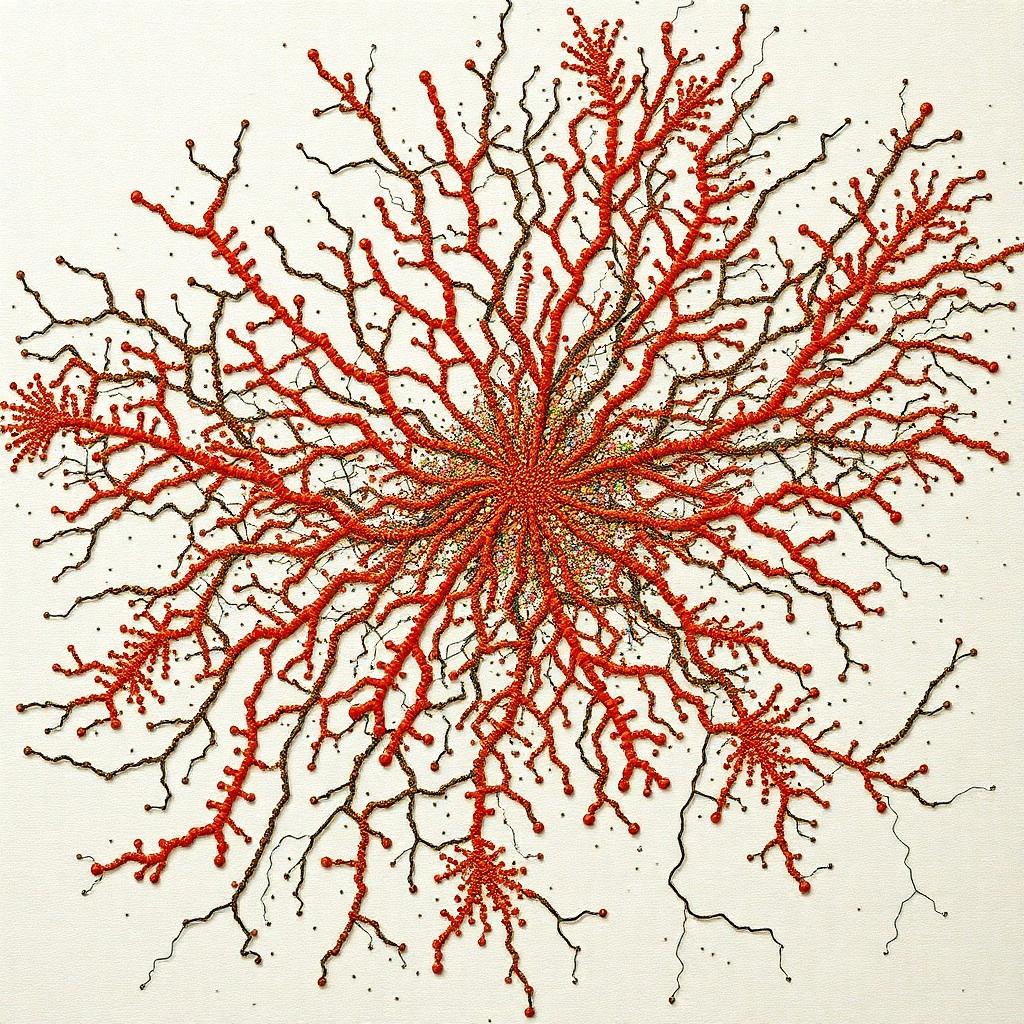
    Paper Review: Role of microRNAs in the pathophysiology of sporadic colorectal cancer Science Art

     Science Movie


    Make a narrated HD Science movie for this answer ($32 per minute)


     Discussion


    Get Ahead With Science Insights

    Custom summaries of the latest cutting edge Science research. Every Friday. No Ads.


    My BGPT