Check each claim against its linked experiments, results, and falsification criteria.Know what the science actually supports before you trust the answer.
Press Enter ↵ to check claims
Explore by Goal
"The more we learn about the world, and the deeper our learning, the more conscious, specific, and articulate will be our knowledge of what we do not know, our knowledge of our ignorance."
- Karl Popper
Long Explanation
Copied
Critical Review: EMT in Gallbladder Cancer (Xu, Zhan & Wang, 2017)
This narrative review synthesizes clinical marker data with the cellular EMT regulatory network in gallbladder cancer (GBC), a tumor with 5-year survival of only 5–18% and high recurrence within 12 months of curative resection .
The most striking quantitative finding is the extreme heterogeneity in E-cadherin loss across ten GBC cohorts: from 11.9% to 80.0% of cases — a >6-fold spread attributable to differing staining methods, cutoffs, and localization scoring (membranous vs cytoplasmic/delocalized), not biology alone. This is the review's core weakness: it aggregates inconsistent evidence without a standardized marker panel or meta-analytic weighting.
Mechanistic network and supporting evidence
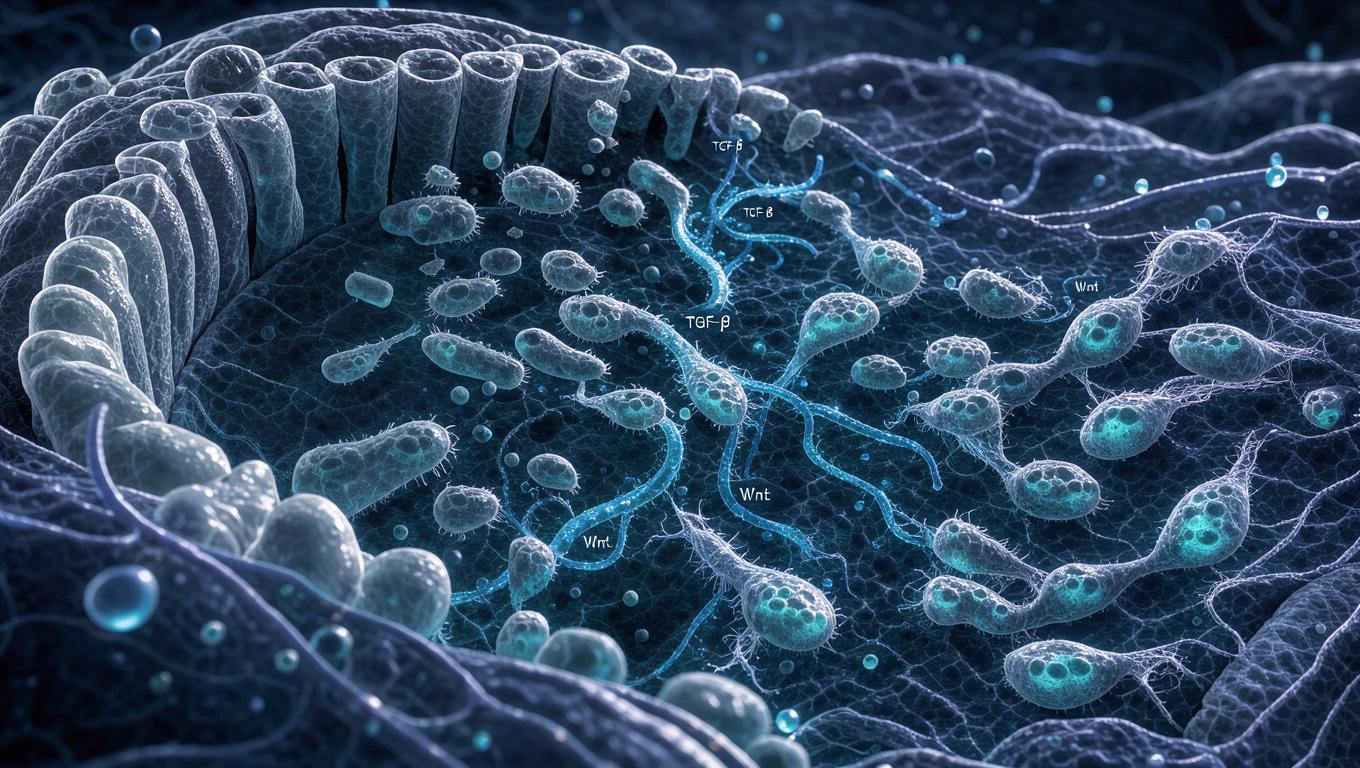
The regulatory map is coherent: TGF-β/Smad3 expands CD44+CD24− stem-like side populations ; Hedgehog/Smo silencing restores membrane E-cadherin via MMP-3/9 suppression; and a dense ceRNA layer (Malat1/miR-206/KRAS-ANXA2; H19/miR-194-5p/AKT2; TUG1/miR-300) reinforces EMT. Subsequent primary data corroborate network nodes: SDC1 knockdown in GBC-SD cells activates ERK/Snail and induces EMT (E-cadherin↓, N-cadherin/Vimentin↑, p<0.01), independently confirming the Snail hub , and the PI3K/Akt–EMT axis is therapeutically targetable by pterostilbene in GBC-SD/SGC-996/NOZ cells and xenografts (N-cadherin, Vimentin, β-catenin down; ZO-1 up; p-PI3K/p-Akt down) .
Blindspots and controversies
The review itself flags missing tumor-microenvironment/immunology layers, but three deeper problems remain: (1) β-catenin localization data are contradictory across groups (Chang et al. found cytoplasmic accumulation associated with improved outcomes, opposite Kimura/Ghosh) ; (2) N-cadherin clinical data rest on a single study (n=80); (3) all EMT-targeting evidence is preclinical (GBC-SD, NOZ, TGBC2TKB cell lines and xenografts) with no prospective clinical validation of any marker panel or inhibitor — the open questions the authors pose remain unresolved. Confidence: moderate; the review is well-sourced (121 refs) but non-systematic and now dated (pre-scRNA-seq/single-cell EMT atlases).
Author Reviews
Feedback:
Updated: October 28, 2026
BGPT Paper Review
Study Novelty
50%
EMT networks in GBC were already established by 2017; the review's value is consolidation, not discovery, though the pseudogene/ceRNA layer was relatively fresh for GBC.
Scientific Quality
70%
Well-organized, 121 references, transparent about open questions and β-catenin controversies, but narrative (non-systematic), no PRISMA search, heterogeneous clinical data aggregated without weighting, and no quantitative synthesis.
Study Generality
60%
Mechanisms (TGF-β/Wnt/Hh/EMT-TFs/ceRNA) are broadly transferable to other GI cancers, but clinical marker data are GBC-specific with small, heterogeneous cohorts.
Study Usefulness
70%
Useful roadmap for GBC researchers: maps markers, pathways, ncRNA axes, and six candidate inhibitors; however, no clinical validation and drug evidence remains preclinical.
Study Reproducibility
50%
A review cannot be reproduced experimentally; cited primary studies used varied IHC cutoffs and methods, limiting reproducible synthesis of the clinical claims.
Explanatory Depth
70%
Goes beyond marker correlation to layered regulation (signaling crosstalk, epigenetic LSD1/HDAC1, ceRNA sponging, pseudogenes), but mechanistic links between lncRNAs and clinical outcomes remain associative.
Aggregating reported E-cadherin loss frequencies across ten GBC cohorts and computing heterogeneity statistics (range, weighted mean, I²) to quantify how assay non-standardization drives the 11.9–80% spread.
Get emailed when your analysis is done!
We'll email you the results when your analysis is finished.
Hypothesis Graveyard
'β-catenin mutation drives GBC aggressiveness via Wnt activation' — falsified by the review: exon 3 mutations are rare (0–9.1%) and uncorrelated with cellular β-catenin accumulation.
'E-cadherin promoter hypermethylation is the main cause of E-cadherin loss in GBC' — unlikely: hypermethylation occurs in only 11.1–40.9% of cases while loss is reported far more frequently, and its causal contribution is explicitly unclear.

 Explore by Goal
 Long Explanation

 Top Data Sources
 Ask a Follow-Up
 Key Insight
 Keep Exploring
 Analysis
 Hypothesis Graveyard
 Potential Experiments
 Discussion
