Check each claim against its experiments, reported results, scope, and stated limitations.Know what the science actually supports before you trust the answer.
Press Enter ↵ to start review
Explore by Goal
"Nothing in life is to be feared, it is only to be understood. Now is the time to understand more, so that we may fear less."
- Marie Curie
Quick Explanation
Copied
This qualitative descriptive study uses one interviewee (Nur Afifah) and direct observation to argue that flow (challenge–skill balance, clear goals, intrinsic pride) explains color guard performance quality in one Indonesian marching band; the interpretation is plausible but rests on a single participant with no triangulation, no member-checking, and no reported limitations, so findings are illustrative rather than generalizable.
Long Explanation
What the Paper Claims and How Well It Supports It
Study design: Qualitative descriptive research (natural setting) combining direct observation of training and performances with one recorded interview (Nur Afifah, 31 December 2023), analyzed through Jackson and Csikszentmihalyi's flow framework from Flow in Sports (1999). The scope covers three championships: Grand Prix Junior Band 2017 (Sakaratul Maut), Grand Prix Marching Band 2019 (Fana), and Grand Prix Junior Band 2023 (Rise).
Central findings (author-reported): (1) alignment of challenge and skill drove effort and felt reward; (2) clear goals and intrinsic motivation (pride in the corps' religious repertoire identity) built focus; (3) by the third championship the performer reported enjoyment and emotional delivery to spectators despite reduced endurance after a 4-year hiatus and weekly-only practice.
Critical assessment: The core claims (E1–E3 in the evidence record) are directly supported by the supplied text, but the evidentiary basis is thin — a single performer (n=1), no sample-size statement, no participant selection criteria, no triangulation across performers, no member-checking, and no author-reported limitations. The conclusion that the corps "created strong connection with spectators" through performer subjectivity is an interpretive leap: spectator experience was never measured. The flow framework application is largely confirmatory (the interview is mapped onto pre-existing theory categories — a possible HARKing-adjacent structure), and retrospective recall across 6 years introduces memory bias the paper does not acknowledge. Observational confirmation of the 2023 "melancholic and cheerful expression" narrative is described only anecdotally.
Useful contribution: As an arts-pedagogy case study, the paper documents a real training pathway (flag → rifle/saber equipment progression) and models how flow concepts can frame performance anxiety management in Indonesian marching band culture. It is best read as a single-case descriptive illustration, not hypothesis-testing evidence. Falsification would require performers reporting reward/flow despite explicit challenge–skill mismatch or absent goals.
Feedback:
Updated: September 15, 2026
BGPT Paper Review
Study Novelty
40%
Applying flow theory to color guard in an Indonesian marching band context is a modestly fresh empirical setting, but the theoretical lens (Jackson & Csikszentmihalyi, 1999) and qualitative mapping approach are well-established, and the author's own prior thesis already covered related ground.
Scientific Quality
40%
Directly reported observations are consistent, but methodological reporting is weak: n=1 interviewee, no selection criteria, no triangulation, no member-checking, no author-reported limitations, and a conclusion about spectator connection that lacks spectator data. Minor issues include typos ("Coprs", "spektator") and heavy reliance on one retrospective interview.
Study Generality
30%
Findings are tied to one corps, one performer, and three specific Indonesian competitions; no mechanisms are proposed that would transfer beyond this case, and generalization is neither demonstrated nor claimed cautiously.
Study Usefulness
40%
Offers a concrete, culturally grounded case of flow in performance arts that could inform dance/marching-arts pedagogy and future comparative studies, but its practical scientific yield is limited by single-case depth.
Study Reproducibility
30%
Method description (observation + interview) is stated but lacks interview protocol, coding scheme, analysis steps, or data availability, so an independent researcher could not reliably replicate the analysis.
Explanatory Depth
40%
The paper maps experience onto four flow constructs (challenge–skill balance, clear goals, intrinsic motivation, subjectivity) but does not probe mechanisms (e.g., why pride buffers anxiety) or test alternative explanations such as practice frequency or physical deconditioning.
We'll email you the results when your analysis is finished.
Hypothesis Graveyard
"Adrenaline stress is purely extrinsic (other competitors' readiness)" — the paper itself shows the 2023 competition with larger fields produced enjoyment, indicating appraisal, not crowd size, governs the response.
"Flow requires balanced weekly practice" — falsified within the case by the one-practice-per-week participant achieving flow.

 Explore by Goal
 Quick Explanation
 Long Explanation
 Top Data Sources
 Ask a Follow-Up
 Key Insight
 Keep Exploring
 Hypothesis Graveyard
 Potential Experiments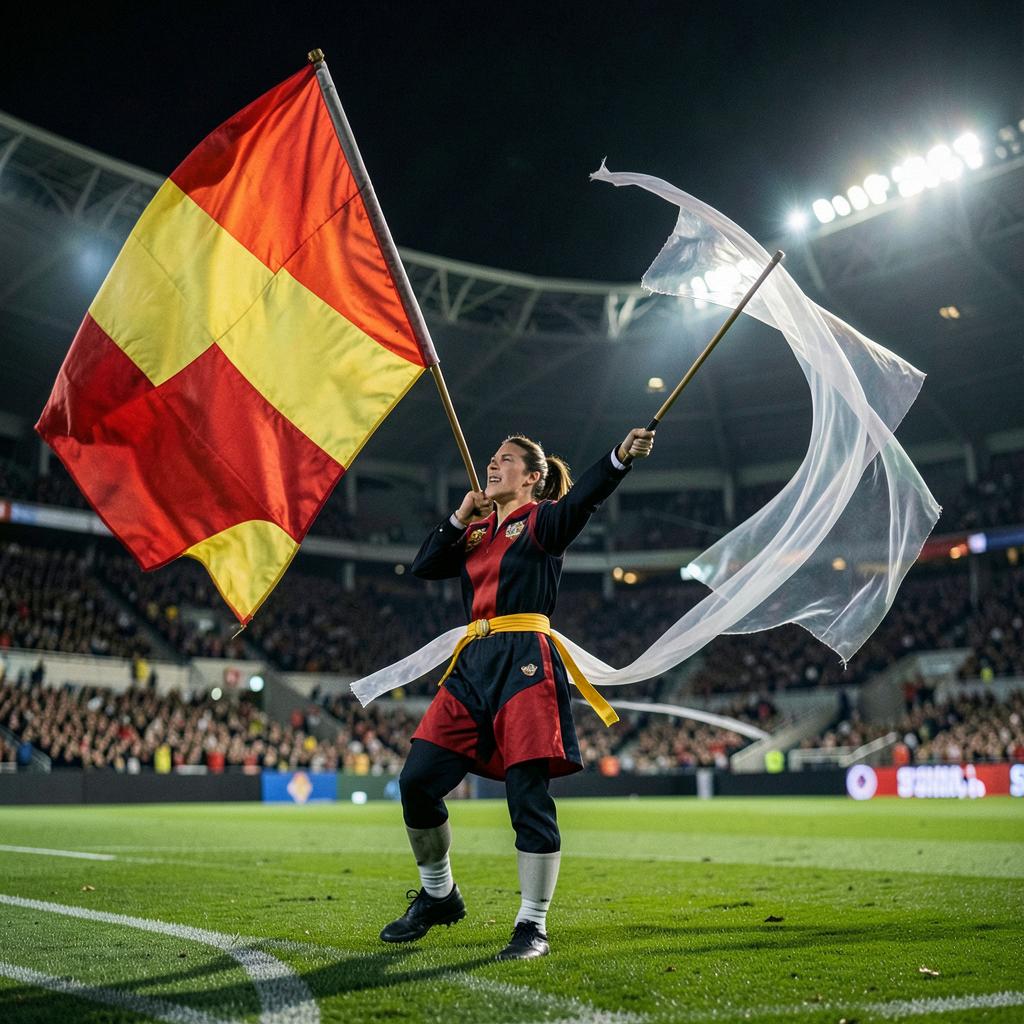
 Discussion