Verify your claims against versioned evidence records with exact reported results and sources.Know what the science actually supports before you trust the answer.
Press Enter ↵ to review claims
Explore by Goal
"Science is the acceptance of what works and the rejection of what does not. That needs more courage than we might think."
- Jacob Bronowski
Quick Explanation
Copied
Marco J Herold demonstrates expertise in distinct scientific domains, successfully applying rigorous methods in both murine cell biology (MHC I/II cross-talk) and clinical gastroenterology (biliary stent malfunction). The immunological work utilizes advanced CRISPR techniques, though its mechanistic findings are constrained by mouse model reliance, while the clinical work provides robust epidemiological data with significant effect sizes, limited only by its retrospective study design.
Long Explanation
The scientific strength of Marco J Herold is characterized by a demonstrable versatility across two highly distinct scientific fields: molecular immunology and clinical gastrointestinal medicine. The author exhibits capacity for complex experimental design, from utilizing advanced genetic editing technologies to performing large-scale clinical retrospective analyses.
Comparative Analysis of Scientific Rigor and Methodology
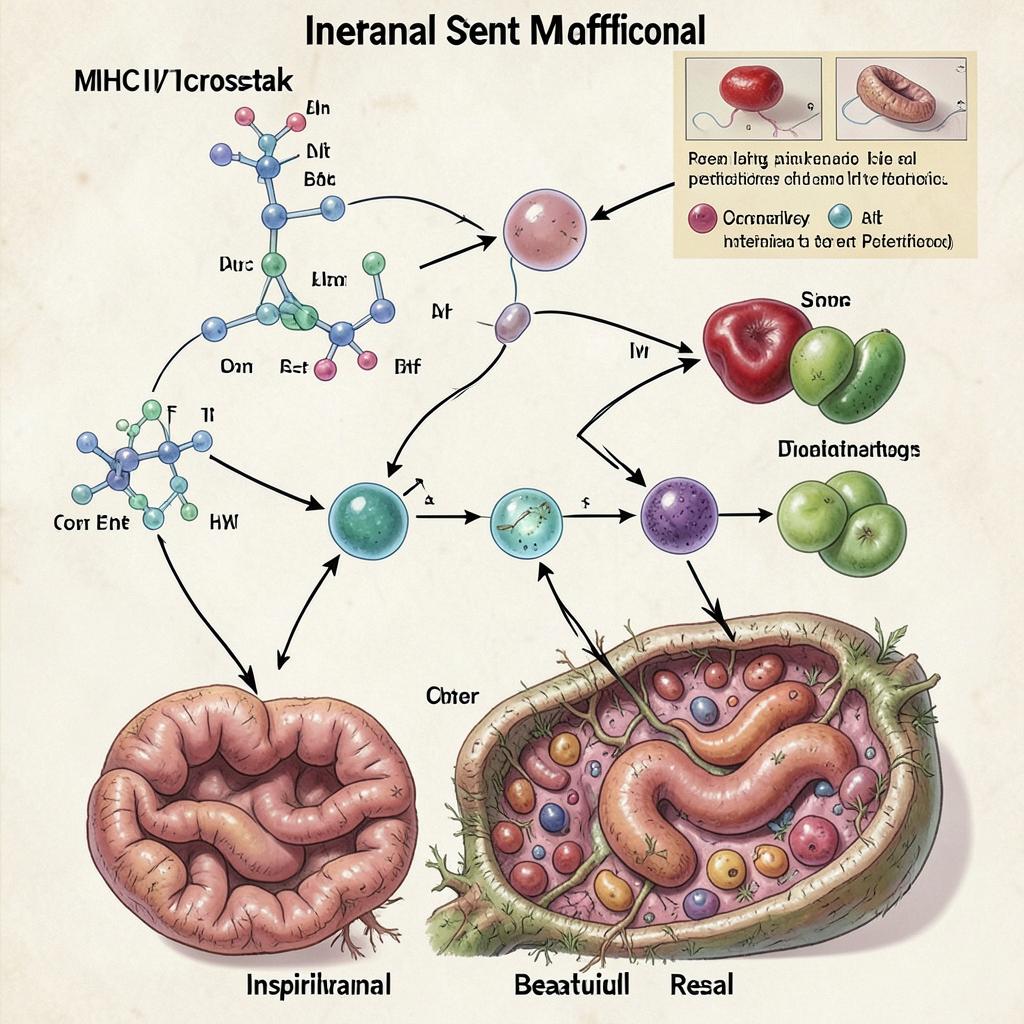
The study addresses the mechanistic cross-talk between MHC class I and MHC class II pathways in dendritic cells and B cells, employing state-of-the-art molecular biology techniques, including CRISPR/Cas9-mediated deletion (MARCH1-/-) and genetic knockout (I-Aα-/-) in mouse systems [1].
A central claim is that loss of MARCH1-dependent ubiquitination of MHC II leads to increased surface MHC II and a concomitant decrease in surface MHC I expression in primary hematopoietic cells [1]. This is further substantiated by observing that removing MHC II or expressing non-ubiquitinatable MHC II (K225R) restores or decreases MHC I accordingly [1].
Strengths: The use of detailed techniques (FIP-Cy5/quencher assays, T-cell proliferation assays, FlowJo data analysis) indicates robust experimental execution [1]. The paper successfully proposes a mechanistic model of indirect coordination between MHC I and II presentation mediated by MHC II ubiquitination [1].
Blind Spots/Limitations: The reliance on a mouse system (C57BL/6 background) and the MuTu DC1940 cell line introduces uncertainty regarding the direct translational applicability of these findings to human innate immunity [1]. Furthermore, the precise molecular mechanism linking increased MHC II abundance to MHC I trafficking remains unresolved within the provided framework [1].
The primary finding is that performing endoscopic dilation prior to plastic stent insertion significantly increases the risk of stent malfunction in patients with benign biliary strictures [2]. A multivariate analysis showed that biliary dilation was associated with a nearly six-fold increase in the odds of stent malfunction, with an Odds Ratio (OR) of 5.68 (95% CI: 2.14, 15.1, p < 0.001) [2].
Strengths: The study provides clear quantitative clinical data, showing a statistically significant and clinically relevant risk factor (dilation) leading to a substantial increase in malfunction odds [2].
Blind Spots/Limitations: As a retrospective analysis, the study is susceptible to selection bias and confounding variables not controlled for by its limited multivariate model [2]. It relies on clinical definitions of stent malfunction, which may introduce inherent variability in outcome measurement [2].
Synthesis of Scientific Profile
The overall profile suggests an author capable of translating complex biological questions into testable hypotheses (2018 paper) and translating clinical observations into actionable, statistically significant epidemiological data (2009 paper). The author displays strong quantitative skills, whether applying CRISPR methodology or calculating Odds Ratios. However, the scientific evidence provided here is limited to two vastly different papers, preventing a comprehensive assessment of citation impact, intellectual history, or overall research trajectory.
Confidence in Assessment: Moderate. The assessment is based solely on the evidence of the two provided papers and cannot account for full career impact or scope of research not provided in the dataset.
We'll email you the results when your analysis is finished.
Hypothesis Graveyard
The idea that stent malfunction is purely a mechanical issue unrelated to surrounding biological processes, as the 2009 study showed that procedural variables (dilation) significantly influence outcomes.
The assertion that MHC I/II cross-talk is entirely independent of environmental factors or cell type, contradicted by findings that MHC I reduction is dependent on MHC II presence in specific cellular contexts.

 Explore by Goal
 Quick Explanation
 Long Explanation
 Top Data Sources
 Ask a Follow-Up
 Key Insight
 Keep Exploring
 Hypothesis Graveyard
 Potential Experiments
 Discussion
