Check your hypothesis against versioned claims, exact reported results, and stated falsification criteria.Know what falsifiable science actually supports before you trust the answer.
Press Enter ↵ to search evidence
Explore by Goal
"The most important scientific revolutions all include, as their only common feature, the dethronement of human arrogance from one pedestal after another of previous convictions about our centrality in the cosmos."
- Stephen Jay Gould
BGPT Odds of True
50%
80% Confidence
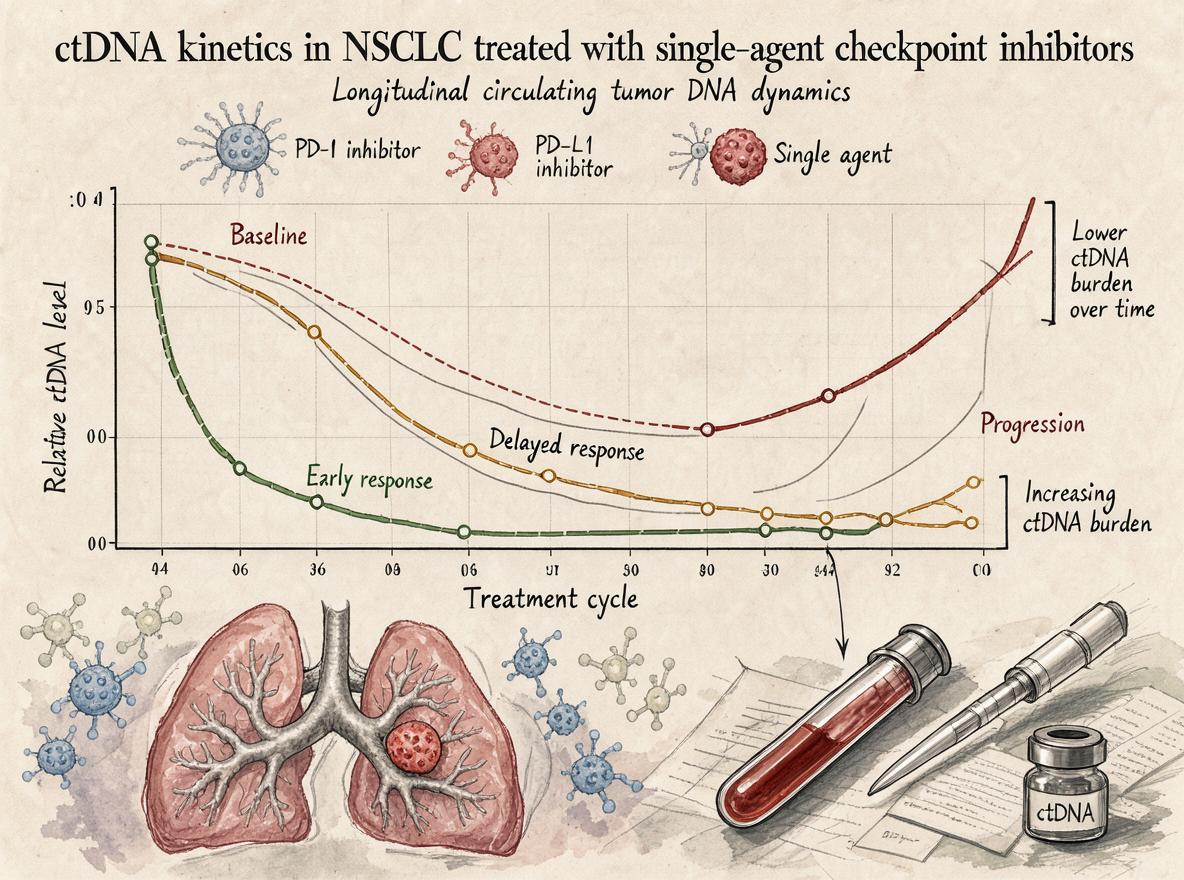
The hypothesis concerns whether ctDNA kinetic response prediction differs by regimen type and whether meta-analyses should stratify accordingly. Plausible biologically (chemotherapy contributes tumor lysis affecting ctDNA dynamics independent of immune activation), but no supplied evidence bears on it; the 50% midpoint reflects an untestable premise with this evidence base.
Hypothesis Novelty
55%
Regimen-stratified ctDNA kinetics as an effect-modification question in meta-analysis is a reasonable and not yet fully standardized methodological concern, but the general prognostic value of ctDNA kinetics in NSCLC immunotherapy is already well studied, so the core idea is moderately novel rather than groundbreaking.
Quick Analysis Plan
Copied
The supplied evidence does not address the hypothesis: no records cover ctDNA kinetics, checkpoint inhibitors, chemoimmunotherapy, or meta-analysis stratification in NSCLC. The available sources concern EGFR trafficking, LDOC1, and EGFR-TKI resistance mechanisms only. No evidence-based verdict on this hypothesis can be rendered from these materials.
Long Analysis Plan
The supplied evidence cannot test the stated hypothesis. The records provided concern EGFR trafficking biology and EGFR-TKI resistance in NSCLC: LDOC1-clathrin adaptor interactions regulating EGFR internalization and gefitinib response, third-generation EGFR TKI resistance reviews, EGFR copy-number screening utility, pSTAT3-driven EGFR transactivation, EGFR core fucosylation in antiviral immunity, and CIN85-dependent EGFR ubiquitination and multivesicular body sorting. None of these sources report ctDNA kinetic measurements, checkpoint inhibitor or chemoimmunotherapy outcomes, response-prediction performance metrics (e.g., AUC, HR for ctDNA clearance), or meta-analytic regimen-stratified effect estimates.
What would be required: patient-level or aggregate data on early ctDNA clearance kinetics in NSCLC cohorts receiving single-agent PD-1/PD-L1 blockade versus platinum-based chemoimmunotherapy, with objective response and survival endpoints, plus interaction tests for regimen-by-ctDNA-kinetics effect modification. No such data are present here, so the question of whether pooled meta-analyses should stratify by regimen remains unanswered by this evidence base.
We'll email you the results when your analysis is finished.
Hypothesis Graveyard
ctDNA kinetics as a single universal prognostic marker in NSCLC immunotherapy regardless of regimen: this strongman version fails because it ignores that ctDNA level is a function of tumor cell death from any cause, including cytotoxic chemotherapy, not specifically immune activation.
Regimen stratification being unnecessary because ctDNA clearance timing dominates regimen effects: unsupported; no supplied evidence quantifies the relative contribution of regimen versus kinetics, and timepoint confounding by chemotherapy cycles remains untested here.
Science Art
Science Movie
Make a narrated HD Science movie for this answer ($64 per minute)

 Explore by Goal

 Hypothesis Novelty
 Quick Analysis Plan
 Long Analysis Plan
 Top Data Sources
 Ask a Follow-Up
 Key Insight
 Keep Exploring
 Hypothesis Graveyard
 Discussion
