See the experiments, methods, and limitations behind existing claims before planning your next study.Know what the science actually supports before you trust the answer.
Press Enter ↵ to plan experiment
Explore by Goal
"Biology is a science of three dimensions. The first is the study of each species across all levels of biological organization, molecule to cell to organism to population to ecosystem. The second dimension is the diversity of all species in the biosphere. The third dimension is the history of each species in turn, comprising both its genetic evolution and the environmental change that drove the evolution."
- E. O. Wilson
Quick Analysis Plan
Copied
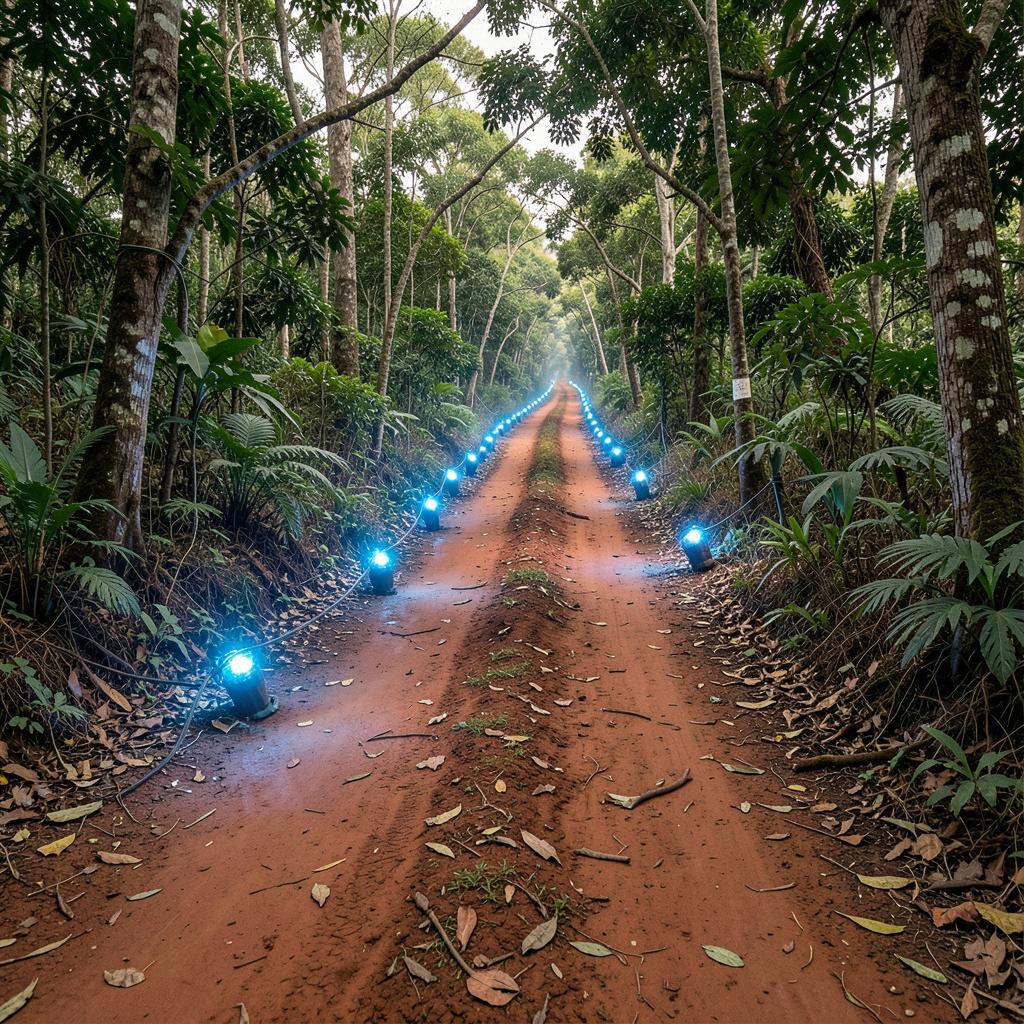
A stratified paired design with 20 KBAs × three distance strata (boundary, interior, >5 km off-road), identical pan-trap + netting transects, analyzed with paired mixed models, directly tests whether the documented roadside concentration of Malagasy bee records (77.1% within 2.5 km of roads; 68.4% of KBAs unsampled) reflects true ecological gradients or sampling-access bias .
Long Analysis Plan
Evidence motivating the design
The Malagasy bee occurrence dataset (4,071 cleaned records, 218 species) shows 77.1% of records within 2.5 km of roads, 79.9% of 25×25 km grid cells entirely unsampled, and 68.4% of 231 KBAs with no bee records; sampled KBAs held a median of only 5 records and 3 species, and within-KBA penetration depth was not resolvable . This makes a standardized-effort within-KBA/off-road comparison the decisive test of whether roadside bias is an artifact of collector access or a real ecological signal.
Experimental design
Units and strata: 20 KBAs selected from the 73 historically sampled KBAs (prioritize those with ≥5 existing records) and stratified by region/vegetation type. Within each KBA, three matched plots: (a) boundary (<100 m from KBA edge, near-road), (b) interior (>500 m from boundary, off-road but within KBA), (c) >5 km off-road outside the KBA in matched habitat. Plot order randomized; observer-blind to stratum labels where feasible.
Standardized effort: identical protocol per plot: 3 linear netting transects (500 m each, 60 min) plus 2 sets of 5 pan-traps (yellow/white/blue UV-bright) along 30 m line, deployed 6 h on 2 consecutive rain-free days, repeated in two seasons (wet/dry). Effort (trap-hours, net-hours) logged identically so effort is never a covariate confound.
Primary hypothesis: with effort standardized, species richness and community composition differ between boundary/near-road and >5 km off-road plots; the roadside bias observed in occurrence databases is collector-access-driven, so bias magnitude (off-road minus boundary dissimilarity) shrinks toward zero relative to historical data.
Falsification: if boundary and off-road plots show equivalent composition and richness (CI of paired effect includes zero), the roadside bias in the database reflects genuine ecological gradients or residual habitat confounds, not access bias.
Bioinformatics/analysis plan
Clean occurrences with BeeBDC/bdc-style filters; georeference all new records; distance-to-road via GRIP lines and sf overlays (as in the source study) .
Paired mixed models: richness/abundance ~ stratum (boundary/interior/off-road) with KBA as random blocking factor (lme4, brms); beta-diversity via PERMANOVA on strata pairs (adonis2, vegan) with KBA as strata.
Chao1/iNEXT coverage-standardized richness per plot so sparse sampling (source KBAs median 5 records) does not distort comparisons .
COI metabarcoding or single-specimen barcoding of trap catches to guard against misidentification-driven bias, analogous to how COI barcoding exposed cryptic diversity in Neuroptera KBA assessments .
Power: with 20 paired KBAs and 3 strata, detectable standardized effect (Cohen's d) ≈ 0.65 at α=0.05, power 0.8 for paired t-type tests; report per-KBA coverage to confirm adequacy.
Known unknowns and blindspots
Historical road networks cannot be reconstructed, so 'near-road' distances for legacy records are approximate against the contemporary network . Habitat type must be matched across strata or a vegetation covariate added, otherwise 'off-road' differences conflate access bias with habitat. Pan-trap color bias and seasonal timing are unresolved and should be balanced across strata within the same day-pairs. KBA Criterion E analyses show irreplaceability is sensitive to thresholds, metrics, and cost assumptions , so conclusions about KBA prioritization from this sample should remain bounded to the 20-KBA sample, not generalized to all 231 KBAs.
We'll email you the results when your analysis is finished.
Hypothesis Graveyard
'Roads are richer bee habitat near KBA boundaries' — cannot be evaluated because legacy records never penetrated KBA interiors; the proposed paired design is precisely the missing control.
'KBAs are well sampled and roadside records represent KBA fauna' — falsified by 68.4% of KBAs being unsampled with median 5 records per sampled KBA.

 Explore by Goal
 Quick Analysis Plan
 Long Analysis Plan
 Top Data Sources
 Ask a Follow-Up
 Key Insight
 Hypothesis Graveyard
 Potential Experiments
 Discussion
