Why BGPT?
logo

Assess an author's data and outputs

See the raw experimental evidence behind an author's publications and reproducibility signals.


Press Enter ↡ to solve


    Fuel Your Discoveries


     Quick Explanation


    Yun Pyo Kang β€” evidence from the provided record
    • Only one specific paper is provided here: 10.1038/s41586-025-09710-8, reporting in vivo KRAS-driven LUAD dependency on ferroptosis suppression via FSP1 (and related axes) and identifying FSP1 as a therapeutic target in preclinical models.
    • Author-level metrics: OpenAlex lookup timed out, so no citation count/hl-index can be verified from the provided prompt.


     Long Explanation


    Author Review (science-focused, skeptical, evidence-based): Yun Pyo Kang
    Scope limitation: The only concrete scientific evidence supplied in your prompt is one paper record (doi:10.1038/s41586-025-09710-8). No publication list, author rank on papers, or verified OpenAlex/Google Scholar metrics were provided; OpenAlex lookup timed out in the prompt.
    Visuals first β€” what the provided record supports
    1) What is actually known from the provided paper record
    Paper identified in the prompt
    • Journal/DOI: Nature; 10.1038/s41586-025-09710-8 (Paper date: Nov 05, 2025).
    • Topic (as stated in the record): β€œTargeting FSP1 triggers ferroptosis in lung cancer,” focusing on FSP1 and ferroptosis suppression dependency in KRAS-driven lung adenocarcinoma.
    Claimed evidence type & methods (from the record)
    The record lists a multi-model strategy (CRISPR in genetically engineered mouse models, xenografts/PDX, orthotopic settings, lipidomics via LC-MS, mechanistic assays including apoptosis/ferroptosis readouts, plus TCGA/CGP expression analyses). This combination can strengthen causal inference relative to single-system studies, but it does not eliminate issues like off-target CRISPR effects, incomplete coverage of LUAD genetic diversity, or unknown systemic toxicities of inhibitors.
    2) Scientific strength signals (supported/unsupported by the provided record)
    Strengths (evidence quality signals)
    • In vivo dependency tests are explicitly claimed in the record: gene-level perturbations (Gpx4, Fsp1) and therapeutic targeting (icFSP1, and related interventions like LIP1/vitamin E/Acsl4 manipulations) are described as suppressing tumor growth and/or improving survival in mouse LUAD contexts (including GEMMs and xenografts/PDX).
    • Mechanistic + translational scaffolding is indicated: lipidomics/epilipidomics, redox/cofactor measures (e.g., CoQ redox states via EL-MAVEN per record), and ferroptosis-associated markers (e.g., 4-HNE; Ki67; cleaved caspase-3; TUNEL) are listed, which (if carried out as described) can reduce reliance on phenotypes alone.
    • Data availability is explicitly claimed: raw lipidomic data are deposited in MassIVE under MSV000098883, and analyzed lipidomics are in a supplementary data file per the record. This supports reproducibility and downstream re-analysis.
    Limitations / possible weak points (as the record itself flags)
    • Generalization risk: the record explicitly notes that translational relevance across all LUAD contexts and/or other cancers β€œremains to be fully validated,” implying potential selection by model/cell-line panel.
    • CRISPR/off-target & redundancy: CRISPR-based knockouts can suffer off-target effects, and in vitro rescue may not fully recapitulate in vivo pathway redundancy.
    • Systemic toxicity unknowns: long-term toxicity/safety of systemic FSP1 inhibitors in humans is unknown per the record.
    3) Conflict-of-interest context (scientific bias check)
    COI statements included in the record
    • The record states that coauthors reported funding not related to the submitted work, while some authors report cofounder/shareholder interests and a filed patent application covering some FSP1 inhibitor compounds.
    Skeptical interpretation: COIs do not automatically invalidate results, but they increase the importance of checking preregistration/robustness, verifying inhibitory specificity, confirming orthogonal readouts, and auditing raw data availabilityβ€”features the record partially supports via MassIVE deposition.
    4) Author attribution & citation metrics: what we cannot conclude
    • OpenAlex citation metrics were not retrieved because the OpenAlex API call in your prompt timed out; therefore no verified h-index/citation counts are available from the provided materials.
    • Author-level role is unknown: the prompt does not specify whether Yun Pyo Kang is first author, last author, or middle author on the provided paper; thus we cannot responsibly infer independence vs. contribution size from authorship position.
    Overall scientific strength (limited by supplied evidence)
    Best-supported conclusion
    Based only on the single provided Nature paper record, the work attributed to the author group appears to be scientifically strong: it claims multi-model in vivo dependency testing, mechanism-linked ferroptosis readouts, and open raw lipidomics deposition in MassIVE, while also transparently listing limitations (off-target risk, incomplete microenvironment/systemic toxicity characterization, and generalization uncertainty).
    Confidence level: moderate for this specific paper-topic; low-to-moderate for any broader evaluation of the author’s overall scientific track record because only one paper record was provided and author-level role/metrics are unavailable.
    This will (iteratively) audit the provided paper’s raw data links (e.g., MassIVE) and verify whether the reported lipidomic/ferroptosis dependencies are internally consistent.


    Feedback:   

    Updated: March 26, 2026

    BGPT Author Review


    Scientific Quality

    60%

    Based on the single provided Nature paper record, the scientific package looks strong (multi-model in vivo perturbations, ferroptosis-linked mechanistic readouts, and raw lipidomics deposition). However, author-level independence/role is unknown, OpenAlex metrics could not be retrieved, and the evaluation is underpowered because only one paper record was suppliedβ€”so confidence in broader author track record is limited.


    Communication Quality

    60%

    No direct writing/communication samples (thesis, papers-as-text, talks) were providedβ€”only a structured paper-record summaryβ€”so communication skill cannot be assessed beyond the presence of transparent methods/COI/data-availability signals in the record.


    Author Novelty

    60%

    The record indicates high novelty within the FSP1/ferroptosis therapeutic targeting space, but novelty cannot be benchmarked against the author’s broader publication history because only one paper record is provided.


    Scientific Rigor

    70%

    The record suggests rigorous experimental design signals: in vivo GEMMs plus xenograft/PDX, mechanistic/biochemical readouts, and raw data deposition (MassIVE). Still, I cannot verify statistical rigor details, blinding, power calculations, or off-target controls from the prompt alone.

     Analysis Wizard


    It loads the MassIVE raw lipidomics deposit from the paper, re-derives key ferroptosis-associated lipid features, and cross-checks whether the strongest discriminators track the reported FSP1 perturbation outcomes.


     Hypothesis Graveyard


    A universal β€œFSP1 always matters” claim across all LUAD genotypes is unlikely: the record itself flags generalization uncertainty, implying that genetic context or microenvironmental lipid availability may gate dependency.


    If FSP1 inhibitors mainly cause nonspecific toxicity, then survival/tumor-burden effects would not track ferroptosis-specific molecular signatures (e.g., lipid oxidation/ferroptosis markers).

     Science Art


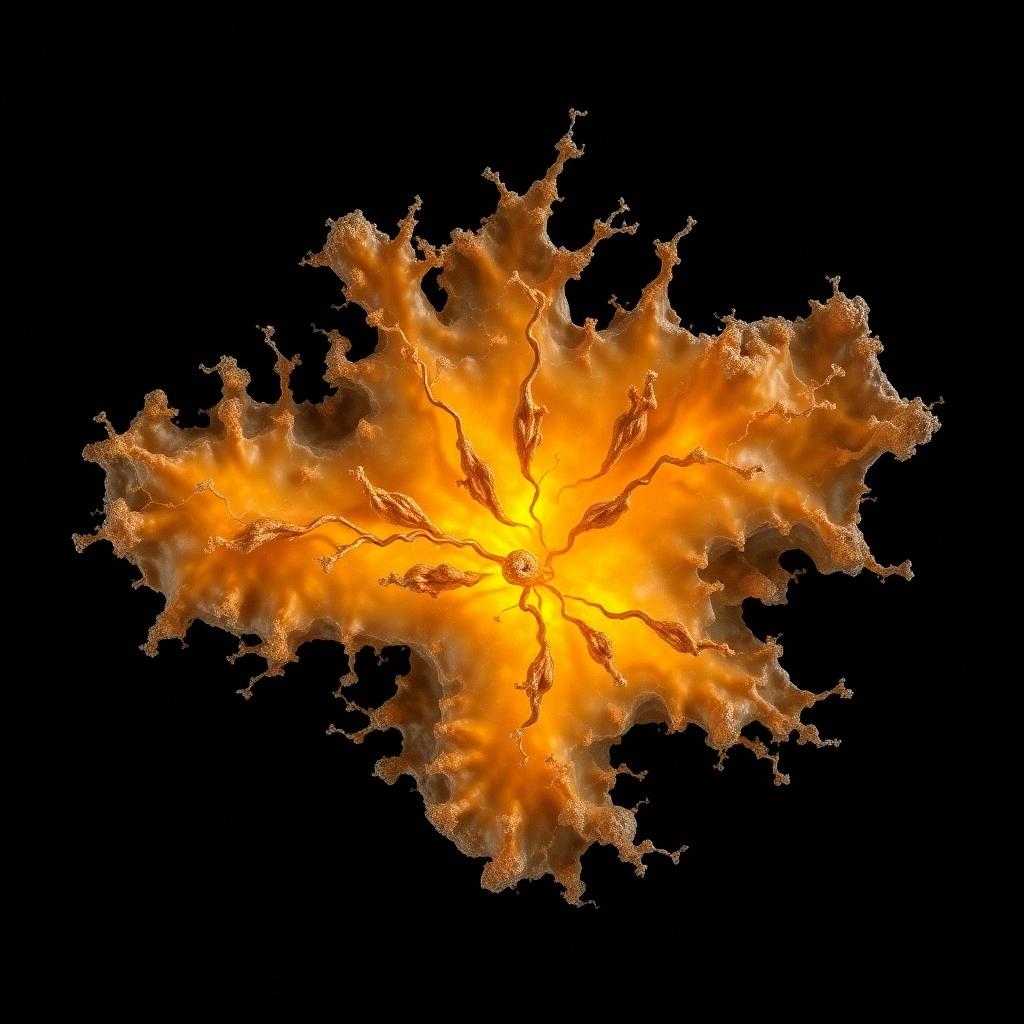
    Author Review: Yun Pyo Kang Science Art

     Science Movie


    Make a narrated HD Science movie for this answer ($32 per minute)


     Discussion


    Get Ahead With Science Insights

    Custom summaries of the latest cutting edge Science research. Every Friday. No Ads.


    My BGPT