Why BGPT?
logo

Review papers with raw data transparency

Quickly verify claims by accessing the underlying experimental data and figures.


Press Enter ↵ to solve


    Fuel Your Discoveries


     Quick Explanation


    Bottom line: Farnung et al. (2026) provide biochemical reconstitution and a 3.1 Å cryo-EM structure showing how a ZSWIM8–CUL3 dimeric E3 ligase clamps a trigger-bound AGO2-miRNA complex, exposing the PAZ pocket and engaging trigger flanking RNA to specify AGO polyubiquitylation that drives TDMD — a two-RNA-factor authentication mechanism that explains selectivity for rare trigger sites over abundant seed-only sites
    Would you like (1) visual breakdowns of the key structure–function interfaces, (2) a targeted list of mutations to test TDMD in other miRNA pairs, or (3) an evolutionary/conservation analysis of AGO and ZSWIM8 contact residues? Click a button below.


     Long Explanation


    Visual-first critique of Farnung et al., 2026 — The E3 ubiquitin ligase mechanism specifying TDMD

    Visuals (left) summarize quantitative biochemical selectivity and structural conclusions; explanations (below) give critical appraisal, limitations, and next experiments. All claims below reference the primary paper (Farnung et al., 2026) and contextual review where noted.

    What the paper shows (evidence-linked)

    • Biochemical reconstitution: purified ZSWIM8–CUL3–ARIH1 + AGO2–miR-7 + CYRANO trigger recapitulate AGO2 polyubiquitylation in vitro, and this activity requires cognate trigger pairing (seed-only mutant fails) — demonstration of direct E3 activity on AGO2 conditioned by trigger RNA
    • Selective binding: ZSWIM8 preferentially co-immunoprecipitates AGO2 only when AGO2 is bound to a trigger (≈70× enrichment vs seed-only) and flanking trigger RNA dramatically improves affinity (~100× efficiency increase) — explains selectivity in face of stoichiometric challenges
    • Structure at 3.1 Å: cryo-EM reveals an asymmetric ZSWIM8 dimer that clamps AGO2-miR-7-trigger; one protomer (NPAZ) engages PAZ and N domains with a TDMD sensor element that occupies the PAZ pocket when miRNA 3' end is displaced; the other (MID) anchors the MID domain; RBEs embrace trigger flanks — explains molecular basis for two-RNA-factor authentication

    Critical appraisal — strengths

    1. Multi-modal approach: clean linkage between biochemical reconstitution, quantitative binding assays, cell-rescue functional readouts, and high-resolution structure — strong causal chain from RNA pairing to E3 engagement and AGO ubiquitylation
    2. Structure explains puzzling previous genetics: why ZSWIM8 (a BC-box protein) partners with CUL3 (normally BTB adaptors) — ZSWIM8 has a novel CUL3-box and SWIM-belt that select for CUL3, demonstrated by mutational and BLI data

    Critical appraisal — limitations, blindspots, and possible over-interpretations

    • Replicates and in vivo scope: many biochemical assays show n=2 technical replicates and cellular assays used n=2 biological replicates — acceptable for initial mechanistic work but limits statistical power and generalization to physiology. Farnung et al. acknowledge limited in vivo mammalian data beyond cell lines
    • Dynamics vs snapshot: cryo-EM gives a high-resolution snapshot of one TDMD-competent pair (miR-7–CYRANO); RNA dynamics and the conformational ensemble of AGO2 across different miRNA-trigger pairs may vary — structure likely captures a dominant conformation but not all possible TDMD states
    • Generality claim caveat: experiments show the mechanism for miR-7/CYRANO and miR-27a/HSUR1 and AGO1/AGO2 paralogs, but claiming universality across all TDMD triggers requires broader in vivo validation (different tissues, triggers, species) — caution warranted before assuming identical architecture for all cases
    • Functional readout linkage: authors link AGO polyubiquitylation to proteasomal degradation and subsequent miRNA degradation via prior literature; direct in vivo demonstration that ZSWIM8-mediated AGO degradation is the dominant driver of miRNA decay for all triggers remains to be fully proven in physiological contexts (though evidence here is persuasive)

    Where the data could mislead or be incomplete

    1. Magnitude of fold-changes reported in vitro (70×, 100×) are robust in those assays but may not reflect in vivo stoichiometry where RNA/protein concentrations and compartmentalization differ.
    2. Mutation phenotypes in cells sometimes conflate binding and stability effects (PAZ mutations that impair miRNA binding complicate interpretation of lack of ZSWIM8 co-IP); recombinant in vitro reconstitution mitigates but does not remove this ambiguity.
    3. Sequence-independence claim for RBEs is supported by scrambled flank experiments, but low-resolution RNA density and heterogeneity mean subtle sequence preferences or co-factors remain possible.

    Suggested next experiments (most informative / falsifiable)

    • In vivo engineered triggers: introduce a synthetic trigger (with/without flanking RNAs) into mouse tissues expressing a reporter miRNA and measure AGO ubiquitylation, AGO half-life, and miRNA decay in WT vs Zswim8 KO animals — would directly test physiological sufficiency.
    • Single-molecule FRET of AGO2–miRNA–target with/without ZSWIM8: measure dwell times and conformational transitions to test whether ZSWIM8 selects a pre-existing TDMD conformation or actively stabilizes it.
    • Proteasome-block + ubiquitin-site mapping in cells: identify endogenous AGO ubiquitylation sites (mass spec) and test whether K-to-R mutations on those lysines block TDMD in cells, confirming AGO degradation as the causal step for miRNA decay.
    • Cross-species rescue & minimal domain swaps: swap ZSWIM8 RBEs or TDMD sensor elements between orthologs to map evolutionary constraints and test whether sequence-independent electrostatic RBEs explain cross-species activity.

    Short actionable takeaways for experimentalists

    • To test TDMD for a new miRNA: design triggers with extended >25 nt flanking regions (both 5' and 3') and probe ZSWIM8 co-IP and AGO ubiquitylation in vitro before moving to cells — flanking RNA length matters strongly (≈25–85 nt used successfully)
    • Mutate PAZ-pocket contact residues (e.g., F294/Y311) or truncate guide 3' length to test PAZ-occupancy dependence: unoccupied PAZ pocket is necessary but not sufficient for ZSWIM8 engagement

    Concise scores (expert critical judgement)

    • paper_novelty: 9
    • paper_quality: 9
    • paper_generality: 8
    • paper_usefulness: 9
    • paper_reproducibility: 7
    • explanatory_depth: 9

    (See numeric explanations appended in metadata fields.)

    Key references

    • Primary paper and core dataset: Farnung et al., 2026 — main structural and biochemical evidence for ZSWIM8-CUL3 E3 targeting of AGO in TDMD
    • TDMD genetic/earlier mechanistic context: Shi et al. and Han et al., 2020 identified ZSWIM8 and ubiquitin dependence in TDMD (cited within Farnung et al.) — anchors the present structural/compositional model to prior genetics (see Farnung et al. refs)
    • Review for miRNA-targeting/AGO conformational background: Jonas & Izaurralde, Nat Rev Genet 2015 — useful mechanistic background on AGO/miRNA regulation and target pairing effects (structural context)
    If you want this review evolved into:
    • Detailed mutation table + prioritized constructs for testing TDMD across 10 miRNA pairs — click: Create Tables: TDMD mutation priority list
    • Automated bioinformatics agent to map conservation of contact residues across 1500 AGO/ZSWIM8 homologs — click the button below to run the AI Scientist agent.
    Author review buttons


    Feedback:   

    Updated: March 09, 2026

    BGPT Paper Review


    Study Novelty

    90%

    Combines first biochemical reconstitution of TDMD-competent AGO ubiquitylation with a high-resolution cryo-EM structure revealing a previously unknown dimeric ZSWIM8 E3 architecture and RNA-dependent substrate authentication — mechanistically novel and explains prior genetic puzzles (ZSWIM8–CUL3 pairing).


    Scientific Quality

    90%

    Robust multi-method approach (biochemistry, co-IP, BLI, cell-rescue assays, small-RNA-seq, cryo-EM at 3.1 Å). Controls include seed-only mutants, paralog testing (AGO1/AGO2), cullin-swaps, and targeted mutagenesis. Main weaknesses are limited biological replicates for some assays (n=2–3 technical; n=2 biological for reporters) and limited physiological in vivo mammalian validation.


    Study Generality

    80%

    Evidence extends to multiple miRNA/trigger pairs and AGO paralogs and demonstrates conserved contact residues across bilateria, supporting broad applicability; however, universality across all triggers/tissues/species is not yet proven in vivo.


    Study Usefulness

    90%

    Provides concrete rules and structural determinants (PAZ-pocket vacancy, RNA trajectory, flanking-RNA engagement, ZSWIM8 dimerization and CUL3 selection) that experimentalists can use to design TDMD triggers, predict sensitivity, and develop interventions targeting this pathway.


    Study Reproducibility

    70%

    Methods are described in detail (protein purifications, in vitro assays, cryo-EM processing), but many critical assays report only 2 technical replicates and cellular assays use two biological replicates; cryo-EM maps and plasmids availability would increase reproducibility (authors provide many materials but explicit data-access statements could be clearer).


    Explanatory Depth

    90%

    Provides atomic-level mechanism connecting RNA pairing geometry to exposure of a protein pocket (PAZ) and to recruitment of a novel dimeric CRL; deep mechanistic insight tying RNA structure, protein conformational change, and ubiquitin machinery together.


    🎁 Authors: Collect 500 Free Science Tokens (≈ $50.0 USD)

    Claim My Author Tokens

    Use for 125 days of free BGPT access (4 tokens = 1 day) or trade/sell (≈ $50.0 USD)

     Top Data Sources ExportMCP


     Analysis Wizard


    Generating multiple-sequence alignments and conservation scores for AGO2 and ZSWIM8 contact residues across 1500 metazoan homologs to prioritize conserved interface residues for mutational tests.


     Hypothesis Graveyard


    Hypothesis: ZSWIM8 recognizes a simple linear peptide degron on AGO exposed by trigger binding — falsified because the structure shows multivalent RNA–protein contacts and RNA-dependent conformational changes, not a short peptide motif.


    Hypothesis: Any unoccupied PAZ pocket alone is sufficient for ZSWIM8 recruitment — weakened by truncation/mutation experiments showing vacated PAZ increases binding but is insufficient without proper RNA trajectory and flanking contacts.

     Science Art


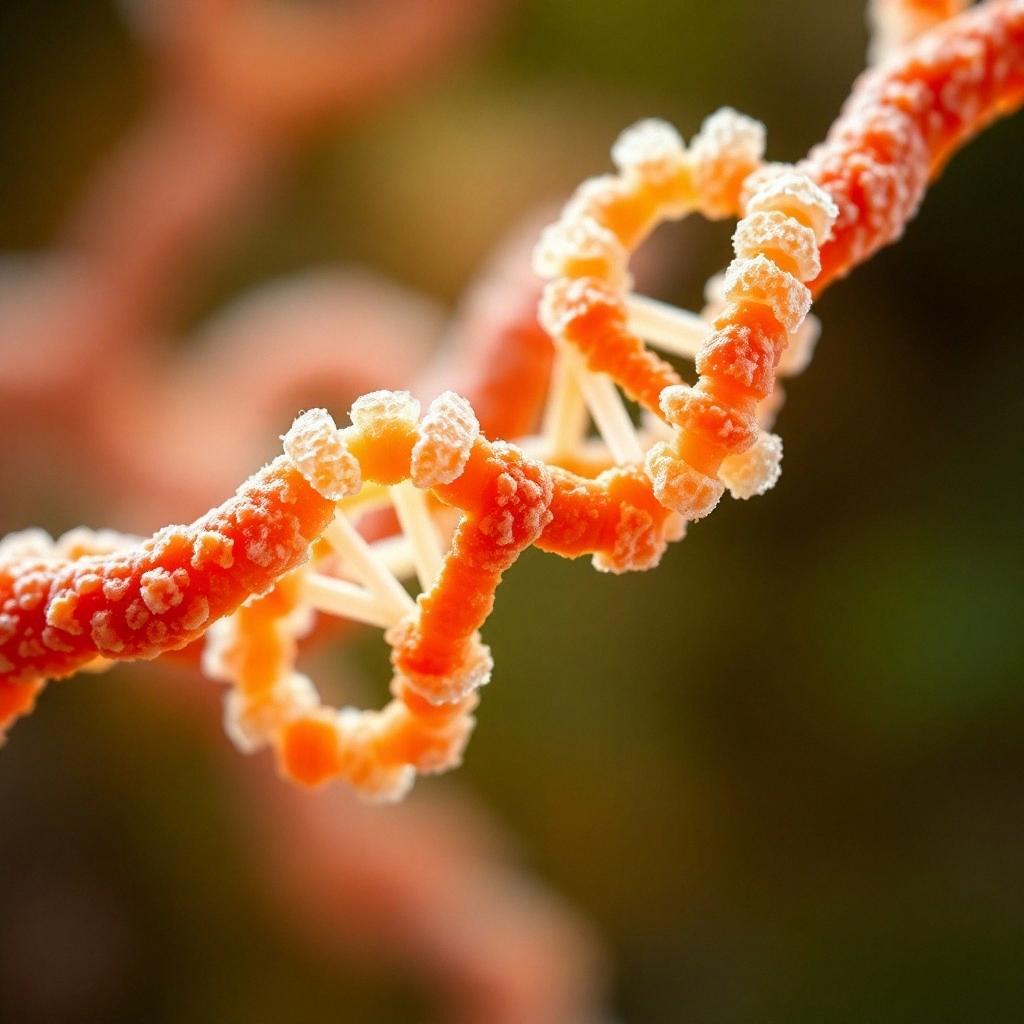
    Paper Review: The E3 ubiquitin ligase mechanism specifying target-directed microRNA degradation Science Art

     Science Movie


    Make a narrated HD Science movie for this answer ($32 per minute)


     Discussion


    Get Ahead With Science Insights

    Custom summaries of the latest cutting edge Science research. Every Friday. No Ads.


    My BGPT