Analyze how experimental results and claims are presented, scoped, and limited in a paper.Know what the science actually supports before you trust the answer.
Press Enter ↵ to analyze
Explore by Goal
"The nitrogen in our DNA, the calcium in our teeth, the iron in our blood, the carbon in our apple pies were made in the interiors of collapsing stars. We are made of starstuff."
- Carl Sagan
Quick Explanation
Copied
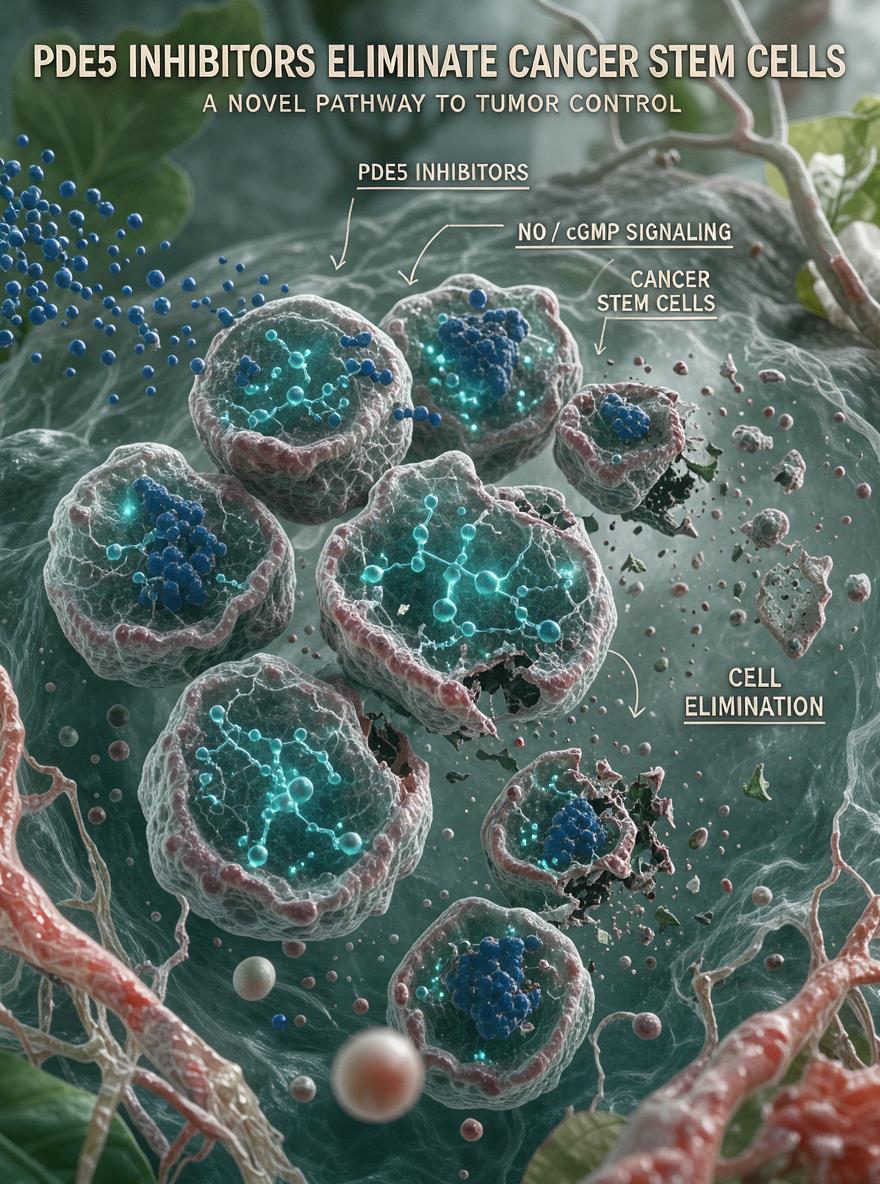
This Bayer-funded in vitro study (Cell Death & Disease, 2018) establishes a high-content Aldefluor screen and reports that PDE5 inhibition (MY5445, sildenafil, vardenafil) eliminates ALDH-high cancer stem cells via a non-canonical cGMP→cAMP→PKA axis, while Wnt inhibition served as assay validation; findings are limited to cell-line models, with 5 of 10 screening hits excluded as ALDH-inhibition false positives, and the cGMP-to-PKA mechanistic link remains unresolved .
Long Explanation
Core Findings and Evidence Quality
All authors are Bayer AG (Berlin) employees, funded by Bayer AG; no conflicts declared. Using a 384-well high-content Aldefluor assay (robust Z′ = 0.35), they screened 1,108 bioactive/FDA-approved compounds in SUM149 breast cancer cells, with DEAB controls and a 6-SD intensity cutoff. Ten hits reduced ALDH-high cells; five were excluded as false positives that directly inhibited ALDH within 2 h and washed out reversibly . Critical self-correction: the authors demonstrate ALDH activity itself is dispensable for CSC maintenance (DEAB fails to reduce tumorsphere formation), so the screen marker is a readout, not a target.
Validation includes: ALDH-high sorted cells showing greater tumorsphere formation and radiation resistance; Wnt inhibition (LGK-974, IWR-1, WIKI4) plus siRNA confirming Wnt dependence; three PDE5 inhibitors and PDE5A siRNA reducing ALDH-high cells and tumorsphere formation; 8-pCPT-cGMP mimicking the effect; PKG inhibition (KT5823) phenocopying rather than reversing it; and PKA inhibition (H-89) rescuing CSC loss . Notably, MY5445 reduced ALDH-high cells (~90% at IC50 3.76 µM) but TFC reduction data show inconsistencies with the abstract's claims of parallel CSC elimination for other hits.
Bars report Table 1 IC50 values; labels show TFC reduction at 10 µM (n ≥ 3, SD). SB 203580 TFC label corresponds to its −24.2% (p<0.05) value.
Critical Limitations and Blind Spots
Mechanistic gap: The cGMP→cAMP→PKA link is inferred, not demonstrated; PDE1/PDE3 inhibitors failed to replicate PDE5 effects, and direct cAMP measurement or CREB phosphorylation data are absent. H-89 has known off-targets beyond PKA.
Model dependence: Nearly all mechanistic work is in SUM149; ALDH as a CSC marker is not universal (the authors cite prostate ALDH counterexamples). Only single-line validation in HCT116 and H358.
No in vivo or patient-derived data: The authors themselves acknowledge that 2D cell lines are limited CSC models and fresh patient cells or animal models are required .
Translation context: Independent in vitro work shows sildenafil potentiates chemotherapy in pediatric CNS tumor cells via a distinct NO/cGMP mechanism, supporting broader PDE5-inhibitor anticancer plausibility but also revealing that mechanisms differ by tumor type , while clinical safety concerns (e.g., melanoma-risk debate) remain unresolved.
What would falsify the central claim: failure of PDE5A knockout (not just siRNA) to reduce ALDH-high cells in multiple lines; demonstration that H-89 rescues via off-target effects; absence of CSC loss with direct cAMP/PKA activation in patient-derived organoids.
Feedback:
Updated: November 01, 2026
BGPT Paper Review
Study Novelty
80%
First small-molecule screen for CSC maintenance using high-content single-cell Aldefluor analysis; the cGMP→cAMP→PKA (non-PKG) mechanism for PDE5 in CSCs was novel, though PDE5's role in prostate CSCs was already published (Liu et al. 2016).
Scientific Quality
70%
Rigorous assay controls (DEAB, Z′ factor, false-positive triage, siRNA concordance, wash-out experiments) but pure in vitro, single dominant cell line, pharmacology with known off-target inhibitors (H-89, KT5823), and no cAMP level measurements. Industry funding with all authors employed by Bayer AG; declared no conflict of interest, which is hard to fully disentangle from sponsor interest in PDE5 assets.
Study Generality
70%
Validation across breast, colon, and lung lines suggests broad CSC relevance, but the ALDH-high marker is tumor-type dependent and the mechanism was tested almost entirely in one line.
Study Usefulness
80%
Repurposing clinically approved PDE5 inhibitors (sildenafil, vardenafil) is immediately actionable; the assay methodology and false-positive filtering approach are transferable to other CSC drug screens.
Study Reproducibility
70%
Detailed methods, IC50s with SDs, n ≥ 3, and supplementary tables provided; however, exact cell passages, raw data depositions, and full siRNA sequences (partially garbled in the published SI) limit independent replication.
Explanatory Depth
70%
Good pharmacological epistasis logic (cGMP analog, PKG inhibitor, PKA rescue), but the key mechanistic bridge (which PDE mediates cAMP accumulation) remains explicitly unresolved; no direct second-messenger quantification.
We'll email you the results when your analysis is finished.
Hypothesis Graveyard
PKG-dependent maintenance of CSCs (Liu et al. prostate model): contradicted here — KT5823 reduced rather than rescued ALDH-high cells in SUM149, showing tissue-type divergence in cGMP signaling downstream of PDE5.
ALDH inhibition as CSC therapy: falsified in this model — DEAB only masked the Aldefluor signal without affecting tumorsphere formation or causing lasting CSC depletion.

 Explore by Goal
 Quick Explanation
 Long Explanation
 Top Data Sources
 Ask a Follow-Up
 Key Insight
 Keep Exploring
 Hypothesis Graveyard
 Potential Experiments
 Discussion
