See how your reported results read as versioned evidence records — linked to experiments and limitations.Know what the science actually supports before you trust the answer.
Press Enter ↵ to review claims
Explore by Goal
"The important thing in science is not so much to obtain new facts as to discover new ways of thinking about them."
- William Lawrence Bragg
Quick Explanation
Copied
Xinjie Xie presents as a multidisciplinary early-career author whose 2026 AI-agent humor study (RPTEL) is a well-powered, transparently reported 2x2 experiment (n=116) with clearly reported effect sizes, though effect magnitudes for learning outcomes are small-to-moderate (η²=0.046 for retention) and the profile spans electrocatalysis and educational psychology, complicating identity attribution .
Long Explanation
Evidence from the primary study under review
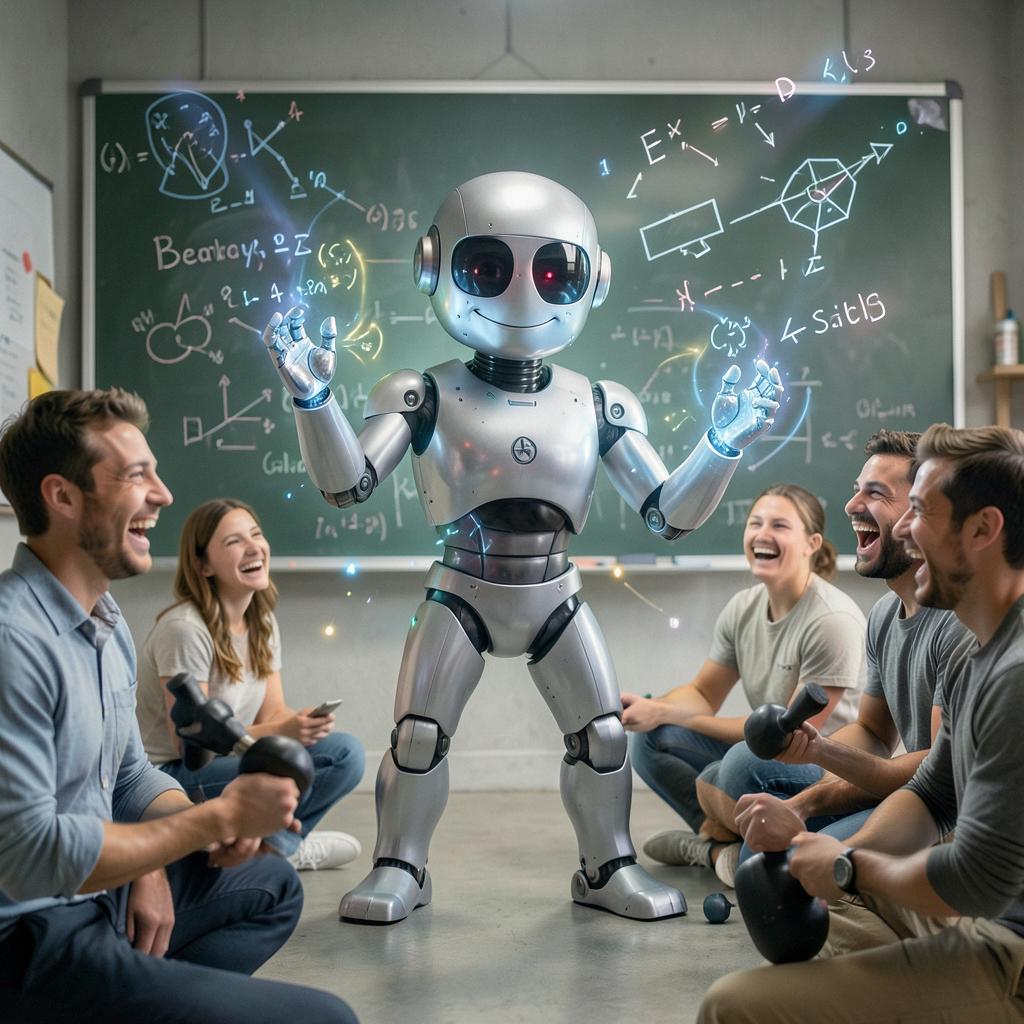
The 2026 RPTEL paper reports a 2x2 between-subjects factorial experiment (humor x question-asking type) with 116 Chinese university students randomized into four groups (n=29, 28, 29, 30), using an AI agent built on Doubao 1.5-Pro. Humor significantly improved perceived humor (F=20.669, η²=0.156), intrinsic motivation (F=17.597, η²=0.136), perceived agent value (η²=0.087), knowledge retention (F=5.367, p=0.022, η²=0.046), and positive emotion (η²=0.044), while reducing intrinsic cognitive load (F=4.018, η²=0.035). Question-asking type and all interactions were null .
Strengths: adequate power via G*Power, manipulation checks, validated scales (Cronbach's α 0.83–0.93), strong scoring reliability, disclosed funding (none), no competing interests, and honestly reported null results — a positive-integrity signal. Weaknesses: only immediate retention (no transfer or delayed test), voluntary learner engagement possibly attenuating question-type differences, single cultural/educational population, and small-to-medium effect sizes on actual learning outcomes (η²≈0.04–0.05) versus larger affective effects, suggesting humor's practical value may be motivational more than cognitive .
Citation profile and identity ambiguity
The dominant OpenAlex profile (h-index 10, 371 citations, 22 works) centers on electrocatalysis at Jiangsu University of Technology — heterojunction water splitting, zinc-air batteries, PET upcycling — with peak output in 2022 (182 citations that year) . A first-author 2025 PET-upcycling series (24 and 19 citations within ~a year) indicates an emerging independent research line . However, the humor paper belongs to an educational-psychology line, and OpenAlex shows at least four other "Xinjie Xie" profiles; a co-authored 2022 psychology paper (nurse mental fatigue, 31 citations) also maps to the same ID . BGPT inference: author-metrics attribution across these fields is uncertain; scores below weight the reviewed paper most heavily.
Blind spots
The humor paper's central causal claims rest on one lab-style online experiment; without pre-registration disclosure, delayed testing, or cross-cultural replication, generalizability is unproven. The null question-asking result could reflect manipulation dilution (voluntary participation) rather than a true absence of effect — a confound the authors acknowledge. Citation counts are inflated by year-2022 co-authorship clusters and may not reflect solo scientific impact.
Feedback:
Updated: October 04, 2026
BGPT Author Review
Scientific Quality
60%
Early-career, multidisciplinary. The humor experiment is methodologically sound for its scale (power analysis, validated instruments, manipulation checks, reliable scoring) but effect sizes on learning outcomes are small and only immediate retention is tested. The electrocatalysis record shows a productive co-authorship cluster (h=10, 371 citations) and an emerging first-author PET-upcycling line. Identity ambiguity across OpenAlex profiles prevents precise attribution; no major red flags beyond generalizability limits.
Communication Quality
70%
The paper reports hypotheses (H2-H8) mapped transparently to results, including nulls, with clear F statistics and effect sizes. Interpretation is measured and limitations are candidly discussed. Some density in the ANOVA reporting and reliance on adapted scales without full validation in this population slightly lowers clarity for non-specialists.
Author Novelty
70%
Testing dynamically LLM-generated humor (vs pre-scripted agent humor) against both cognitive-load and learning outcomes is timely and underexplored; most prior humor-instruction evidence used human instructors or scripted agents. The question-asking null adds useful boundary conditions. The electrocatalysis work is more incremental within a crowded heterojunction field.
Scientific Rigor
70%
Strong for an educational experiment: randomization, factorial design, power analysis, manipulation checks, high inter-rater reliability (r=0.95, kappa=0.79), and honest null reporting. Deductions: no pre-registration stated, no delayed/transfer tests, unmodeled moderators, voluntary engagement confound for question-type manipulation, single-country sample, and unclear author-profile identity.
We'll email you the results when your analysis is finished.
Hypothesis Graveyard
Humor improves learning purely via elevated positive affect: weakened here because positive emotion's effect size (η²=0.044) is no larger than retention's (η²=0.046), implying mediation is not simply affect-driven.
Open-ended questions outperform close-ended for deeper learning in dialogue: not supported in this AI-agent context, likely because fixed non-adaptive questioning plus voluntary answering neutralized the manipulation.

 Explore by Goal
 Quick Explanation
 Long Explanation
 Top Data Sources
 Ask a Follow-Up
 Key Insight
 Keep Exploring
 Hypothesis Graveyard
 Potential Experiments
 Discussion
