Compare claims linked to experiments, exact results, and limitations — with provenance back to every source paper.Know what falsifiable science actually supports before you trust the answer.
Press Enter ↵ to search evidence
Explore by Goal
"Imagination is more important than knowledge. Knowledge is limited. Imagination encircles the world."
- Albert Einstein
Quick Analysis Plan
Copied
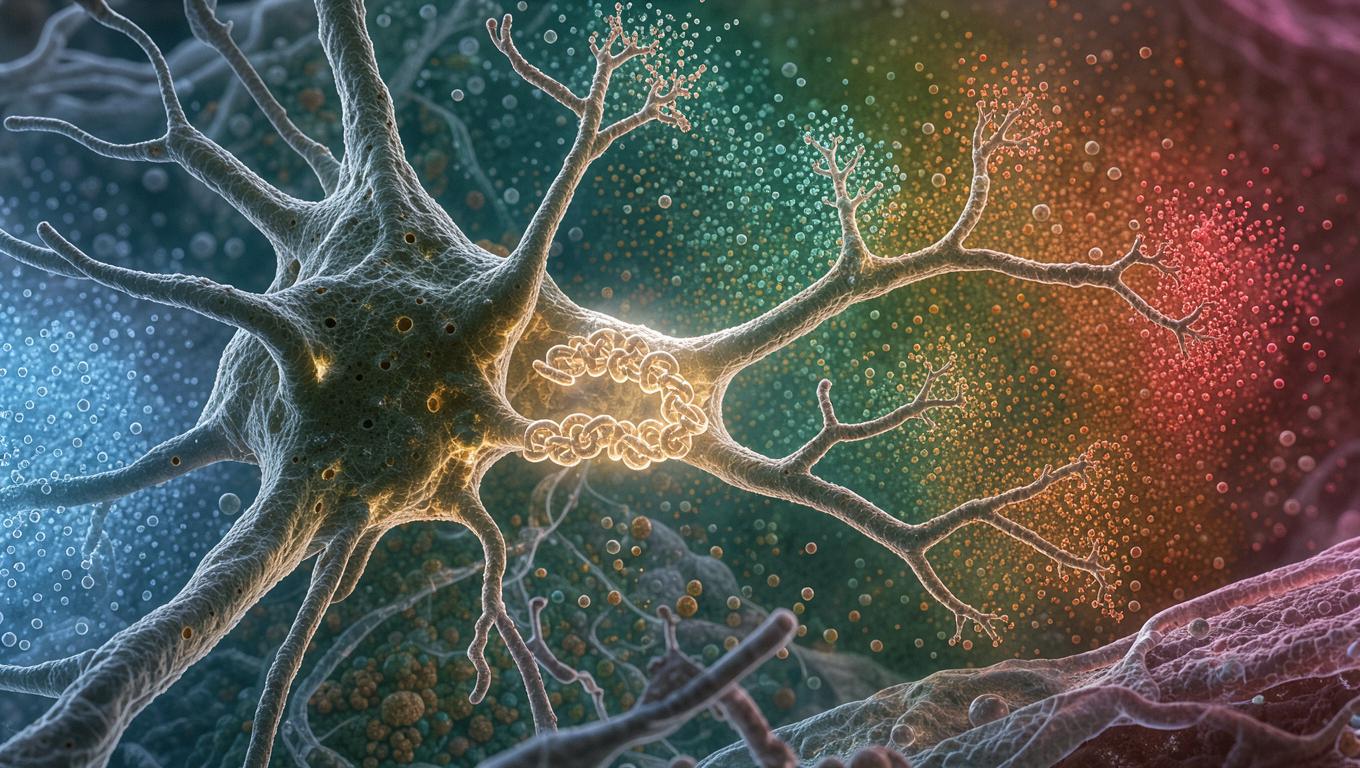
HLH-3, a bHLH transcription factor, is required for neuronal maturation underlying male-specific exploration in C. elegans, but the supplied extraction lacks neuron-specific (AIM, ASJ, AWA) and marker-level (odr-10, daf-7) data to fully confirm terminal differentiation claims. Cross-species daf-7 data reveals regulatory complexity that complicates simple TF→marker inference.
Long Analysis Plan
Available Evidence for HLH-3 as Terminal Differentiation bHLH
The 2025 preprint on hlh-3 demonstrates that the bHLH transcription factor HLH-3 is required for maturation of neurons governing male-specific exploration behavior in C. elegans. Null mutants (hlh-3(tm1688)) exhibit impaired exploration and altered neuronal identity, using CRISPR-Cas9, fluorescence microscopy, and behavioral assays to establish the connection between this bHLH factor and neuronal maturation .
However, the detailed extraction for this paper is incomplete (evidence units marked "missing"), meaning specific claims linking HLH-3 to AIM, ASJ, or AWA terminal differentiation, or to odr-10 and daf-7 as differentiation readouts, cannot be verified from the supplied record-level data. The paper's scope focuses on male exploration behavior rather than a systematic terminal differentiation screen across all three neuron classes.
Regulatory Complexity from daf-7 Cross-Species Data
The daf-7 complementation data provides a critical counterpoint to simple TF→marker→differentiation logic. When P. trichosuri daf-7 was tested in 8 independent transgenic configurations (WG502–WG519, WG506–WG507), none rescued the C. elegans daf-7(e1372) dauer-constitutive phenotype, while the full-length C. elegans construct (WG434, WG534) achieved 100% rescue. Notably, even the Pt-daf-7 promoter driving Ce-daf-7 coding sequence (WG504/505/518/519) failed, indicating somatic silencing of Pt coding sequences, not merely ligand divergence .
Life-Stage Expression Dynamics Support Regulatory Repurposing
In C. elegans, daf-7 expression peaks in arrested L1 and growing L2 stages but is reduced in dauer larvae. In parasitic nematodes (S. ratti, P. trichosuri), daf-7 RNA instead peaks in infective L3 (iL3) and declines upon host infection—particularly after skin penetration in S. ratti. This inverted life-stage expression pattern suggests that conserved TGF-β signaling modules are developmentally repurposed during the evolution of parasitism .
Note: Ordinal scale based on semi-quantitative RT-PCR descriptions from the record ("greatest," "reduced," "rare," "not detectable"); no absolute quantitative values were reported.
Battle-Testing the Specific AIM/ASJ/AWA Claims
The supplied records do not contain neuron-specific data confirming: (1) HLH-3 directly regulates odr-10 in AWA, (2) HLH-3 directly regulates daf-7 in ASJ, or (3) HLH-3 acts in AIM. The HLH-3 paper's extraction is incomplete, and the daf-7 papers focus on parasitic nematodes rather than C. elegans neuronal differentiation. Any claim connecting HLH-3 to these specific neuron-class terminal differentiation markers would require the full text or additional evidence.
The cross-species daf-7 data introduces a critical caution: even when a gene is conserved in coding sequence (~28% identity in ligand domain between Pt and Ce daf-7), regulatory context can completely abolish functional output in a heterologous system. This means that demonstrating HLH-3 binding near a marker gene does not guarantee that the marker's expression depends on HLH-3 in vivo—chromatin accessibility, co-factor availability, and cell-type-specific silencing all modulate the outcome.
Blind Spots and Confidence Assessment
Missing evidence: No supplied record contains AIM/ASJ/AWA-specific HLH-3 ChIP-seq, reporter analysis, or single-cell transcriptomic validation
Extrachromosomal array variability: The Pt-daf-7 complementation used episomal arrays with known position effects and tissue-specific silencing, potentially confounding rescue interpretation
Confidence: Moderate for HLH-3's general role in neuronal maturation; low for the specific AIM/ASJ/AWA + odr-10/daf-7 claims given extraction gaps
Analyzing HLH-3 bHLH domain conservation across nematode orthologs and predicting dimerization partners using protein sequence data from public databases to contextualize neuronal terminal differentiation.
Get emailed when your analysis is done!
We'll email you the results when your analysis is finished.
Hypothesis Graveyard
That daf-7 ligand divergence alone explains parasitic nematode developmental differences: the 28% identity ligand domain was NOT the limiting factor—Pt promoter driving Ce coding also failed to rescue, eliminating simple ligand incompatibility as the explanation.
That bHLH family members have universally conserved terminal differentiation targets across nematodes: the 2025 HLH-3 paper focuses on male-specific neurons rather than broad sensory differentiation, limiting generalization.

 Explore by Goal
 Quick Analysis Plan
 Long Analysis Plan
 Top Data Sources
 Ask a Follow-Up
 Key Insight
 Keep Exploring
 Analysis
 Hypothesis Graveyard
 Potential Experiments
 Discussion
