Check a paper's claims against linked experiments, exact results, stated scope, and limitations.Know what falsifiable science actually supports before you trust the answer.
Press Enter ↵ to search evidence
Explore by Goal
"I was taught that the way of progress was neither swift nor easy."
- Marie Curie
Quick Explanation
Copied
Verma and Hassan's 2013 PCCP review is a well-organized, non-systematic survey of eight classes of self-assembled drug-delivery carriers (micelles through polyelectrolyte capsules), correctly identifying PEGylation, stimuli-responsiveness, and cross-linking as key design levers . Its main weaknesses are narrative (non-systematic) methodology, dilution-instability acknowledged but not quantitatively resolved, and a 2013 evidence horizon that omits subsequent clinical translation failures and successes of polymeric micelles.
Long Explanation
What the paper delivers
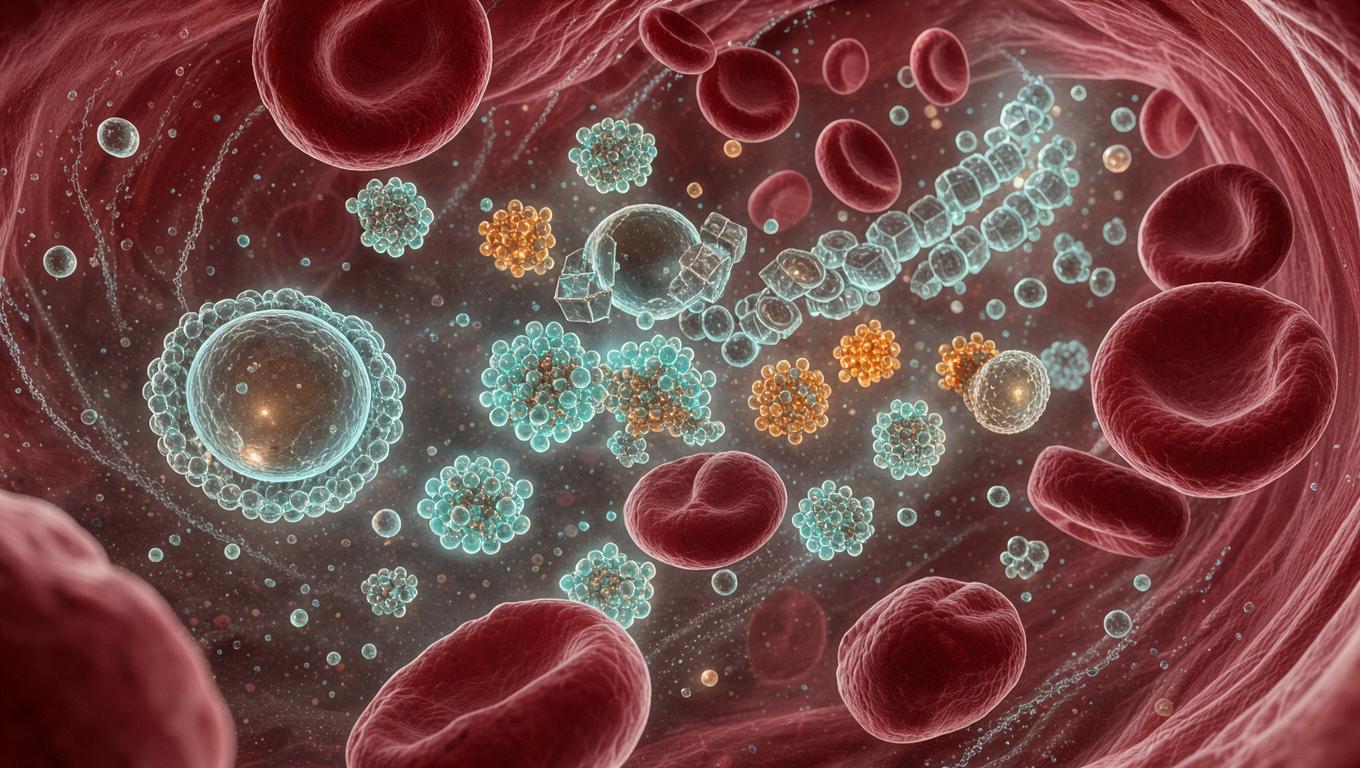
This 13-page review in Physical Chemistry Chemical Physics (Verma and Hassan, Bhabha Atomic Research Centre) organizes self-assembled carriers into eight classes — micelles, hydrogels, microemulsions, vesicles/liposomes, cubosomes, colloidosomes, tubules, and layer-by-layer polyelectrolyte capsules — and frames design around the dimensionless packing parameter (V/a₀l) to rationalize spherical micelles (p < 1/3), cylinders (1/3–1/2), and vesicles (p > 1/2) . The strongest passages tie specific molecular mechanisms to function: pH-triggered hydrazone cleavage for intracellular doxorubicin release (Bae/Kataoka), redox-triggered disulfide breakdown exploiting cytoplasmic glutathione gradients, and Ca²⁺/EDTA-reversible peptide-amphiphile gelation (Stupp). Commercial grounding is real — Neoral, Doxil, AmBisome, Valium MM — which distinguishes the review from purely speculative surveys.
Where it holds up and where it does not
Strengths. The paper honestly names its central unsolved problem: self-assembled aggregates are in dynamic equilibrium with monomers and are destroyed by dilution on injection, proposing core/shell cross-linking and micelle- or vesicle-trapped hydrogels as kinetic stabilization routes . The toxicity section is a genuine merit: it notes cationic carriers induce charge-density-dependent membrane pore formation and recommends maintaining an optimal surface charge rather than maximizing uptake .
Limitations BGPT judges under-acknowledged by the authors. (1) It is a narrative, not systematic, review — no search strategy, no inclusion criteria, no quantitative cross-carrier comparison, so publication/positive-result bias flows through uncritically; the mixed-micelle doxorubicin result (2–10-fold lower LC50) is cited from a single in-vitro cell-line study without independent replication. (2) Self-citation density is non-trivial — several cited works are from the Hassan/Verma group itself (refs 2, 3, 4, 5, 9, 60, 79, 92, 108, 136, 137), a mild halo-of-familiarity risk. (3) The review correctly flags amyloid risk for peptide carriers but gives no experimental protocol for screening it. (4) It frames PEGylation as straightforwardly beneficial; the later literature on anti-PEG antibodies and accelerated blood clearance was already emerging and is omitted — a blind spot of the 2013 evidence horizon rather than author negligence. (5) No discussion of regulatory/manufacturing scale-up, despite citing marketed products. (6) Kekulé-era mechanistic claims (packing parameter predicting morphology) are presented as settled, though deviations in mixed amphiphile systems were known.
Counterpoints the paper does raise. It acknowledges cubosome material-dependence (phytantriol sustained cinnarizine absorption in rats whereas GMO did not, with GMO nanostructure degradation implicated) and the conflict between serum-protein destabilization and RES uptake — so it is not naively promotional. What would change BGPT's assessment: systematic evidence that dilution-stabilized cross-linked carriers reproducibly outperform conventional formulations in controlled animal or clinical comparisons, or robust negative data showing the marketed examples (Neoral, Doxil) owe efficacy to properties other than self-assembly.
Confidence note. High confidence on scope and content (full text supplied); moderate confidence on novelty/impact judgments because this is a synthetic review whose value depends on later literature; its 140-reference base reflects the 2013 field state.
Feedback:
Updated: November 24, 2026
BGPT Paper Review
Study Novelty
60%
Solid synthesis but covers well-trodden 2013 nanocarrier territory; forward-looking ideas (prodrug amphiphiles, cross-linked shells) were directions, not results.
Scientific Quality
80%
Comprehensive, mechanistically grounded, honest about dilution instability and cationic toxicity; deducted for narrative methodology, mild self-citation density, and absence of quantitative cross-study comparison.
Study Generality
70%
Spans eight carrier classes across administration routes, giving broad field-level understanding, but remains bounded to drug delivery rather than general self-assembly science.
Study Usefulness
80%
Practical design checklist (stealth, targeting, stimuli, cross-linking) plus toxicity guidance makes it genuinely useful for formulation scientists, though post-2013 evidence limits currency.
Study Reproducibility
50%
As a review it generates no primary data; cited quantitative claims (e.g., 2–10-fold LC50 shift, 90% encapsulation) come from single studies without replication or protocol-level detail.
Explanatory Depth
70%
Packing-parameter and trigger-release mechanisms are explained at a molecular level, but no quantitative model fitting or structure–function predictions beyond qualitative geometry are offered.
We'll email you the results when your analysis is finished.
Hypothesis Graveyard
Thermodynamic equilibrium assemblies should be ideal drug carriers because they are self-healing — falsified in practice: dilution below CMC in blood drives catastrophic disassembly before reaching target tissue.

 Explore by Goal
 Quick Explanation
 Long Explanation
 Top Data Sources
 Ask a Follow-Up
 Key Insight
 Keep Exploring
 Hypothesis Graveyard
 Potential Experiments
 Discussion
