Check each claim against its linked experiments, results, and falsification criteria.Know what the science actually supports before you trust the answer.
Press Enter ↵ to check claims
Explore by Goal
"The beauty of a living thing is not the atoms that go into it, but the way those atoms are put together."
- Carl Sagan
Quick Explanation
Copied
This 2016 JVI paper reports the first evidence that DENV NS5 dynamically accumulates in the nucleolus in a reversible, extracellular-pH-sensitive manner, mapping a pH-sensitive nucleolar targeting region to residues 1–244 with hydrophobic residues Leu-165, Leu-167, and Val-168 being essential and their mutation severely attenuating viral growth .
Long Explanation
Core Finding and Evidence
Fraser, Rawlinson, Heaton, and Jans (Monash University; JVI, published 13 April 2016) document that the dengue virus (DENV) polymerase NS5 accumulates within the nucleolus of infected cells and can target GFP to the nucleolus of live transfected cells. The central novelty is that NS5 exchange between nucleus and nucleolus is rapidly and reversibly modulated by extracellular pH — behavior not seen for GFP alone or other nucleolar/non-nucleolar control proteins. The minimal pH-sensitive nucleolar targeting region (pHNTR) was mapped to NS5 residues 1–244, and mutation of hydrophobic residues Leu-165, Leu-167, and Val-168 abolished pHNTR function in transfected cells and severely attenuated DENV growth in infected cells .
Critical Analysis and Context
Interpretive caution: The authors interpret the pH response as DENV "detecting" its extracellular environment, but the mechanistic link between extracellular pH, intracellular nucleolar accumulation, and viral fitness remains inferential. The role of the nucleolus in DENV replication is undefined here. Independent work shows NS5 nuclear localization does not strictly correlate with efficient viral RNA replication or interferon antagonism — mutations in the α/β NLS that abolish nuclear accumulation can leave replication at wild-type levels, while residues 401–402 (in the RdRp domain) reduce replication ~50,000-fold via impaired polymerase activity rather than mislocalization . This raises the possibility that the L165/L167/V168 growth attenuation reflects disruption of NS5 folding, stability, or polymerase-domain conformation rather than nucleolar targeting per se — a confound the paper does not fully exclude.
Strengths: Live-cell imaging with appropriate nucleolar and non-nucleolar controls, reversibility testing, residue-level mapping, and functional validation in infected cells. Limitations: Cell-culture-only; no in vivo validation; single serotype/strain focus; extracellular pH manipulation (a non-physiological experimental perturbation in many tissue contexts) may not reflect host physiology. Later host-factor work shows NS5 behavior is heavily shaped by host PTM machinery (e.g., ZNF33B-driven SUMOylation stabilizing JEV NS5) , suggesting pH-modulated trafficking is one of several regulatory layers — and that overexpression/transfection artifacts (GFP fusion vs. authentic NS5 in replication complexes) deserve scrutiny.
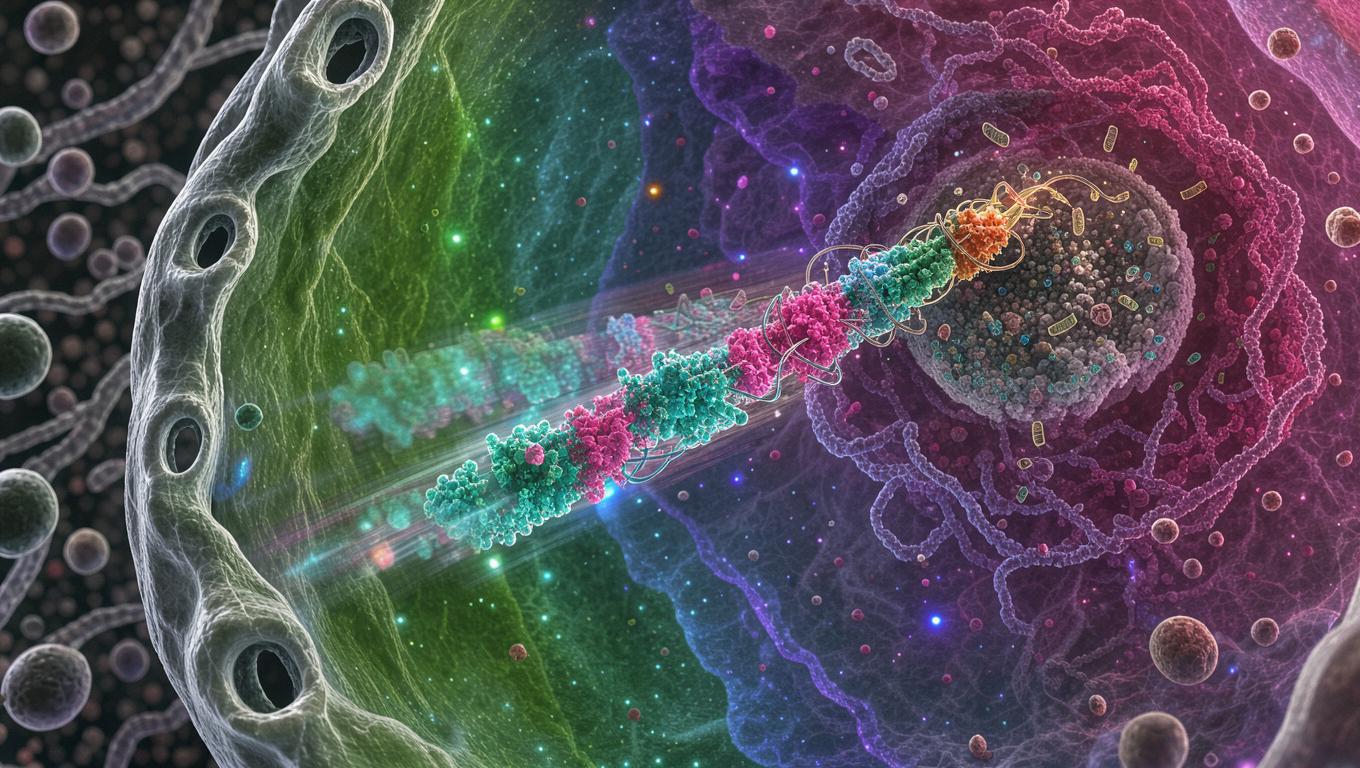
The figure above contextualizes why localization-function claims in NS5 require caution: in the DENV-2 system, mutations with the most dramatic replication defects (401–402, ~50,000-fold) mapped to the RdRp catalytic region, not the classical NLS, while NLS-disrupting mutations spared replication . A pHNTR mutation's effect on growth could similarly be enzymatic rather than trafficking-related.
What Would Change the Conclusion
Disproof would come from: (1) rescue of pHNTR-mutant growth by altering nucleolar targeting without restoring WT NS5 sequence; (2) demonstration of physiological pH shifts in infected tissues that reversibly redistribute NS5 in vivo; (3) confirmation that hydrophobic-residue mutants fold and polymerize normally yet lose nucleolar accumulation. NS5's catalytic properties are otherwise well-characterized biochemically , providing good tools for such dissection. Overall confidence in the localization observations is high; confidence in the mechanistic interpretation (pH-sensing as a viral function) is moderate.
Feedback:
Updated: November 01, 2026
BGPT Paper Review
Study Novelty
70%
First demonstration of extracellular-pH-modulated nucleolar targeting of a viral protein — a genuinely novel trafficking observation — though flavivirus NS5 nucleolar/nuclear localization was already studied, so conceptual novelty is incremental-to-substantial rather than paradigm-breaking.
Scientific Quality
70%
Solid cell-biology methodology with controls, reversibility, and functional mutagenesis; main weakness is that growth attenuation of hydrophobic mutants may reflect folding/polymerase defects rather than nucleolar targeting, and no in vivo validation. No fabricated data or prompt injections detected in the supplied text.
Study Generality
50%
Findings are DENV-NS5-specific; whether pH-sensitive nucleolar trafficking generalizes to other flaviviruses or viral proteins was not tested, limiting broad conceptual gain.
Study Usefulness
70%
Identifies specific residues and a trafficking phenotype that could guide antiviral target discovery and probes virus-environment sensing; usefulness tempered by unvalidated mechanistic role of nucleolar NS5 in replication.
Study Reproducibility
70%
Standard imaging, mutagenesis, and infection assays with defined constructs and residues; reproducible in principle, but reliance on GFP fusion/transfection systems and absence of quantitative detail in the supplied text lower certainty.
Explanatory Depth
60%
Residue-level mapping of the pHNTR is a concrete mechanistic advance, but the molecular mechanism by which extracellular pH alters NS5 nucleolar partitioning (protein conformation? binding partners? import/export receptor pH dependence?) remains unexplained.
Mapping DENV NS5 residues 165–168 onto its polymerase domain structure to assess whether pHNTR hydrophobic mutations risk structural disruption versus specific nucleolar tethering loss.
Get emailed when your analysis is done!
We'll email you the results when your analysis is finished.
Hypothesis Graveyard
'NS5 nuclear localization is required for replication' — falsified by NLS-mutant data showing wild-type replication with minimal nuclear NS5 (JVI 2013), so nucleolar targeting is unlikely to be essential either.
'pH effect reflects GFP fusion artifacts' — partially deflated by pH response also being observed in infected cells with authentic NS5, though fusion-specific artifacts remain unexcluded for transfected constructs.

 Explore by Goal
 Quick Explanation
 Long Explanation
 Top Data Sources
 Ask a Follow-Up
 Key Insight
 Keep Exploring
 Analysis
 Hypothesis Graveyard
 Potential Experiments
 Discussion
