Why BGPT?
logo

Review papers with raw data transparency

Quickly verify claims by accessing the underlying experimental data and figures.


Press Enter ↡ to solve


    Fuel Your Discoveries


     Quick Explanation


    Paper review (docking + protein modeling overview)
    The article is a mostly didactic review that summarizes docking workflows, common software (e.g., AutoDock Vina, Swiss Model, AlphaFold), and includes a small docking example (WR1 vs SARS‑CoV‑2 main protease 2OP9) with reported affinity/RMSD table values drawn from its own workflow.


     Long Explanation


    Paper: β€œComputational Approaches to Molecular Docking and Protein Modeling in Drug Discovery”
    Status: Review article with a small illustrative docking/prediction example; no new experimental validation is presented in the provided full text.
    Primary source:
    1) Conceptual workflow emphasized by the review
    The paper’s central narrative is: (i) prepare ligand/receptor files, (ii) define grid boxes and docking region, (iii) run docking with a scoring function and rank poses, and (iv) (optionally) use protein structure prediction tools (Swiss Model, AlphaFold) when experimental structures are unavailable.
    Diagram purpose: structure the review’s described steps; it is not a quantitative model.
    2) Figures extracted from the paper’s example docking table (WR1 vs SARS‑CoV‑2 2OP9)
    The paper reports a docking output table for WR1 docked to SARS‑CoV‑2 main protease (PDB 2OP9), listing per-mode affinity (kcal/mol) and RMSD lower/upper bounds in Γ….
    Note: Docking β€œRMSD” values depend on the particular protocol and definition of reference pose(s). The review text treats β€œmore negative affinity” as stronger binding and links RMSD inversely to affinity; such interpretations depend on docking/scoring design and should be validated experimentally.
    3) Scientific rigor & where the review is strong vs weak
    What the review does well
    • Clear high-level workflow framing (ligand/receptor preparation β†’ docking setup β†’ pose ranking β†’ visualization) consistent with how docking studies are typically organized, and the paper provides a concrete step list for conversion/prep and grid-box formation.
    • Correct directionality that AlphaFold-like structure prediction can supply structures when experimental structures are absent, and that docking can be integrated afterward in a pipeline narrative.
    Key weaknesses / red flags
    • Limited methodological transparency for the included docking example: the review provides affinity and RMSD bounds, but not enough detail (e.g., full Vina config, grid dimensions/centering, exhaustiveness, number of modes, ligand protonation/tautomer choice, receptor state) to assess reproducibility.
    • Over-interpretation risk: the review treats docking energies/RMSD as proxies for binding affinity/biological inhibition without discussing scoring-function failure modes and the importance of flexibility/ensemble treatment. Docking accuracy is known to degrade when ligand flexibility is high or when protein conformations are inadequate (e.g., using apo or averaged structures).
    • Receptor flexibility under-emphasized: while the review mentions β€œflexible docking”, it does not clearly connect the practical need for receptor ensembles (multiple conformations) to improve pose prediction. Ensemble docking work shows protein structural variations can materially affect docking success compared with single-structure approaches.
    Technical content that is directionally correct (but needs tightening)
    • The paper describes rigid vs flexible docking conceptually and also distinguishes blind vs active-site/specific docking.
    • It lists widely used docking and preparation/visualization tools (AutoDock Vina, Open Babel, PyMOL, ChimeraX, Discovery Studio).
    However, several statements in the provided text appear oversimplified (e.g., rigid/flexible definitions and docking mechanics described in a high-level way) and are not connected to the nuanced accuracy/conditioning literature that exists.
    4) Biases, blindspots, and β€œknown unknowns”
    • Proxy validity problem: docking affinity/scoring is not identical to experimental binding free energy, and RMSD is protocol-dependent. The review does not sufficiently bracket this limitation when interpreting docking results biologically.
    • Conformational sampling: docking performance is sensitive to ligand flexibility and protein conformation states; without ensemble/explicit flexibility treatment, accuracy can drop substantially.
    • Over-reliance on β€œbest pose”: selecting a single top-ranked docking mode can be misleading if the pose-ranked energies do not correlate with true binding. Ensemble docking literature suggests that multiple conformations/structures can improve binding-mode prediction success rates.
    • Review-era knowledge lag / coverage: the review is dated mid-2025, but does not clearly distinguish which docking/protein-modeling improvements are state-of-the-art vs older baseline methods, nor does it quantify comparative performance across tools. (This is an information-quality limitation rather than a falsifiable empirical claim.)
    5) How to improve this review (actionable revisions)
    1. Add a β€œlimitations & validity” box that explicitly ties: (a) ligand/protein flexibility sensitivity (cite ) to (b) what the review does/doesn’t address in its example workflow.
    2. Make the example reproducible: publish docking parameter settings (grid center/size; exhaustiveness; number of output poses; protonation/tautomer handling; receptor preparation rules) because the current text does not provide enough to replicate the reported modes.
    3. Use a benchmarking framing: for claims about β€œbetter predictions”, require either (i) benchmark citations with metrics or (ii) explicit acknowledgment that the paper’s included example is illustrative, not comparative.
    4. Separate β€œpose prediction” vs β€œbinding affinity prediction”: include a caution that scoring functions are approximations and correlations with experimental Ξ”G are not guaranteed, and recommendβ€”at minimumβ€”orthogonal validation (e.g., ensemble docking, or physics-based post-processing), while keeping the review non-prescriptive.
    5. Strengthen citations: replace low-specificity internet citations and generic statements with primary docking methodology papers and/or well-known review benchmarks where possible.
    Evidence note: This critique uses only information explicitly present in the provided full text plus the cited methodological papers included above. Where the review’s own text is silent (e.g., parameters), that absence is treated as a limitation rather than filled with assumptions.


    Feedback:   

    Updated: March 24, 2026


    BGPT Paper Review


    Study Novelty

    30%

    The work is a general review of molecular docking and protein modeling workflows; the novelty is mainly in how it aggregates tools and presents an illustrative example, not in introducing new docking/ML methods or new datasets beyond the described example.


    Scientific Quality

    60%

    Moderate scientific quality: the workflow descriptions and tool lists are coherent, but the included docking example lacks sufficient parameter transparency for strict reproducibility and the review’s interpretation of docking outputs relies on proxies without adequately bracketing known failure modes (flexibility/sampling dependence).


    Study Generality

    80%

    The review targets broadly applicable concepts (docking types, preparation steps, common tools, and protein modeling pipelines) that are general to many structure-based drug discovery contexts.


    Study Usefulness

    70%

    Useful as a structured learning/overview artifact: it enumerates tools and steps for typical docking/protein-modeling pipelines and provides a compact example table (WR1 vs 2OP9).


    Study Reproducibility

    40%

    As a review, it is not fully reproducible in the sense of generating the exact example outcomes; key simulation/protocol parameters for the docking run are not fully specified in the provided full text excerpt, limiting exact replication.


    Explanatory Depth

    60%

    The explanation is mainly conceptual and procedural; it does not deeply connect the review’s claims to known mechanistic reasons for docking score/pose errors (e.g., flexibility sampling). External literature indicates docking accuracy depends on ligand/protein flexibility and conformational state, but the review does not integrate this as a core interpretive framework.


    🎁 Authors: Collect 48 Free Science Tokens (β‰ˆ $4.8 USD)

    Claim My Author Tokens

    Use for 12 days of free BGPT access (4 tokens = 1 day) or trade/sell (β‰ˆ $4.8 USD)

     Top Data Sources ExportMCP


     Analysis Wizard


    Extract the WR1 2OP9 mode affinity and RMSD table from the review text, plot affinity vs mode and RMSD-bounds vs mode, and export figures for comparing pose-ranked consistency.


     Potential Experiments


    N/A


    N/A

     Science Art


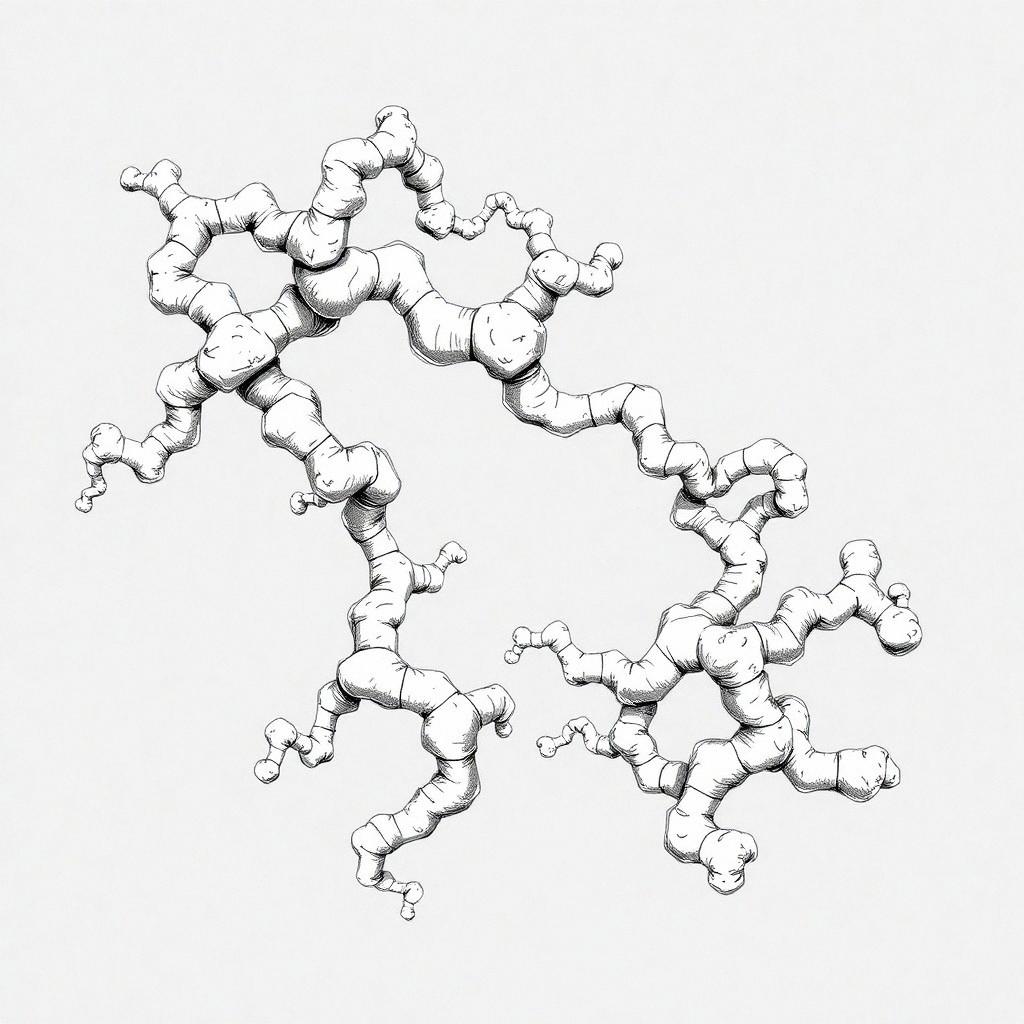
    Paper Review: Computational Approaches to Molecular Docking and Protein Modeling in Drug Discovery Science Art

     Science Movie


    Make a narrated HD Science movie for this answer ($32 per minute)


     Discussion


    Get Ahead With Science Insights

    Custom summaries of the latest cutting edge Science research. Every Friday. No Ads.


    My BGPT