Why BGPT?
logo

Review papers with raw data transparency

Quickly verify claims by accessing the underlying experimental data and figures.


Press Enter ↵ to solve



    Fuel Your Discoveries


     Quick Answer


    Concise critique — Gomazkov (2024)

    This narrative review argues that immune dysregulation—antigen persistence, innate/adaptive discord, endothelial dysfunction and autoimmunity—drives post‑COVID syndrome (PCS). Strength: wide mechanistic synthesis and up‑to‑date citations; Weaknesses: non‑systematic search, no new data, possible selection bias and limited methodological transparency ().


     Long Answer


    Visual, evidence‑first review: "Pathogenesis of Post‑Covid Syndrome. The Key Role of the Immune System" — Gomazkov 2024

    Quick visual summary (scores from paper metadata)

    What Gomazkov claims (short bullets, each supported below)

    • Immune dysregulation (discordant innate/adaptive responses) is central to PCS.
    • Persistence of viral antigen (S1, N) in tissues or cells helps sustain inflammation and symptoms.
    • Endothelial dysfunction, microcirculatory disturbance and coagulopathy amplify multi‑organ damage.
    • Autoantibodies and autoreactive B/T responses contribute to heterogeneous phenotypes.
    • Biomarker panels and immune phenotyping should guide personalized therapy.

    Representative primary/secondary evidence Gomazkov cites (selected, with concise extracts)

    Critical appraisal — strengths and limitations (evidence‑first)

    Strengths
    • Timely integration of literature linking antigen persistence, immune signatures and endotheliopathy to PCS ().
    • References include mechanistic and cohort studies (Phetsouphanh 2022; Swank 2023; Espín 2023) supporting persistent immune activation and antigen signals ().
    Limitations / blindspots
    • No systematic review protocol or search strategy reported -> selection bias risk and unknown sensitivity/specificity of included evidence ().
    • Heterogeneity of cited studies (serum vs plasma, different assays, timepoints, cohorts) complicates causal inference; Gomazkov notes persistence but the literature often cannot distinguish RNA/antigen fragments from replication‑competent virus (Cevik 2021) ().
    • Some mechanistic links (e.g., spike in extracellular vesicles causing broad immune evasion) are plausible but still debated; evidence strength varies between cohort, proteomic and cell-model studies (Swank 2023; Troyer 2021) ().

    How Gomazkov's synthesis matches high‑quality recent findings

    High‑quality cohort and mechanistic papers converge on a multi‑pathway model: (A) in a subset of patients, persistent antigen or viral fragments (anti‑N/anti‑S kinetics differ between PCC and recovered cohorts) are measurable and associate with PCS; (B) immune signatures (persistent innate activation, altered T/B subsets, cytokine triads IL‑1β/IL‑6/TNF) are reproducible across cohorts; (C) endothelial/complement/coagulation activation shows repeated signal in proteomics cohorts. Gomazkov correctly centers the immune system but overstates generality without subgroup stratification ().

    Practical implications and where evidence is strong vs weak

    • Strong evidence (moderate–strong): immune alterations persist in a subset of patients and correlate with symptoms; antigen persistence measurable in subgroups; complement/endothelial signals repeatedly appear in proteomics/cohort studies ().
    • Weaker / contested areas: universal antigen persistence as the single cause of PCS (many patients lack detectable spike/N despite symptoms), direction of causality (immune dysregulation could be both cause and effect), and which interventions reliably alter long‑term outcomes ().

    Visual: frequency of key mechanistic themes in Gomazkov's narrative (derived from paper text & reference topics)

    Note: the pie encodes narrative emphasis in the review (how often themes and supporting citations appear), not quantitative patient data; used only to visualise the review's focus and to show how the author prioritises mechanisms.

    Falsifiability: what would refute Gomazkov's central claim?

    1. Large, prospective cohorts showing that PCS incidence and severity are unrelated to persistent antigen detection or persistent immune signatures after adjusting for confounders would contradict antigen/immune‑centric causality ().
    2. Randomized immunomodulatory interventions that suppress the reported immune signatures but do not change PCS clinical outcomes would challenge immune‑driven causation.

    Concrete recommendations for improved science & for clinicians reading Gomazkov

    • Use prospective, pre‑specified cohort designs with standardized specimen types (EDTA plasma vs serum) and harmonized assays to reduce interstudy heterogeneity ().
    • Attempt stratification early: identify antigen‑positive vs antigen‑negative PCS subgroups and report results separately — this will clarify which mechanisms apply to which patients.
    • Avoid overgeneralization: label conclusions per subgroup and state explicitly where evidence is weak or correlative.

    Bottom line (short)

    Gomazkov provides a concise, up‑to‑date narrative arguing that immune dysregulation and antigen persistence are central to PCS. This is consistent with multiple cohort and mechanistic studies, but the review's narrative (non‑systematic) design, interstudy heterogeneity, and incomplete attention to null/contradictory data lower its evidentiary weight. The review is useful as a synthesis and hypothesis generator but should not be taken as definitive proof of a single, universal PCS mechanism ().


    Feedback:   

    Updated: March 07, 2026

    BGPT Paper Review


    Study Novelty

    60%

    Gomazkov synthesizes contemporary hypotheses (antigen persistence, immune dysregulation, endotheliopathy) that were already emerging in 2021–2023; the review's novelty is moderate because it integrates recent work but does not present new mechanisms or data.


    Scientific Quality

    70%

    Quality is intermediate: accurate citation of relevant literature and plausible mechanistic linking, but lacks a pre-specified search strategy, no methods for study selection, and possible selection bias from narrative format—these reduce reproducibility and systematic strength.


    Study Generality

    70%

    The review covers multi‑organ and multi‑mechanism phenomena and therefore is broadly generalizable conceptually, but clinical heterogeneity of PCS limits direct generalization to all patient subgroups without stratification.


    Study Usefulness

    70%

    Useful as a synthesis and hypothesis generator for clinicians and researchers (identifies biomarkers and pathways), but limited for guiding definitive interventions because it lacks graded evidence and subgroup‑specific recommendations.


    Study Reproducibility

    60%

    Reproducibility limited because no systematic search or methods are given; readers cannot reproduce literature inclusion; claims rely on external primary studies whose reproducibility varies by field and assay.


    Explanatory Depth

    80%

    Provides deep mechanistic narrative (innate/adaptive discord, antigen persistence, endothelial/coagulation interplay, autoimmunity) and cites mechanistic and cohort studies, giving relatively high explanatory depth for a narrative review.


    🎁 Authors: Collect 197 Free Science Tokens (≈ $19.7 USD)

    Claim My Author Tokens

    Use for 49 days of free BGPT access (4 tokens = 1 day) or trade/sell (≈ $19.7 USD)

     Top Data Sources ExportMCP


     Analysis Wizard


    Preparing longitudinal serology and proteomics alignment scripts to test whether anti‑N kinetics and complement markers jointly predict PCS status in cohort datasets cited (e.g., Virus Watch, proteomics cohorts).


     Hypothesis Graveyard


    Universal antigen persistence as the sole cause of PCS — falsified by cohorts showing PCS without detectable spike/antigen but with immune/cognitive symptoms, indicating multiple mechanisms.


    PCS entirely psychosomatic — inconsistent with objective biomarker changes (persistent cytokines, altered cell subsets, proteomic endothelial signals) observed in multiple cohorts, so pure psychologization does not explain all PCS.

     Science Art


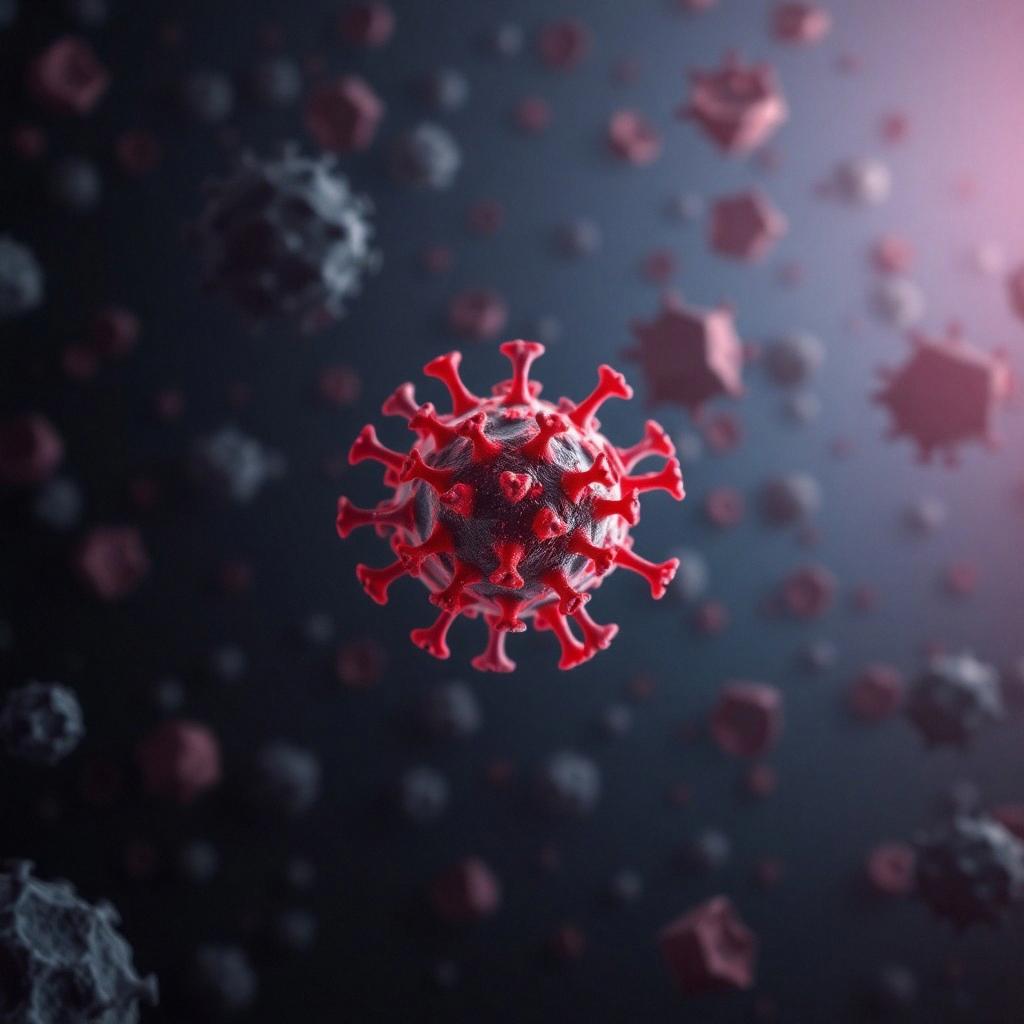
    Paper Review: Pathogenesis of Post-Covid Syndrome. The Key Role of the Immune System Science Art

     Science Movie


    Make a narrated HD Science movie for this answer ($32 per minute)


     Discussion


    Get Ahead With Science Insights

    Custom summaries of the latest cutting edge Science research. Every Friday. No Ads.


    My BGPT