See how your reported results read as versioned evidence records — linked to experiments and limitations.Know what the science actually supports before you trust the answer.
Press Enter ↵ to review claims
Explore by Goal
"The most beautiful experience we can have is the mysterious. It is the fundamental emotion that stands at the cradle of true art and true science."
- Albert Einstein
Quick Explanation
Copied
Scope check: With the data provided, BGPT can only evaluate scientific profile (topic breadth, methods implied by titles, and impact proxies like citation counts per year) — not validate conclusions from specific full-text experiments.
Long Explanation
Author Review — Graciela Castro-Escarpulli
Evidence-grounded critique of scientific strength using only the information provided in this prompt (titles + OpenAlex-like impact timeline + a few DOI-linked exemplar works).
Important limitation (skeptical, methodological): The prompt provides paper titles and bibliometric signals, but not full experimental results. Therefore, claims about what was actually found are not possible here. Where I discuss biology/methods, I infer only what is directly suggested by the title (and I flag uncertainty).
1) Impact over time (proxy: citations per year)
Raw values were taken from the provided OpenAlex record fragment: counts_by_year[].cited_by_count.
2) Research footprint (what the titles strongly suggest)
Based only on the provided titles (no full-text), the author appears to work heavily on:
Virulence mechanisms & secretion systems (e.g., type III secretion system in Aeromonas; outer membrane vesicles).
Host–microbe ecology signals (e.g., microbiota collapse titles; dysbiosis/IBD titles; COVID-19/VAP airway samples as described in titles).
CRISPR/Cas biology in bacteria (CRISPR/Cas system typing/analysis, plus bioethics editorial).
Uncertainty note:
Title-based inference can mislead (e.g., a “review” may not include new experiments; some items may be computational-only; some are edited/proceedings). I therefore treat these as likely thematic areas, not confirmed results.
3) Exemplars with DOIs (impact-quality cross-check)
Below are a few DOI-linked works from the provided dataset that help anchor discussion in verifiable bibliographic records.
Outer membrane vesicles (review):
Complete type III secretion system (primary molecular genetics):
Breadth without obvious incoherence: titles cluster around bacterial genomics/epidemiology, resistance/virulence, and molecular mechanisms (especially Aeromonas and secretion/vesicle themes).
Mechanistic-molecular touch points: at least some works appear to be sequence/genetic characterization rather than purely phenomenological description (e.g., “complete TTSS” title).
Translation across scales: pathogen ecology → molecular determinants → outbreak/clonal dispersion signals (again inferred from titles).
What remains unverified from the provided data:
Reproducibility details (controls, replicates, statistical tests, contamination control for sequencing, blinding in clinical sampling).
Effect sizes & uncertainty (confidence intervals, model assumptions, multiple-testing corrections).
Causal claims vs correlational claims (common issue in microbiome and observational titles).
Common blind spots to check in full texts:
Sampling bias (geography/time/site selection for clinical isolates; hospital unit clustering; animal host differences).
Batch effects in high-throughput sequencing or RT-PCR panels.
Interpretation bias (equating detection of genes with functional expression; overfitting in “network reconstruction” or pan-genome interpretations).
Publication bias: highly cited works may reflect easier-to-detect questions or stronger narratives, not necessarily stronger mechanistic grounding.
5) Visual “impact shape” summary
Using the provided yearly cited-by counts, I compute concentration and skew (proxy metrics only).
Interpretation caution: these are citations aggregated by publication year as provided in the snippet; they are not a per-paper normalization and may conflate publication count, venue visibility, and topic salience.
6) What would most improve confidence (disconfirming targets)
The fastest way to verify whether the author’s science is truly strong (not just broadly productive or thematically popular) is to inspect full texts for:
Whether “virulence genes/secretion/OMVs” findings use functional assays versus detection-only pipelines.
Whether observational microbiome/clinical-phase work uses robust controls for batch effects, contamination, and confounding.
Whether “network reconstruction/pan-genome/regulatory network” claims include validation (e.g., held-out data, orthogonal evidence) rather than purely inferred edges.
Whether CRISPR/Cas analyses include experimental corroboration (or explicitly limit to computational inference).
Feedback:
Updated: April 28, 2026
BGPT Author Review
Scientific Quality
60%
Strengths: consistent clustering around bacterial pathogens, resistance/virulence, and genomics/molecular mechanism themes suggested by titles; some exemplars imply sequence/genetic characterization (e.g., complete secretion system) and influential review work. Weaknesses: this prompt lacks full-text methods/results, so I cannot verify rigor (controls, blinding, stats, functional validation) or reproducibility. Citation/timeline is a proxy that can be biased by venue/topic; titles can mislead (review/editorial/proceedings/computational-only).
Communication Quality
60%
Likely competent given broad publication output across topics, but the prompt provides no abstracts, figures, or writing samples to assess clarity, structure, and precision of claims. Title-level labeling is insufficient to judge communication quality.
Author Novelty
50%
Thematic focus (CRISPR/Cas, HGT, secretion/vesicles, microbial epidemiology) suggests engagement with ongoing research areas rather than demonstrably new paradigms from the provided snippet alone. Without full-text novelty statements and methodological advances, novelty cannot be confirmed.
Scientific Rigor
50%
Rigor cannot be evaluated directly because full experimental details are missing. However, some titles imply molecular characterization (potentially rigorous sequence/genetic work), while observational/omics titles often require careful confounder control—unknown here.
If full-text genomes are available, it will extract Aeromonas loci, quantify HGT/CRISPR signatures, and visualize secretion/OMV-linked gene neighborhood enrichment across strains’ ecotypes.
Get emailed when your analysis is done!
We'll email you the results when your analysis is finished.
Hypothesis Graveyard
“OMVs are always a dominant driver of virulence across all conditions.” Likely too strong; many OMV phenotypes are context-dependent and can be a correlated marker rather than a primary causal driver.
“CRISPR absence directly causes higher resistance.” Plausible but simplistic; resistance can arise via other mobile elements, and CRISPR effects depend on spacer targets, interference strength, and ecological context.
Science Art
Science Movie
Make a narrated HD Science movie for this answer ($32 per minute)

 Explore by Goal
 Quick Explanation
 Long Explanation
 Ask a Follow-Up
 Key Insight
 Analysis
  Hypothesis Graveyard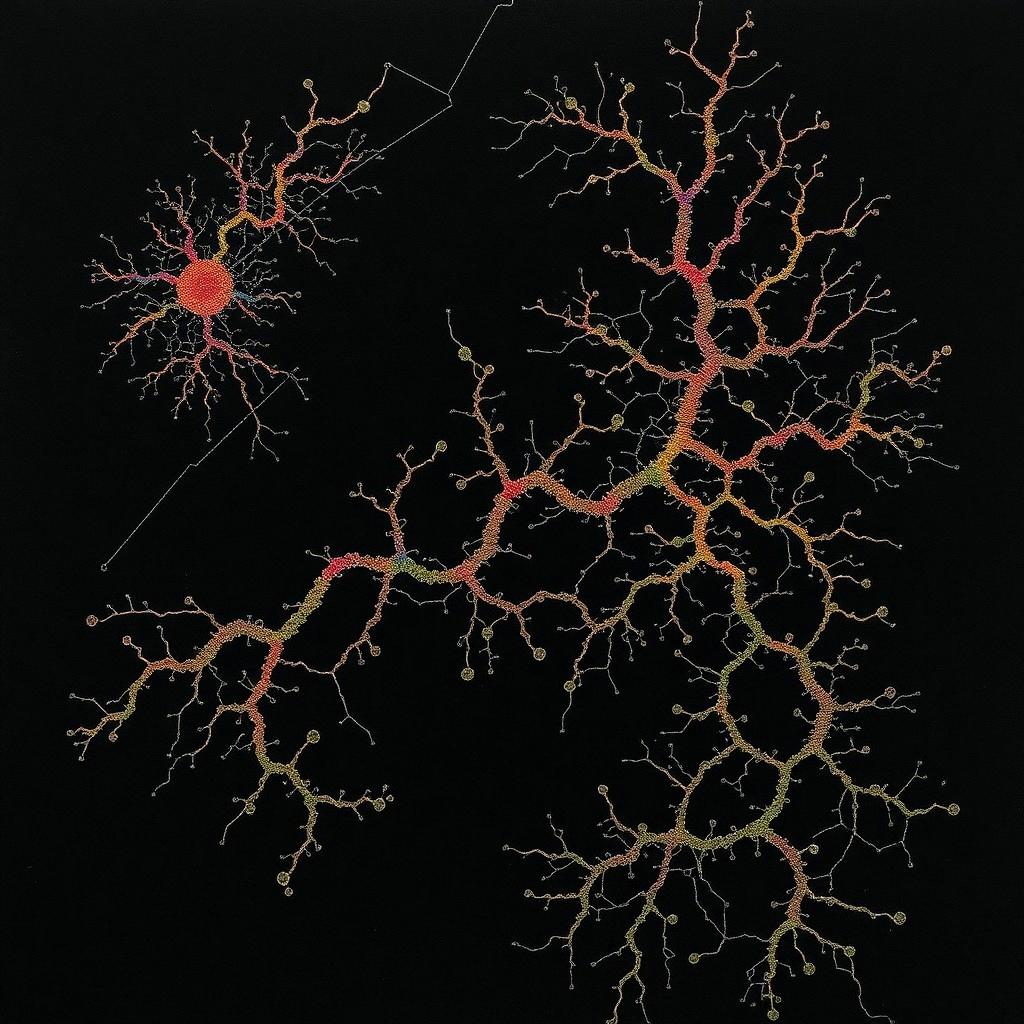
 Discussion