Why BGPT?
logo

Paper Review β€” verify claims with raw data

Extract figures, tables, methods, and underlying data to audit results.

Press Enter ↡ to review


    Explore by Goal


     Quick Explanation


    Core finding (skeptical take)
    The paper uses the ANOSPP panel to benchmark morphology and to map Anopheles + Plasmodium at species resolution across Tanzanian sentinel districts, reporting 15 Anopheles taxa, 5 Plasmodium species, and a 6.2% morphology misclassification rate relative to ANOSPP. Key headline: Plasmodium caprae was detected in Anopheles arabiensis, framed as Tanzania’s first record of P. caprae.
    Evidence used here is directly from the provided paper text and its cited methodological references (ANOSPP panel and related analytical components).


     Long Explanation


    Paper review (skeptical, evidence-based)
    Title: Exploring the diversity and spatial distribution of Anopheles mosquitoes and their associated Plasmodium species in Tanzania using the ANOSPP amplicon panel.
    What they did (methods you can audit)
    • Sampling design: rolling cross-sectional surveillance in 25 NMCP sentinel districts (Dec 2020–Dec 2023), with sentinels sampled in wet and dry seasons; one sentinel village per district; multiple sub-villages/households; new households each round to reduce pseudo-replication.
    • Trapping: METs (indoor/outdoor), backpack aspirators, and barrier screen interception traps; standardized night/time-window scheme.
    • Species assignment: morphology (complex/group/species level) then ANOSPP sequencing for a large subset.
    • ANOSPP computational assignment: species assignment via NNoVAE species assignment pipeline (anospp_analysis v0.3.5) using reference datasets (nnv2 and gcrefv1), and additional post hoc classification for unresolved Funestus clades via PCA on 8-mer counts and a bootstrap ensemble of classifiers.
    • Plasmodium detection: embedded in ANOSPP via two short mitochondrial amplicons (P1/P2, ~170–220 bp); presence inferred from Plasmodium reads and species assigned via BLAST workflow against a Plasmodium reference database.
    VISUALIZE FIRST: key distributions & concordance
    Below plots use only the numeric data explicitly present in the provided paper text (paper figures/tables summarized into counts).
    Visual evidence is supported by the paper’s summarized counts and statistics:
    Explain SECOND: what the results likely mean (and what they don’t)
    1) Morphology still has non-trivial, taxon-skewed error. The paper reports an overall morphology misclassification rate of 6.2% when benchmarked to ANOSPP, with much higher errors for rare/morphologically difficult taxa (e.g., An. rufipes and An. maculipalpis). This implies that surveillance lists based solely on morphology can be qualitatively wrongβ€”especially for secondary taxa.
    Skeptical caveat: because rare taxa are where morphology performs worst, aggregate error can β€œlook small” while still shifting the ecological composition and potentially biasing any downstream inference about vector assemblages.
    2) ANOSPP appears to substantially expand detectable diversity (vector + parasite). The study reports 15 Anopheles taxa and five Plasmodium species detected in mosquito specimens across Tanzania using ANOSPP.
    3) The P. caprae result is both striking and scientifically underdetermined. The paper reports P. caprae detected only in An. arabiensis (n=6), claiming first record in Tanzania and first detection in An. arabiensis globally.
    What we can infer: mitochondrial Plasmodium DNA consistent with P. caprae was recovered.
    What we cannot infer from this alone: whether mosquitoes were infected with sporozoites (transmissible stage), whether the mosquito is a true biological vector, or whether detections reflect recent blood meals / ecological spillover rather than onward transmission.
    The paper itself clarifies this limitation by noting that ANOSPP detects Plasmodium DNA rather than stage-specific sporozoite infection.
    4) Vector assemblage composition correlates with NMCP transmission strata. The paper reports that districts with more primary-vector richness show a strong positive association with NMCP composite transmission score (Spearman Οβ‰ˆ0.722; partial Οβ‰ˆ0.765 controlling for total Anopheles catch).
    Skeptical caveat: correlations between assemblage richness and composite transmission intensity can be confounded by unmeasured covariates (sampling intensity differences, seasonality residuals, intervention heterogeneity) even if they control for total catch. The paper indicates robust association after partialling out total catch, which helps, but does not fully eliminate all confounding.
    Method-critical assessment (quality, reproducibility, blindspots)
    Strengths
    • Large field-scale specimen volume (71,146 total mosquitoes collected; 6,650 submitted to ANOSPP; 5,498 retained after QC/contamination filters), which supports meaningful estimates of species distributions in sampled districts.
    • Benchmarking morphology directly against ANOSPP for the same specimens processed by sequencing, enabling a measurable misclassification rate and taxon-specific error patterns.
    • Explicit statistical framework (Wilson CIs for binomial mis-ID rates; chi-square/Fisher tests; logistic regression odds ratios; richness/diversity metrics; Fisher exact and Spearman correlations with BH FDR correction).
    Limitations / red flags (what could change the interpretation)
    • Sentinel-site coverage may not represent national vector/parasite distributions. The paper itself frames this as a limitation (only NMCP sentinel sites).
    • Residual β€œunresolved” taxa occur due to reference-sequence gaps and/or insufficient amplicon recovery; these unresolved assignments remain at group/complex level and can dilute ecological conclusions.
    • Plasmodium stage inference is weak because ANOSPP detects parasite DNA rather than sporozoite stage. That means β€œvector incrimination” cannot be concluded from DNA presence alone.
    • Classifier accept/reject threshold (ensemble support β‰₯0.80 for acceptance as resolved species in Funestus subgroup post hoc) implies that resolution quality is partially a function of modeling choices; species boundaries near the threshold could be sensitive.
    • Bioinformatics provenance: while the paper specifies software versions and reference database names, the provided text does not include explicit external accession numbers/datasets for the ANOSPP-run outputs (so end-to-end computational reproducibility may be constrained by available data packaging).
    What would disprove or materially change the main claims?
    • If morphology vs ANOSPP benchmarking were biased (e.g., by DNA extraction success correlated with morphology class), the reported 6.2% misclassification estimate could change; re-benchmarking with stratified extraction success would help.
    • If P. caprae mitochondrial assignments were confounded by reference database issues or by barcode similarity to other Plasmodium lineages, the β€œfirst record” claim would weaken; independent replication with orthogonal markers (e.g., additional nuclear loci) would be decisive, consistent with the paper’s own reliance on mitochondrial amplicons.
    • If district-level associations with NMCP strata were driven by unmeasured sampling heterogeneity not removed by controlling for total catch, the strength/sign of richness–transmission correlation could shift.


    Feedback:   

    Updated: July 08, 2026

    BGPT Paper Review


    Study Novelty

    90%

    High novelty because the paper operationalizes a previously published genus-wide ANOSPP panel for large-scale Tanzanian entomological surveillance, simultaneously mapping vector taxa and multi-species Plasmodium and benchmarking morphologyβ€”explicitly producing new/expanded taxonomic records such as β€œfirst Tanzania record” claims and improved resolution across genera.


    Scientific Quality

    80%

    Strong field scale and explicit computational/statistical workflows, with direct morphology-vs-ANOSPP benchmarking. Skeptical downgrades include: (i) Plasmodium inference is mitochondrial-DNA based (not stage-specific sporozoites), (ii) some taxa remain unresolved due to reference gaps, (iii) dependence on modeling thresholds for Funestus post hoc classification, and (iv) limited explicit data provenance in the provided text (end-to-end computational reproducibility may be constrained).


    Study Generality

    70%

    Substantial generality for malaria vector surveillance method development (genus-wide simultaneous vector+parasite amplicon panels; species-resolved stratification concepts). However, ecological inference remains context-bound by sentinel-site sampling and by assay/reference-panel composition.


    Study Usefulness

    90%

    Practically useful as a surveillance template: it quantifies taxonomy error in morphology and demonstrates multi-vector/multi-parasite detection, informing how species-informed assemblages relate to NMCP transmission strata.


    Study Reproducibility

    80%

    Methods include concrete software versions and analysis steps (e.g., anospp_analysis v0.3.5, PCA + PERMANOVA parameters, ensemble models, tree-builders). Reproducibility likely strong if ANOSPP outputs/references are accessible; however, the provided text does not fully document external data depositions for ANOSPP run outputs.


    Explanatory Depth

    70%

    The paper offers explanatory insight about surveillance blindspots and shows empirical associations between vector assemblage richness and transmission intensity, but it does not mechanistically prove vector competence or transmissibility for detected Plasmodium beyond DNA presence.

     Top Data Sources ExportMCP


     Analysis Wizard


    It will parse the reported ANOSPP+Plasmodium counts, compute confidence intervals for prevalence per vector taxon, and generate a sensitivity plot showing how excluding low-support ANOSPP calls changes richness–NMCP correlation.


     Hypothesis Graveyard


    A simple explanation that morphology error is random across taxa (so aggregate 6.2% error is representative) is unlikely because the paper reports extremely high misclassification for specific taxa (e.g., An. rufipes, An. maculipalpis) while others have very low errors.


    A single mitochondrial marker (P1/P2) provides definitive sporozoite transmissibility is unlikely because the paper explicitly notes ANOSPP detects Plasmodium DNA rather than stage-specific sporozoite infection.

     Science Art


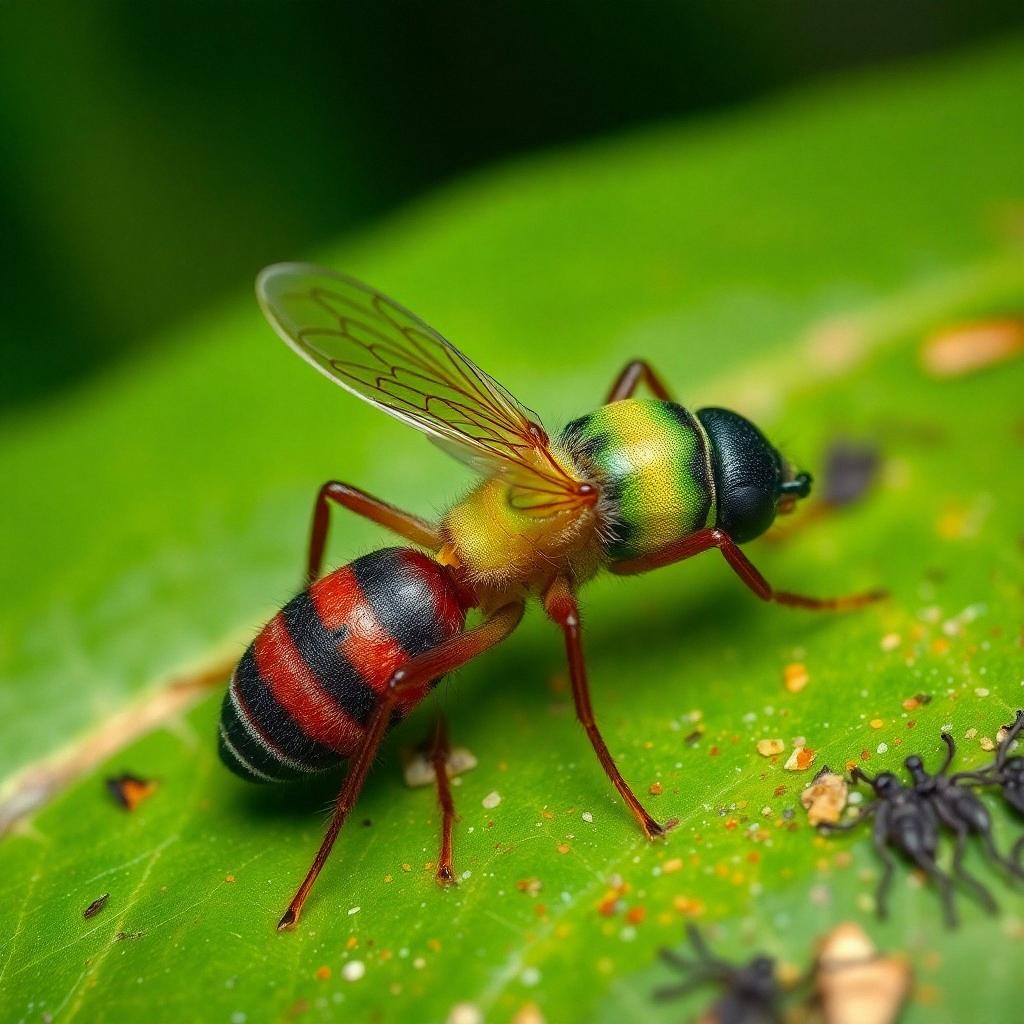
    Paper Review: Exploring the diversity and spatial distribution of Anopheles mosquitoes and their associated Plasmodium species in Tanzania using the ANOSPP amplicon panel Science Art

     Science Movie


    Make a narrated HD Science movie for this answer ($32 per minute)


     Discussion


    Follow the Evidence

    New scientific claims, supporting evidence, and important limitations. Every Friday. No ads.


    My BGPT