Why BGPT?
logo

Paper review grounded in raw data

Read full papers, extract experimental data and metadata, and see exactly what studies found.


Press Enter ↵ to solve



    Fuel Your Discoveries


     Quick Explanation


    Core claim (mechanistic):
    Ectopic SOX17 driven in Sertoli cells by an hAMH promoter expands “Sertoli valve” (SV)–like structures and partially rescues defective spermatogenesis/infertility in rete testis–specific Sox17 cKO mice, with evidence pointing to a Sertoli-cell–to–RT paracrine shift involving WNT4–RSPO1.


     Long Explanation


    Paper Review (skeptical, evidence-based): “Ectopic hAMH-driven SOX17 expression induces hyperplastic Sertoli valve formation in mouse testes”

    Study type: In vivo mouse genetics + histology + TEM + RNAscope + quantitative histomorphometry.

    1) Visual map: what the authors did → what they observed

    Genetic perturbation logic
    • Transgene: hAMH promoter drives Sox17 expression in Sertoli cells (AMH-Sox17 Tg lines #13, #26, #27; line #26 used for most work).
    • Loss-of-function reference: RT-specific Sox17 cKO (SF1-Cre; Sox17 flox/flox) disrupts SV formation and causes defective spermiogenesis/infertility.
    • Cross: cKO;Tg combines RT Sox17 loss with Sertoli-cell SOX17 overexpression to test functional substitution/paracrine rescue.

    2) Visualizations (from reported metadata)

    Note: The full text you provided does not include numeric effect sizes for all phenotypes; the plots below therefore reflect sample sizes and experimental group structure explicitly stated in the paper text.

    3) Key results (what’s supported vs what’s inferred)

    A. Sertoli-cell SOX17 overexpression expands SV-like structures
    • Founder line effects: Among founders, one male (#27) is infertile and smaller with expanded SV-like region; another line (#26) is fertile and shows expanded acetylated tubulin–positive SV region localized to the proximal/terminal segments after sexual maturation.
    • Cellular/morphological phenotype: Expanded regions are marked by ace-TUB and Cyclin D1, with TEM showing multiple cytoplasmic layers and protrusions into RT lumen.
    • Ectopic SOX17 distribution: Immunostaining indicates ectopic high SOX17 in Sertoli cells throughout convoluted seminiferous tubules and SV-like regions in Tg animals.
    Skeptical note: The paper reports a severe line (#27) that appears ectopic-wide and infertile, suggesting that SOX17 overexpression can also be disruptive to Sertoli cell function beyond SV patterning.
    B. Partial rescue in RT-specific Sox17 cKO by AMH-Sox17 Tg
    • Spermatogenesis rescue: RT cKO mice show abnormal spermiogenesis with absence of epididymal sperm. In cKO;Tg double mutants, the authors report improved spermatogenesis with epididymal sperm in some individuals and increased spermatogenesis score; they also report a higher proportion of elongated spermatids.
    • Fertility rescue: Mating trials yield offspring in 2 of 4 cKO;Tg males.
    • SV structural normalization (intermediate phenotype): In cKO;Tg testes, SOX17 is restricted to Sertoli cells in terminal segments (RT SOX17 remains absent), and SV structures appear partially normalized; Sertoli valve cell density shows intermediate values between Tg and cKO, described as Sox17 dose-dependent.
    Key inference boundary: The paper argues SOX17’s RT role is mainly for SV formation and that Sertoli-cell SOX17 can functionally substitute via paracrine mechanisms. This is plausible given the partial structural and fertility rescue, but the provided full text does not show causality for specific downstream mediators beyond expression correlations (notably Rspo1/Wnt4).
    C. Candidate paracrine axis: SOX17 → RSPO1/WNT4 in RT-SV boundary
    • No ectopic Rspo1: Using RNAscope on serial sections with identical conditions, the authors report Rspo1 (RT) and Wnt4 (SV) expression profiles are generally comparable among control, Tg, cKO, and cKO;Tg, confirming that SOX17 + SV Sertoli cells do not ectopically turn on RT-specific Rspo1 expression directly.
    • Directionality consistent with rescue: Wnt4 appears enhanced in Tg SV regions; RT-specific Rspo1 expression is increased in Tg and slightly elevated in cKO;Tg relative to cKO.
    External corroboration (context): The paper places its signaling logic in the broader framework that SV region specification involves paracrine factors from SOX17+ RT cells, including WNT-related signaling and RT-SV organization. For example, the earlier work on RT SOX17 and the valve niche provides the baseline dependency.

    4) Mechanistic critique: where the evidence is strong vs where it’s thin

    Strong support (from the provided full text)
    • Phenotypic causation at the level of phenotype: Introducing SOX17 in Sertoli cells correlates with SV expansion (ace-TUB/Cyclin D1/TEM-protrusion features), and removing RT SOX17 produces SV defects that are partially ameliorated in cKO;Tg.
    • Spatial specificity of expression in rescue background: In cKO;Tg, SOX17 is present in terminal Sertoli cells but absent from RT epithelium, strengthening the argument that rescue is not due to restoring RT SOX17 expression.
    Mechanistic gaps / red flags (what could change the interpretation)
    • No direct functional perturbation of the proposed mediator axis: The mechanistic story emphasizes WNT4/RSPO1 changes consistent with rescue, but the provided full text does not show that blocking RSPO1/WNT4 signaling abolishes SV rescue. That means causality remains unresolved.
    • Overexpression artifacts & line-to-line variability: Founder line #27 is infertile with severe ectopic expression, implying possible global Sertoli dysfunction. In general, Tg insertion effects, expression levels, and timing differences can produce phenotypes not equivalent to endogenous SOX17 programs.
    • Scoring and quantification details are partially under-specified in the extracted text: The paper states “at least four animals in each group” for histology and provides explicit n for the spermatogenesis scoring, but the extracted full text does not provide complete blinding/observer information for scoring nor all morphometric sampling parameters beyond a “mid-sagittal plane” and ~100 μm counting window. That can affect reproducibility/estimator variance.

    5) What would disprove the headline conclusion?

    • No SV expansion despite Sertoli SOX17: If another Sertoli-specific SOX17 perturbation (or reduced expression) fails to expand ace-TUB+/CyclinD1+ valve regions and protrusion phenotypes, then the Tg phenotype linkage weakens.
    • No rescue when mediator axis is blocked: If inhibiting RSPO1/WNT4 signaling in the RT-SV boundary prevents cKO;Tg structural and spermatogenesis rescue, the paracrine mediator becomes causal rather than correlative (and the authors’ current mechanistic emphasis would be strengthened). Conversely, if rescue persists despite blocking, the mechanism must be different from the emphasized axis.

    6) Paper quality snapshot (skeptical scoring)

    These scores are derived from the provided full text excerpt: strength of causal inference (genetic rescue/phenotype), appropriateness of methods (IHC/TEM/RNAscope), and transparency of sample sizes and quantification, balanced against under-specified details and lack of mediator necessity tests.


    Feedback:   

    Updated: June 04, 2026

    BGPT Paper Review


    Study Novelty

    80%

    Novelty is driven by the specific in vivo genetic strategy: Sertoli-cell ectopic SOX17 using an hAMH promoter combined with RT-specific Sox17 cKO to test functional substitution of an RT lineage niche factor, with SV expansion and partial spermatogenesis/fertility rescue as the central readouts.


    Scientific Quality

    80%

    Scientific quality is supported by: (i) relevant genetic models (Tg overexpression plus cKO rescue), (ii) multimodal phenotyping (IHC markers, TEM ultrastructure, RNAscope expression), and (iii) an explicit scoring framework for spermatogenesis. Main quality risks from the provided excerpt are lack of mediator necessity tests (beyond expression correlations), limited numeric effect sizes in the text excerpt, and potential overexpression/line effects.


    Study Generality

    60%

    The findings are niche to testis SV/RT niche biology and SOX17-driven paracrine signaling; while conceptually relevant to tissue niche signaling logic (TFs in one compartment instructing a neighboring niche structure), direct generalization to other tissues/species/humans is not established in the provided excerpt.


    Study Usefulness

    80%

    Useful as a mechanistic genetics blueprint and model system for SV/RT-SV paracrine logic. It provides experimentally manipulable SV hyperplasia and a genetic rescue paradigm that can be leveraged for pathway causality testing (e.g., downstream WNT/RSPO components), even though those causal tests are not fully shown in the excerpt.


    Study Reproducibility

    70%

    Reproducibility is moderately strong due to described methods (fixation/sectioning, marker panel concept, TEM processing, RNAscope procedure type, and statistical approach). Reproducibility risks remain because the excerpt does not provide all operational details needed for exact replication (e.g., blinding, full scoring operationalization beyond the described rubric, and full morphometric sampling parameters).


    Explanatory Depth

    80%

    The paper provides a coherent tissue-compartment narrative (RT SOX17 is required for SV; Sertoli-cell SOX17 can partially compensate) and introduces candidate signaling changes (Rspo1 and Wnt4). Explanatory depth is limited by incomplete causal dissection in the excerpt (mechanistic necessity for WNT4/RSPO1 not directly tested).

     Top Data Sources ExportMCP


     Analysis Wizard


    Build a genotype→phenotype extraction table (control, cKO, Tg, cKO;Tg) from the provided full-text XML and render a pathway schematic linking SOX17 → Rspo1/Wnt4 → SV metrics and spermatogenesis score.


     Hypothesis Graveyard


    A “simple cell-autonomous” hypothesis—that Sertoli SOX17 directly executes SV formation without requiring RT signaling—would be less favored if RT-specific Sox17 loss could not be rescued by Sertoli SOX17 overexpression. The paper reports at least partial rescue (SV density intermediate, elongated spermatids, some sperm and offspring), which argues against purely cell-autonomous SV formation.


    A “transgene insertion artifact only” strongman view would be undermined by the consistent Tg-to-phenotype relationship described across the selected line (#26) and by the genotype-interaction logic (cKO;Tg improves outcomes vs cKO). However, without additional independently targeted models, insertion-site uncertainty remains.

     Science Art


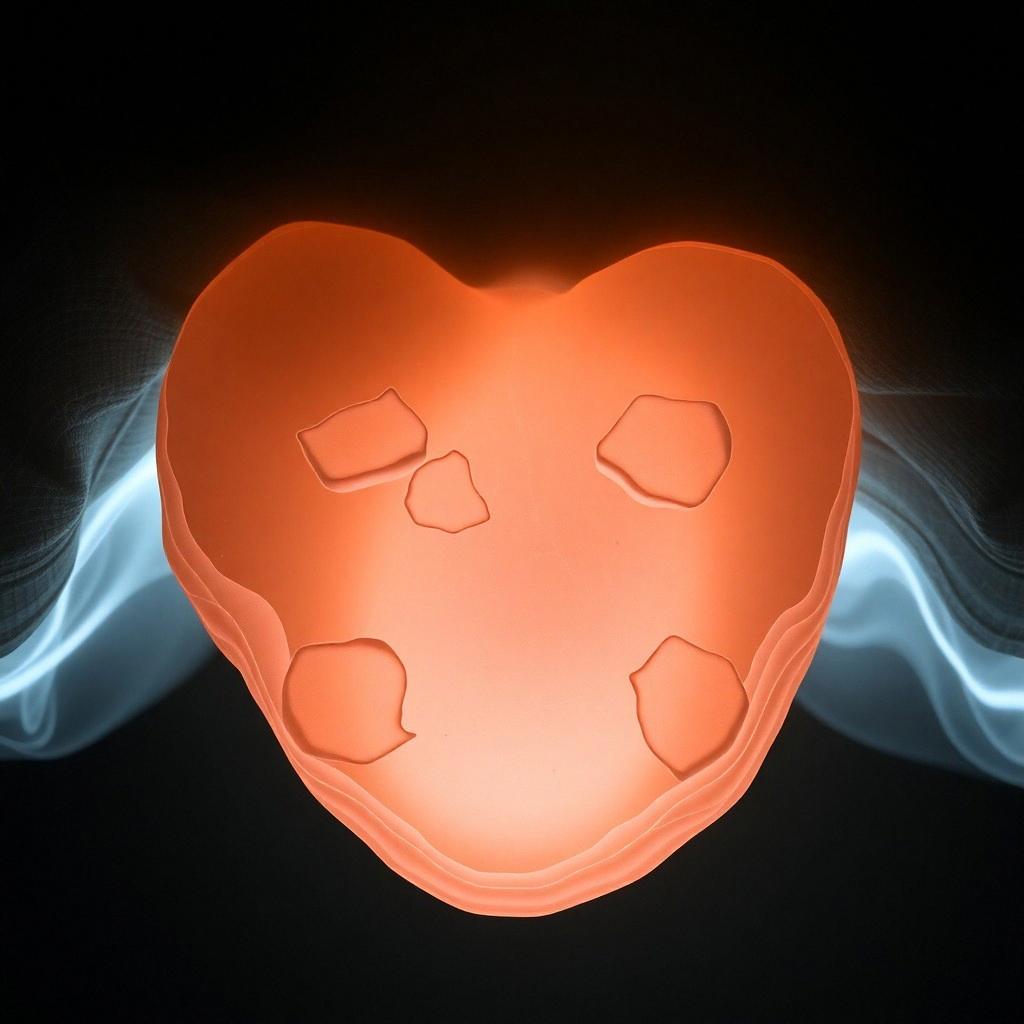
    Paper Review: Ectopic                  hAMH                     -driven SOX17 expression induces hyperplastic Sertoli valve formation in mouse testes Science Art

     Science Movie


    Make a narrated HD Science movie for this answer ($32 per minute)


     Discussion


    Get Ahead With Science Insights

    Custom summaries of the latest cutting edge Science research. Every Friday. No Ads.


    My BGPT