Ground protocols in what was actually done and measured, with provenance for each record.Know what the science actually supports before you trust the answer.
Press Enter ↵ to design experiment
Explore by Goal
"Just like a single cell, the character of our lives is determined not by our genes but by our responses to the environmental signals that propel life."
- Bruce H. Lipton
Quick Analysis Plan
Copied
The supplied zebrafish evidence supports the premise's core mechanism — Dll4 is required pre-flow (~24 hpf) for pre-HE→HE transition while Jag1a is flow-dependent later (~50% expression loss under blocked flow) — but irreversibility of transient flow defects after restoration has not been tested . A staged flow-pulse experiment with time-resolved scRNA-seq is the decisive test.
Long Analysis Plan
What the evidence establishes — and what it does not
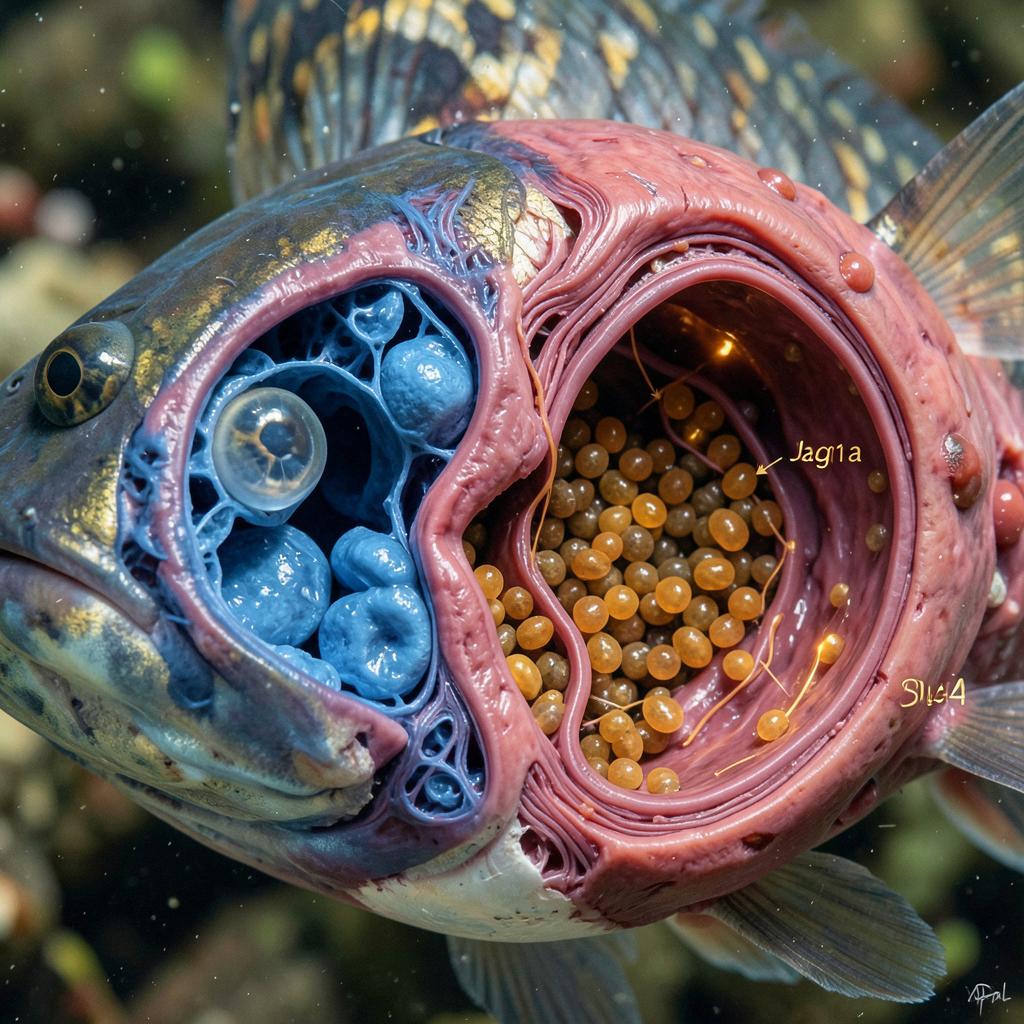
The sequential-ligand model is directly supported in zebrafish: at 24 hpf (pre-circulation), dll4 knockdown abolishes HE marker expression while jag1a knockdown does not; by 26–28 hpf both are required, and double knockdown is worst . Mechanistically, dll4 loss causes ~2-fold pre-HE accumulation, and 5 µM (but not 10 µM) PD98059 rescues HE genes, implicating excessive MAPK . Flow-dependence of Jag1a is shown by ~50% jag1a reduction under reduced/blocked flow and rescue by endothelial kdrl:jag1a overexpression .
What is missing for the user's hypothesis: no experiment in the record imposed a transient flow defect with subsequent restoration, so "permanently reduced HSPC output after flow restoration" is an inference, not an observation. The authors themselves note unresolved mechanistic links (MAPK→EHT morphogenesis; how flow regulates jag1a), no Jag1a mutant test, and no mammalian validation . Mouse work shows Dll4 effects precede flow (aortic calibre reduced at 8-somite, pre-heartbeat), consistent with a pre-flow Dll4 window being flow-insensitive , but its small n (2 embryos/genotype for counts) limits confidence .
Values are as reported in the zebrafish study; no error bars were extractable from the record.
Bioinformatics/coding/analysis plan
1. Test irreversibility directly (decisive experiment). Use tnnt2a MO (1.4 ng) for a defined pulse window (e.g., 22–26, 26–30, 30–34 hpf), wash out or use a reversible flow modulator, restore flow, then quantify runx1:Citrine+ CHT HSPCs at 4 dpf. If output recovers to control levels for any window, the permanence claim is falsified for that window.
2. scRNA-seq pipeline (scanpy/Seurat). Re-analyze the 18,913 kdrl:GFP+ cells (7,365 WT, 11,548 dll4 MO) from the source GEO-style workflow: UMAP, Monocle3 pseudotime, module scores for MAPK targets (dusp6, spry4), HE program (runx1, gata2b, cmyb, gfi1aa), and pre-HE state; then repeat after transient-flow perturbation with restoration to test whether pseudotime branch commitment is locked in .
3. Window sensitivity model. Fit a logistic commitment curve HE(t) over 22–34 hpf from the marker-expression time series; compute ∂HSPC_output/∂(flow defect duration) for each window to predict which CHD-relevant gestational windows are most vulnerable.
4. Cross-species extrapolation with explicit uncertainty. Map zebrafish hpf windows to human gestational weeks via somite-stage/heart-beat-onset anchors; treat as inference only, given no mammalian HSPC data in the record. Endothelial DLL4 dependence of hematopoietic niches postnatally (PERK–DLL4–NOTCH3 axis in marrow regeneration) suggests lifelong DLL4 relevance but is not direct evidence for the embryonic window claim .
Blindspots: morpholino off-targets and residual-HSPC penetrance are unquantified; no dose-response of flow severity; human CHD "reduced hematopoietic reserve" is asserted in the prompt without a supplied citation, so that clinical link remains unverified here.
Modeling how transient hemodynamic defect timing and duration during the 22–34 hpf ligand-switch window changes predicted HSPC output, to identify the most vulnerable commitment window and plan the washout experiment.
Get emailed when your analysis is done!
We'll email you the results when your analysis is finished.
Hypothesis Graveyard
'Flow affects HSPCs only mechanically' — falsified by the jag1a expression rescue: the effect is mediated through a specific ligand (Jag1a), so ligand-identity timing, not shear per se, is the causal variable.
'Dll4 and Jag1a are redundant Notch ligands' — refuted by their non-overlapping temporal requirements at 24 vs 26–28 hpf and opposing MAPK effects.

 Explore by Goal
 Quick Analysis Plan
 Long Analysis Plan
 Top Data Sources
 Ask a Follow-Up
 Key Insight
 Keep Exploring
 Analysis
 Hypothesis Graveyard
 Potential Experiments
 Discussion
