Why BGPT?
logo

Review papers with raw data transparency

Quickly verify claims by accessing the underlying experimental data and figures.


Press Enter ↡ to solve


    Fuel Your Discoveries


     Quick Explanation


    Concise critique: The ICTV profile (10.1099/jgv.0.002000) concisely codifies Turriviridae morphology (β‰ˆ75 nm turreted icosahedra with internal host-derived lipid membrane), circular dsDNA genomes (~16–17 kb), host range (Sulfolobus/Saccharolobus) and taxonomy (Alphaturrivirus), but is inherently a synthesis with limited primary-data coverage outside model viruses STIV1/STIV2 and therefore underrepresents family diversity and functional annotation gaps


     Long Explanation


    Visual-first critique of: ICTV Virus Taxonomy Profile: Turriviridae (10.1099/jgv.0.002000)

    One-line synthesis
    The ICTV profile defines Turriviridae as turreted, ~75 nm icosahedral archaeal viruses with circular dsDNA (16–17 kbp), internal host-derived lipid membranes, infecting Sulfolobus/Saccharolobus; it is authoritative but limited by dependence on a small set of well-characterized isolates (STIV1/STIV2).
    Data source: STIV1/STIV2 genome lengths and CDS counts reported in the ICTV profile (10.1099/jgv.0.002000)

    Key structural and lifecycle features (visual-first)

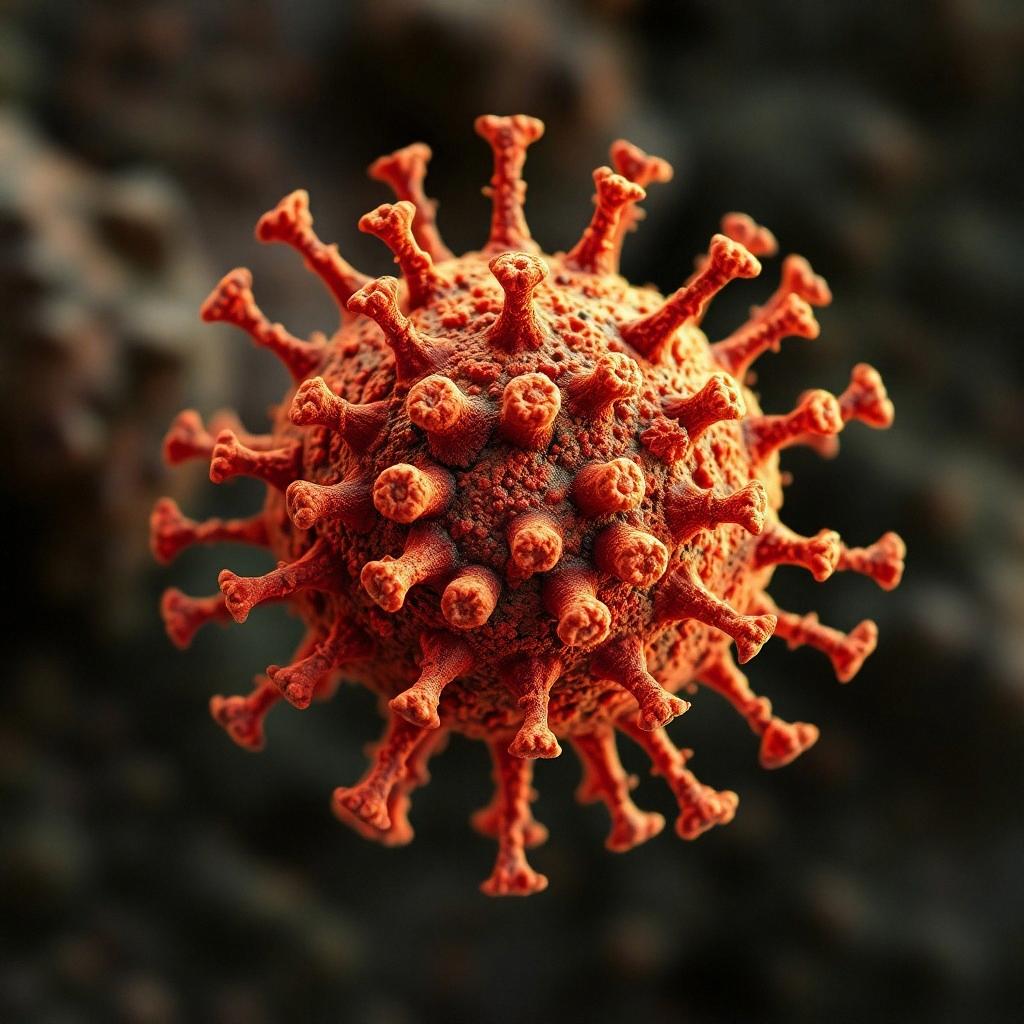
    • Virion morphology: spherical ~75 nm diameter; turretlike protrusions ~12 nm above capsid; pseudo T=31d icosahedral capsid with a double-jelly-roll major capsid protein fold and an internal host-derived lipid membrane
    • Genome & coding: circular dsDNA 16–17 kbp; many CDSs remain functionally unannotated; STIV1: 38 CDSs; STIV2: 34 CDSs with ~24 homologues to STIV1
    • Replication: STIV1 lytic with C92-mediated pyramid egress structures; evidence exists for temperate lifestyles via integrase-like genes in related elements integrated into host genomes
    Strengths
    1. Authoritative, succinct codification of taxonomy and canonical features for downstream referencing (ICTV standard).
    2. Integrates structural (cryo-EM/X-ray) and genomic data to give a consistent family definition.
    3. Provides clear falsification criteria (e.g., genome size, virion architecture, host range) for future reclassification.
    Limitations & blind spots
    1. Sampling bias: the profile relies heavily on STIV1/STIV2 data; environmental/sequence surveys may reveal wider diversity and genome-size/architecture deviations not captured here
    2. Functional annotations are sparse: only a few CDSs have known structural/genetic functions; this limits mechanistic understanding and tests of evolutionary relationships.
    3. Host-range breadth is inferred from cultured Sulfolobus/Saccharolobus species; metagenomic discovery could broaden host assignments or reveal cryptic lineages.
    4. As a short ICTV profile, methods and raw datasets (e.g., alignments, trees) are not provided directly in the text, reducing immediate reproducibility; the full ICTV Report must be consulted for raw data.

    Recommendations to strengthen future family characterizations

    • Publish standardized genomic annotations & pangenome analyses across environmental assemblies to quantify diversity beyond STIV isolates (explicitly include accession lists and alignments).
    • Provide phylogenetic trees (protein-marker and whole-genome) and ANI/AAI matrices in the full ICTV Report to support species/genus boundaries quantitatively.
    • Functionally characterize conserved but unannotated CDSs (e.g., via structural prediction, crosslinking, heterologous expression) to reduce annotation blind spots.
    • Report metadata on sampling locations, hosts, and methodologies used in constituent primary studies to expose potential systematic biases.
    Explicit falsification test
    The profile would be falsified (or require major revision) if: discovery of robustly validated Turriviridae-like capsids lacked an internal host-derived membrane, or new members with circular dsDNA genomes outside ~16–17 kbp or hosts outside Sulfolobus/Saccharolobus with strong phylogenetic support were reported; the ICTV report itself states similar criteria
    Note: The summary, data points and critique are strictly drawn from the ICTV Profile (10.1099/jgv.0.002000); statements about sampling bias, annotation gaps and recommendations are empirical inferences based on the profile's explicit limitations and standard best practices in viral systematics


    Feedback:   

    Updated: March 07, 2026

    BGPT Paper Review


    Study Novelty

    60%

    A taxonomy/profile update is moderately novel: it compiles and standardizes existing structural and genomic data (especially on STIV1/STIV2) and situates Turriviridae within Varidnaviria; novelty arises from formalization rather than discovery of wholly new biology.


    Scientific Quality

    80%

    High quality as an ICTV synthesis: authoritative, succinct, and well-referenced to primary structural/genomic studies; limitations are intrinsic to profile format (not primary-data reporting) and include lack of raw alignments/phylogenies and underrepresentation of environmental diversity.


    Study Generality

    70%

    Generality is substantial within archaeal virology (defines family-level features usable across studies), but limited beyond Sulfolobus-like systems because it centers on a few model isolates.


    Study Usefulness

    80%

    Very useful as a canonical reference for taxonomy, morphology, and genome properties for researchers and database curation; less useful for mechanistic functional inference due to sparse CDS annotation.


    Study Reproducibility

    60%

    Reproducibility of statements depends on underlying cited primary studies; the profile itself lacks primary-method detail and raw data/alignments, lowering direct reproducibility; full ICTV Report and cited primary papers are required to reproduce analyses.


    Explanatory Depth

    60%

    Provides clear structural and genomic descriptions and some mechanistic notes (e.g., C92-mediated pyramid egress), but many CDSs remain uncharacterized and evolutionary mechanisms across the family are not deeply resolved here.


    🎁 Authors: Collect 193 Free Science Tokens (β‰ˆ $19.3 USD)

    Claim My Author Tokens

    Use for 48 days of free BGPT access (4 tokens = 1 day) or trade/sell (β‰ˆ $19.3 USD)

     Analysis Wizard


    Preparing a pangenome summary (genome lengths, CDS counts, presence/absence matrix) from STIV1/STIV2 and related accessions to visualize diversity and compute ANI/AAI statistics.


     Hypothesis Graveyard


    All family members must be exactly 16–17 kbp circular dsDNA – falsified because mobile genetic elements and recombination could expand/contract genome size, making strict size a poor sole classifier.


    Turreted morphology always implies Alphaturrivirus taxonomy – unlikely because convergent structural motifs can evolve in distinct lineages; taxonomy must combine phylogenomics with structure.

     Science Art


    Paper Review: ICTV Virus Taxonomy Profile: Turriviridae 2024 Science Art

     Science Movie


    Make a narrated HD Science movie for this answer ($32 per minute)


     Discussion


    Get Ahead With Science Insights

    Custom summaries of the latest cutting edge Science research. Every Friday. No Ads.


    My BGPT