Why BGPT?
logo

Review papers with raw data transparency

Quickly verify claims by accessing the underlying experimental data and figures.


Press Enter ↵ to solve


    Fuel Your Discoveries


     Quick Explanation


    Paper focus: gut microbiota dysbiosis → microbial metabolites/endotoxemia/immune signaling → vascular + neurovascular injury and post-stroke complications, framed as a “gut–brain axis” continuum in ischemic stroke.
    Key “mechanism modules” emphasized: TMAO, SCFAs, bile acids, and LPS/TLR4, plus gut-driven shifts in barrier integrity and T-cell balance.
    Critically: this is a narrative synthesis—strong mechanistic plausibility, but limited direct causal quantification for humans in the review itself.


     Long Explanation


    Pol Arch Intern Med (Narrative Review) — Rigorous Critique
    "Cardiovascular disease and microbiome: focus on ischemic stroke" (DOI: 10.20452/pamw.17088) • Published: Aug 11, 2025 • Authors: Szegedi, Bomberák, Éles, Lóczi, Bagoly • Section theme: cardio-metabolic → gut → immune/metabolites → ischemic stroke

    1) What the paper argues (visual map first)

    Input drivers
    • Dysbiosis in cardiometabolic contexts and around ischemic stroke events
    • Barrier impairment (“leaky gut”) enabling systemic exposure to microbial products
    • Gut–brain axis bidirectionality (brain injury ↔ gut dysfunction)
    Microbial mediator modules
    • TMAO: pro-atherothrombotic & platelet-reactivity promoting pathways
    • SCFAs: barrier integrity + anti-inflammatory roles; neuroinflammation dampening
    • Secondary bile acids: FXR/TGR5-related signaling affecting immune/inflammation and vascular tone
    • LPS: endotoxemia activating TLR4 signaling on immune/endothelial cells
    Outputs the review emphasizes
    • Ischemic stroke risk, infarct progression, BBB disruption, neuroinflammation
    • Post-stroke complications: hemorrhagic transformation, PSCI/PSD, poststroke epilepsy
    • Potential stratification by microbial/metabolite markers
    • Microbiome-targeted strategies discussed as adjuncts
    Epistemic humility checkpoint: This paper is explicitly a narrative review, not a new experimental study. Therefore, it should be treated as mechanistic synthesis and hypothesis framing, not as causal proof in humans.

    2) Mechanisms: what is “known” vs “inferred” in this review

    Module Mechanistic claim type Specific pathways highlighted Evidence strength inside this review
    LPS → TLR4 Primarily causal-plausibility + translational inference Barrier dysfunction/endotoxemia → TLR4 activation on immune/endothelial cells → neuroinflammation, BBB disruption, prothrombotic changes Moderate (reviewed via mechanistic literature; not directly quantified here in humans)
    TMAO Association + mechanistic inference Gut microbial conversion of dietary substrates → TMAO influences foam-cell formation, cholesterol transport, platelet reactivity, inflammatory pathways (incl. inflammasome mention) Moderate (mediator-centric framing; review-level causality depends on cited primary work)
    SCFAs Protective mediator inference Fiber fermentation → epithelial barrier support and anti-inflammatory signaling; butyrate noted for BBB integrity and microglia modulation; possible epigenetic effects in preclinical context Moderate (plausible, but review does not establish magnitude/causality in patients)
    Bile acids Receptor-mediated inference Primary/secondary bile acid balance → FXR/TGR5 signaling affecting vascular/immune modulation and possible neuroprotective effects Moderate (mediator-focused; pathways summarized rather than re-tested here)
    Immune axis (Th1/Th17 vs Tregs) Synthesis/interpretive inference Stroke injury induces immune activation; gut-brain interactions may shift T-cell balances; Tregs described as anti-inflammatory brake Moderate (consistent with immune-neuroinflammation literature; review-level uncertainty remains)

    3) Post-stroke complications: breadth is good, but specificity is limited

    The review attempts to unify microbiome links not only to the index ischemic event but also to multiple complication phenotypes—hemorrhagic transformation (HT), post-stroke cognitive impairment (PSCI), post-stroke depression (PSD), and post-stroke epilepsy (PSE).
    Critical limitation (review-level): narrative synthesis across diverse phenotypes can blur causality boundaries—especially where many signals are observational and where post-stroke factors (treatment exposure, diet change, immobilization, infections, antibiotic use) can simultaneously reshape microbiomes and outcomes.
    What would sharpen the mechanistic story: consistent, subtype-stratified causal experiments or Mendelian-randomization frameworks in humans; and microbiome interventions where confounders (antibiotics, nutrition, rehab intensity, infections) are explicitly handled.

    4) Therapeutic strategies: promising, but this review reads as hypothesis-forward

    The review discusses microbiome-targeted strategies including dietary modification, probiotics/prebiotics/synbiotics, fecal microbiota transplantation (FMT), and intestinal epithelial stem cell transplantation, positioning them as potentially adjunctive approaches for stroke outcomes.
    Critical bias check (scientific):
    • Publication bias / narrative selection: narrative reviews can overweight mechanistically aligned studies.
    • Confounding: diet/antibiotics/rehab change microbiomes after stroke and may correlate with recovery.
    • Cross-species generalization: preclinical mediation may not map cleanly onto human physiology.
    Practical implication for readers: treat the therapeutic section as candidate intervention logic tied to mechanistic endpoints (barrier markers like LPS/zulin markers, metabolite direction like SCFAs, and immune readouts like TLR4-driven inflammation), rather than as established efficacy.

    5) Reproducibility & falsifiability (as a review)

    What is reproducible: the mechanistic structure and the mediator list are explicit in the manuscript narrative/figures, so readers can reproduce the conceptual mapping.
    What is not directly reproducible from the review alone: quantitative effect sizes, study-level inclusion/exclusion rules, and mechanistic endpoint magnitude in humans.
    Falsifiability targets (science logic):
    • If microbiome-mediated markers (e.g., LPS/TLR4 axis, TMAO axis, SCFA/butyrate protection) do not independently associate with stroke risk/outcome after rigorous confounding control, the causal narrative weakens.
    • If barrier restoration or metabolite shift interventions do not translate to altered neurovascular outcomes, then the mediator-to-outcome mapping is incomplete.

    6) What could disprove/change the review’s emphasis?

    • Causal mediation failure in humans: interventions that measurably change microbiome endpoints without improving stroke outcomes would undermine the proposed mechanistic chain.
    • Endpoint specificity failure: if observed associations are explained by co-exposures (antibiotics, diet, infections, severity of stroke), the microbiome mediator claim would become secondary rather than primary.
    • Mechanism swap: if alternative pathways (non-microbial inflammation sources) dominate stroke biology for most patients, then microbial mediators would be markers rather than drivers.

    7) BGPT Science Actions (author-specific deep dives)

    Note: This review-text input does not provide machine-readable metadata for every cited primary study (e.g., missing DOIs for many references in the extracted text). As a result, BGPT cannot safely quantify or graph exact effect sizes across the cited literature without risking uncited speculation.


    Feedback:   

    Updated: April 15, 2026

    BGPT Paper Review


    Study Novelty

    60%

    Novelty is moderate because the gut–brain axis framing with core mediators (TMAO, SCFAs, bile acids, LPS/TLR4) is a well-established framework; the specific emphasis on cardiovascular disease intersection and ischemic-stroke complication breadth is a synthesis-level contribution rather than a new mechanistic paradigm.


    Scientific Quality

    70%

    Scientific quality is moderate-to-good for a narrative review: it provides an organized mechanistic structure and a coherent mediator-to-outcome logic. Quality concerns: narrative nature, reliance on heterogeneous evidence types, and limited direct quantification/standardized causal inference within the review text.


    Study Generality

    70%

    Generality is fairly broad: it connects dysbiosis-mediated cardiovascular mechanisms to ischemic stroke and post-stroke complications, making it useful as a conceptual scaffold; however, it remains mediator-centric and does not fully resolve patient-subtype specificity with standardized criteria.


    Study Usefulness

    70%

    Usefulness is moderate-high for hypothesis generation and reading guidance (mediator pathways and endpoints to watch). However, it is less useful for decision-making because it does not provide effect sizes, trial-level outcomes, or standardized inclusion criteria.


    Study Reproducibility

    40%

    Reproducibility is limited because the manuscript is a narrative synthesis without primary data, without provided machine-readable tables of included studies, and without detail here on search strategy/inclusion criteria.


    Explanatory Depth

    70%

    Explanatory depth is decent at the pathway level (mediators → barrier/immune signaling → neurovascular outcomes) and includes gut–brain bidirectionality. It is less deep mechanistically at the precise human causal mediation step (quantitative dose-response or pathway flux), which remains unresolved in the review itself.


    🎁 Authors: Collect 115 Free Science Tokens (≈ $11.5 USD)

    Claim My Author Tokens

    Use for 28 days of free BGPT access (4 tokens = 1 day) or trade/sell (≈ $11.5 USD)

     Top Data Sources ExportMCP


     Hypothesis Graveyard


    “Microbiome composition alone determines stroke outcome independent of barrier and metabolites.” This is disfavored by the review’s emphasis that functional mediators (LPS/endotoxemia, SCFAs, bile acids, TMAO) and barrier integrity are the proximate drivers linking dysbiosis to vascular/neuroimmune injury.


    “All probiotic/prebiotic interventions will improve ischemic stroke outcomes regardless of context.” This fails because the review frames outcomes as dependent on specific microbial metabolites/endpoints and acknowledges heterogeneity in reported taxon directionality and the need for validation.

     Science Art


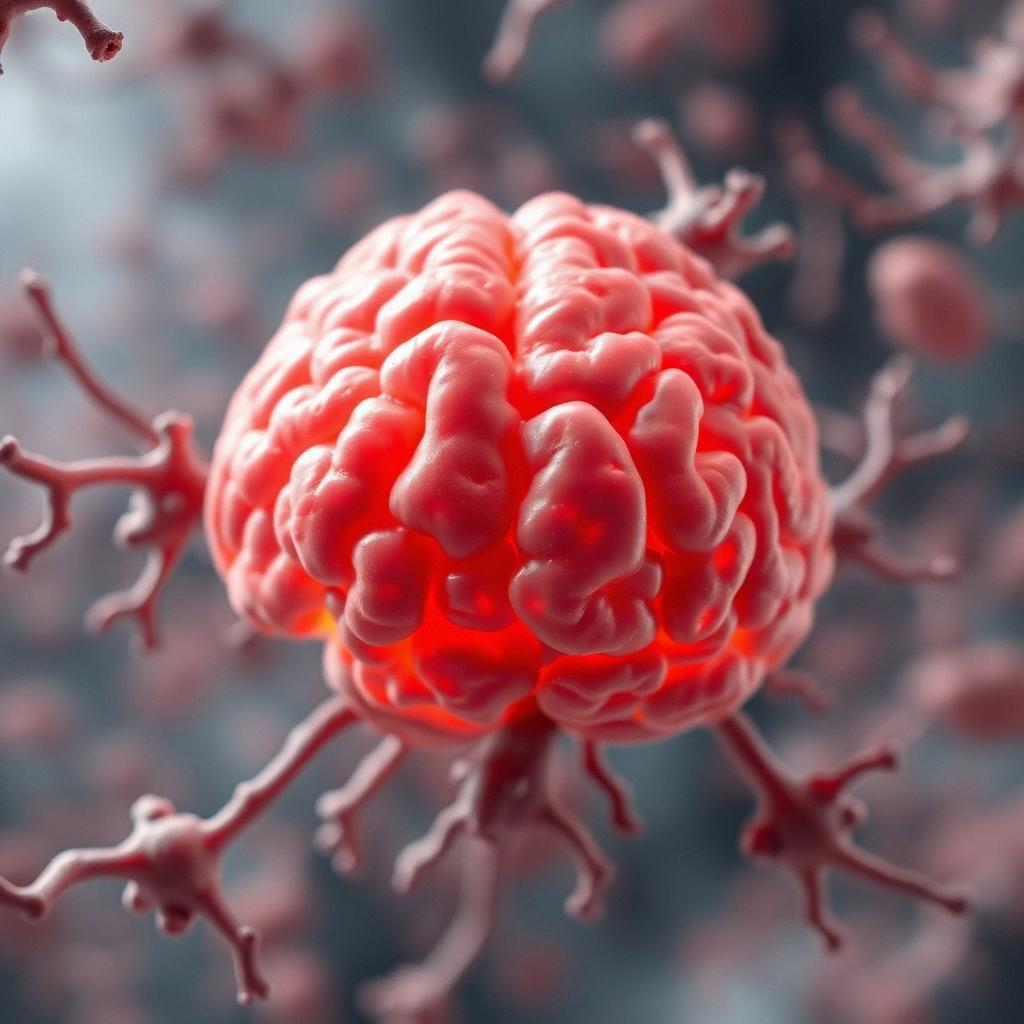
    Paper Review: Cardiovascular disease and microbiome: focus on ischemic stroke Science Art

     Science Movie


    Make a narrated HD Science movie for this answer ($32 per minute)


     Discussion


    Get Ahead With Science Insights

    Custom summaries of the latest cutting edge Science research. Every Friday. No Ads.


    My BGPT