Check a paper's claims against cited experiments, reported results, and sources.Know what the science actually supports before you trust the answer.
Press Enter ↵ to review paper
Explore by Goal
"Biology sees right and wrong as the same color in different light."
- Delia Owens
Quick Explanation
Copied
This preprint provides the first functional genetic evidence that a nicotinic acetylcholine receptor subunit (chrnal-E) promotes wakefulness in a cnidarian: RNAi knockdown increased sleep, cholinergic drugs bidirectionally altered ganglionic pacemaker firing, and field circadian sampling showed chrnal-E tracks wake drive . Caveats: small n, no CRISPR rescue, species-identity ambiguity, and single-transcript centrality.
Long Explanation
What the paper establishes
Building on the 2017 demonstration that Cassiopea meets behavioral sleep criteria (reversible nocturnal quiescence, elevated arousal threshold, daytime rebound after deprivation) , this preprint asks whether sleep regulation is also conserved. The team first validated a pulse-rate sleep/wake threshold via drop-tests, then performed RNAseq on rhopalia (the radial ganglia harboring pacemakers) after light-based sleep deprivation (LSD) and mechanical sleep deprivation (MSD). Chrna-α-E emerged as the top differentially expressed gene in ComBat-Seq merged datasets (24 consistently DE genes) .
Four converging lines support causality: (1) tubocurarine (nAChR antagonist) increased and nicotine decreased ganglionic inter-spike intervals dose-dependently (e.g., 600 µM DTC p=4.0e-9; 75 µM nicotine p=1.3e-8); (2) in situ hybridization localizes chrnal-E to the oral ganglia, with expression area expanding after LSD (p=1.1e-9, control n=252 ganglia, SD n=353); (3) novel Cassiopea RNAi feeding produced knockdown and increased daytime sleep (p=3.3e-6 for expression reduction); (4) field qPCR at Key Largo showed chrnal-E lowest at ZT19 in controls but peaking there after 7h LSD (p=.0013) — expression tracks wake drive, mirroring Drosophila Redeye .
Critical assessment
Strengths: two independent deprivation modalities, batch-correction across rounds, behavioral plus electrophysiological plus spatial-expression plus functional (RNAi) triangulation, and field circadian sampling — a rarely rigorous design for an early-branching metazoan. The species foundation was previously well characterized, including the sleep phenotype and melatonin/pyrilamine responsiveness .
Limitations: MSD had only n=3 animals and no nighttime recording assessment — the smallest arm carries the merged-dataset conclusion. One LSD animal consistently clustered with controls (noted by authors), and RNAi knockdown at ZT11 in LSD animals was non-significant, so the wake-promotion model is partly inferential. No rescue experiment (RNAi + chrnal-E overexpression) establishes specificity; mcol is an acceptable negative control but a second sleep-gene knockdown would strengthen causal attribution. AlphaFold structural homology to human Chrna7 (charged vestibule residues) is suggestive, not functional proof. Species ambiguity is under-addressed: Florida Keys Cassiopea include C. andromeda mitotypes and lab stocks may be mixed , and mitochondrial identity does not even predict nuclear ancestry . The prior sleep paper itself genotyped multiple COI haplotypes among Florida specimens , so chrnal-E findings should be validated in a genetically characterized clonal line.
What would change the conclusion: CRISPR knockout or rescue showing chrnal-E is necessary and sufficient; single-cell RNAseq resolving whether the receptor is neuronal vs. non-neural (given non-nuclear, cytosolic mRNA localization reported); and dose-response rescue of the RNAi sleep phenotype. Confidence in the wake-promotion claim: moderate-to-strong; in the evolutionary "conserved cholinergic homeostat" framing: plausible but rests on one gene in one cnidarian lineage where Chrns independently radiated .
Author-specific reviews:
Feedback:
Updated: September 19, 2026
BGPT Paper Review
Study Novelty
90%
First functional genetic evidence (RNAi) implicating a specific cholinergic receptor subunit in sleep regulation in a pre-bilaterian, extending sleep-homeostat conservation beyond Hydra's behavioral/qualitative work.
Scientific Quality
80%
Triangulated, multi-modal evidence with honest treatment of individual variability; but small MSD sample (n=3), no rescue experiment, non-significant knockdown in the LSD RNAi arm, and under-addressed species/mixed-stock identity temper quality. Preprint, not yet peer-reviewed.
Study Generality
80%
If chrnal-E genuinely tracks sleep debt, the cholinergic homeostat predates the CNS ancestor, generalizing across bilaterians and cnidarians; however, cnidarian Chrns independently radiated, so receptor-level (vs system-level) conservation is uncertain.
Study Usefulness
80%
Establishes RNAi tooling for Cassiopea and a candidate sleep-homeostat gene, opening a tractable non-bilaterian system for sleep-mechanism research relevant to the general sleep field.
Study Reproducibility
70%
Detailed methods (Pulse Tracker, RNAi feeding recipes, sequencing parameters, genome portal access); but RNAseq data 'available upon request' rather than deposited, and species composition of stocks is under-specified.
Explanatory Depth
70%
Positional, transcriptional, pharmacological, and behavioral evidence converges on chrnal-E as wake-promoting, but where it sits in the pathway (homeostat vs circadian vs stress sensor) remains explicitly unresolved by the authors; no cellular identity of receptor-expressing cells.
We'll email you the results when your analysis is finished.
Hypothesis Graveyard
Sleep regulation requires a centralized CNS with dedicated sleep nuclei — falsified for Cnidaria by this work and Hydra sleep studies.
Chrna7 orthology implies direct vertical descent of the sleep receptor — undermined by the authors' own phylogeny showing cnidarian and bilaterian Chrns radiated independently; conservation is at the system level, not the gene level.

 Explore by Goal
 Quick Explanation
 Long Explanation
 Top Data Sources
 Ask a Follow-Up
 Key Insight
 Keep Exploring
 Hypothesis Graveyard
 Potential Experiments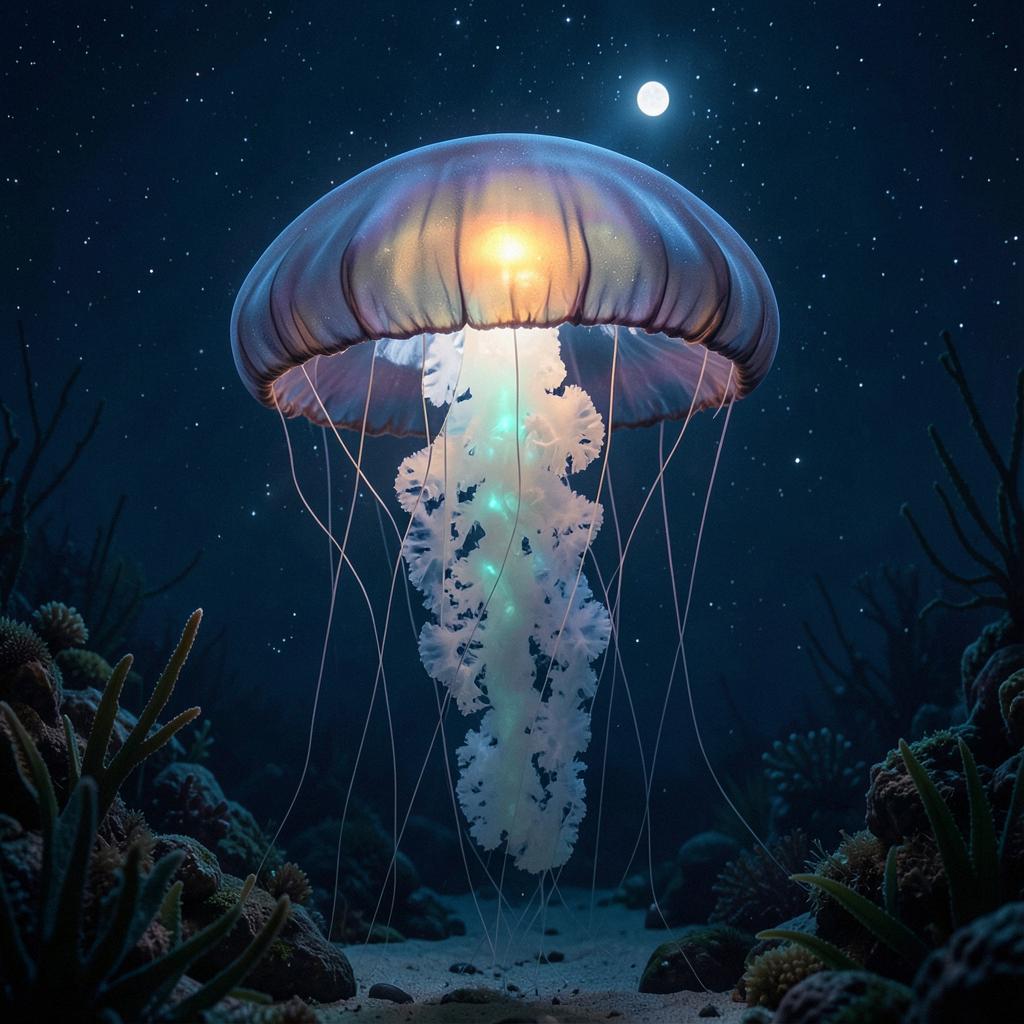
 Discussion