See how your reported results read as versioned evidence records — linked to experiments and limitations.Know what the science actually supports before you trust the answer.
Press Enter ↵ to review claims
Explore by Goal
"The most important scientific revolutions all include, as their only common feature, the dethronement of human arrogance from one pedestal after another of previous convictions about our centrality in the cosmos."
- Stephen Jay Gould
Quick Explanation
Copied
J. G. M. Thewissen is a world-leading paleontologist of cetacean origins, with 218 works, ~6,827 citations, and an h-index of 46, including multiple landmark Nature and Science papers that transformed understanding of whale evolution .
Long Explanation
Career Trajectory and Citation Impact
OpenAlex records 218 works for J. G. M. Thewissen with 6,827 citations and an h-index of 46 (orcid 0000-0002-0973-4137). Citation throughput peaked between 2001 and 2011 (≈2,800 citations in that decade alone), consistent with a mature, high-impact career that remains productive (2 works in 2026) .
Signature Contributions
His most influential work resolves the terrestrial-to-aquatic transition of whales: the 1994 Science paper on archaeocete locomotion (174 citations) , the 2001 Nature paper on terrestrial cetacean skeletons and the whale–artiodactyl relationship (291 citations) , and the 2007 Nature paper placing whale origins in Eocene India (339 citations) . He bridges paleontology with developmental biology: the 2006 PNAS paper on dolphin hind-limb bud degeneration (168 citations) and vestibular morphology work with Spoor (240 citations) . His 2008 edited synthesis of sensory evolution in secondarily aquatic vertebrates (237 citations) demonstrates breadth beyond Cetacea .
Critical Assessment
Strengths: fieldwork-driven discovery (Pakistan, India), repeated publication in top-tier venues, and integration of evo-devo with fossil evidence. Weaknesses/blindspots: most landmark papers are closed-access; citation counts concentrated in a few classic papers; the 2019–2026 citation dip partly reflects recency and OpenAlex lag, not declining influence. Total h-index (46) is inferred from OpenAlex metadata, which can split author identities (three minor duplicate records exist here), so metrics are approximate.
Feedback:
Updated: October 03, 2026
BGPT Author Review
Scientific Quality
90%
H-index 46, ~6,827 citations, 218 works, multiple first-author Nature/Science papers that redefined whale origins; genuinely field-transformative contributions, though citation concentration in a handful of classics suggests fewer recent high-impact works.
Communication Quality
80%
Writes accessible syntheses (Evolution Education and Outreach piece) alongside technical papers; the 2009 outreach article and edited sensory-evolution volume show strong skill translating paleontology for broad audiences, though much flagship work is paywalled.
Author Novelty
80%
Discovery of key transitional cetacean fossils and integration with developmental genetics were field-defining and novel; the conceptual frameworks are largely paleontological rather than methodologically groundbreaking.
Scientific Rigor
80%
Work is morphology- and specimen-based with careful phylogenetic and isotopic evidence; limitations include reliance on fragmentary fossils, inherently interpretive functional morphology, and limited pre-registration/testability typical of the field.
We'll email you the results when your analysis is finished.
Hypothesis Graveyard
Whale origins within mesonychians: falsified by Thewissen's own 2001/2007 fossil and molecular evidence placing Cetacea within Artiodactyla.
The 'explosive' cetacean radiation model: superseded by stepwise Eocene fossil sequences (Pakicetus → Ambulocetus → basilosaurids) documented in his work.

 Explore by Goal
 Quick Explanation
 Long Explanation
 Ask a Follow-Up
 Key Insight
 Keep Exploring
 Hypothesis Graveyard
 Potential Experiments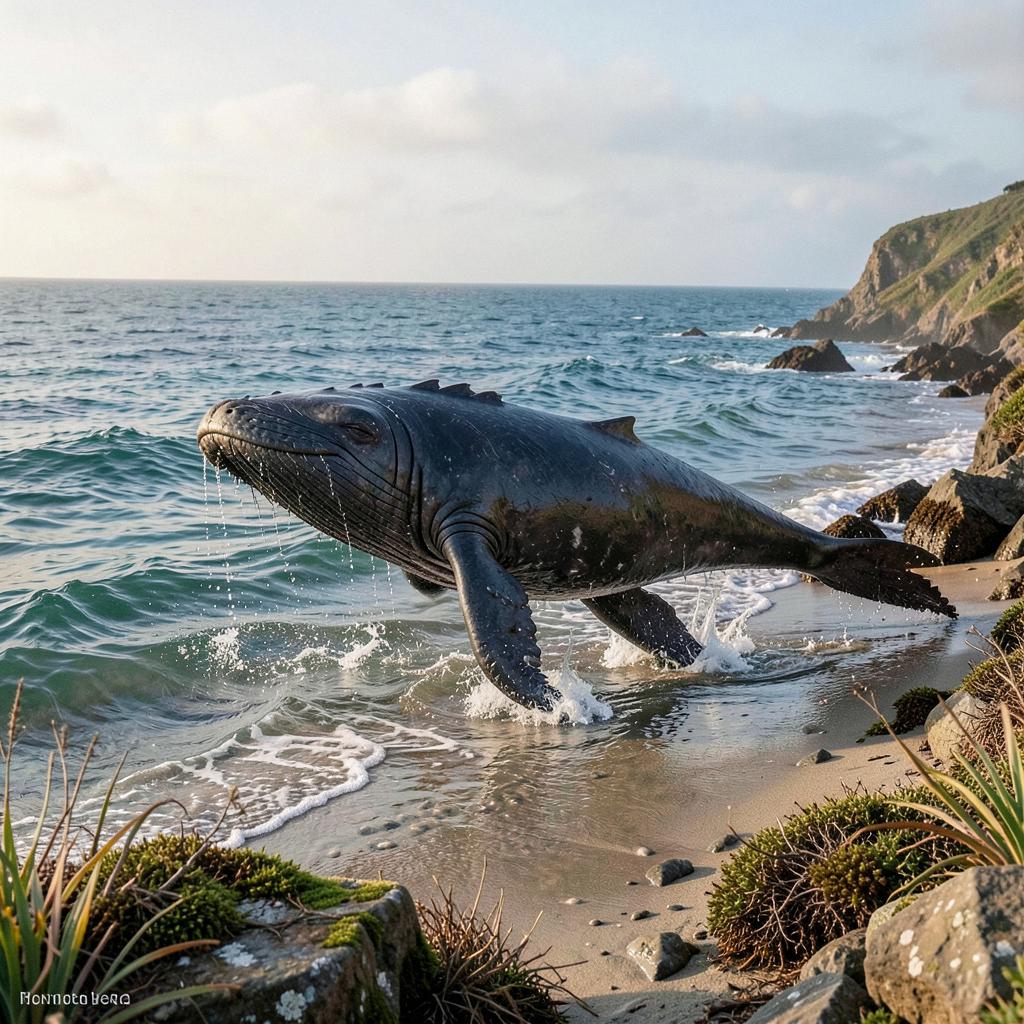
 Discussion