Why BGPT?
logo

Review papers with raw data transparency

Quickly verify claims by accessing the underlying experimental data and figures.


Press Enter ↵ to solve


    Fuel Your Discoveries


     Quick Explanation


    Paper Review (mechanism-focused): NEDD8 links CRLs to p97

    Den Besten et al. identify UBXD7 (and its yeast ortholog Ubx5) as the p97 cofactor that directly recognizes the active, neddylated form of cullin-RING ligases (CRLs) via UBXD7’s UIM–NEDD8 interface, and show that disrupting this UIM mechanism impairs CRL substrate degradation—demonstrating a conserved role for NEDD8 as a molecular link between CRL chemistry and the p97 extraction/dislocation pathway.

    Most important mechanistic claim: UBXD7 binds only neddylated cullins through its UIM, and this binding is required (at least in the tested yeast substrate context) for efficient p97/Cdc48-dependent degradation.


     Long Explanation


    NEDD8 links cullin-RING ubiquitin ligase function to the p97 pathway

    Den Besten et al., 2012 • DOI: 10.1038/nsmb.2269

    1) Visual: pathway architecture (what the authors propose/test)

    Schematic of the paper’s core mechanistic link: CRL activation via NEDD8 enables UBXD7/Ubx5 recruitment to neddylated cullins, thereby coupling to p97/Cdc48 for degradation of a CRL substrate (tested in yeast as UV-induced Rpb1 degradation).

    Known vs. inferred (from the paper): The binding preference for neddylated cullins and the UIM dependence are directly tested by biochemical recruitment assays and UIM/NEDD8 mutant perturbations; however, the exact mechanistic timing/order of “neddylation → UBXD7 engagement → p97-driven substrate extraction” across all substrates remains incompletely resolved.

    2) Results map (what was tested, and what each test supports)

    Experiment theme Primary observation Mechanistic support
    UBXD7 recruitment specificity across cullins Among p97 adaptors tested, UBXD7 (UBX-domain deleted) associates with endogenous CUL2 and CUL4a; UBXD7 shows strongest binding to CUL2, CUL4a and CUL4b and no binding to CUL5. Establishes cullin-selective recruitment as a prerequisite for a CRL→p97 link.
    Neddylation dependence UBXD7 binds exclusively the neddylated form of cullins; NEDD8 conjugation inhibition (MLN4924) or cullin neddylation-deficient mutants (K→R) reduce binding. Supports that NEDD8 activation is the recruitment signal.
    UIM requirement (direct recognition) UIM mediates binding to neddylated CRLs (in recombinant pull-down contexts); ∆UIM decreases endogenous CUL2 association with little/no change in p97 binding. Supports direct UIM–NEDD8 interface as the critical molecular contact.
    NEDD8 hydrophobic patch mutational validation UIM point/triple mutants of UBXD7 and a NEDD8 hydrophobic patch mutant (N8-L8A) reduce UBXD7–CUL2 association; a cullin–RBX complex that adopts active conformation without neddylation does not bind UBXD7. Supports that it is conjugated NEDD8, not just “active conformation,” that enables UIM docking.
    Functional requirement in vivo (yeast substrate) In yeast, UV-induced, Cul3-dependent degradation of Rpb1 depends on Ubx5; deleting Ubx5 UIM delays Rpb1 degradation (ubx5uim∆ intermediate vs ubx5∆ stronger effect). Epistasis with rub1∆ supports shared pathway logic. Links the binding mechanism to a degradation phenotype.

    3) Mechanistic interpretation (with skepticism)

    3.1 What is strongly supported

    • Conjugated NEDD8 is required for UBXD7↔cullin recruitment (neddylation-deficient cullins and MLN4924 reduce recruitment; NEDD8 hydrophobic patch mutation reduces binding).
    • UBXD7’s UIM is the critical determinant for recognition of neddylated cullins, while UIM deletions reduce CUL2 association without abrogating p97 binding.
    • UIM-dependent binding contributes to degradation in a yeast CRL substrate model (Rpb1) under UV-induced conditions.

    3.2 What remains uncertain / open

    • Which CRL substrates robustly require p97/UBXD7 recruitment remains incompletely mapped; the paper explicitly notes that additional CRL substrates engaging the p97 pathway will be needed for a deeper range of biological functions.
    • Timing and conditionality: UIM–NEDD8 likely stabilizes a multidentate interaction, but the paper also argues UIM–NEDD8 alone is typically low-affinity; the precise register/structural interface details are left for future structural work.
    • Potential antagonism vs support: because UBXD7’s determinants also matter for ubiquitin-ligase assembly/recognition, the authors discuss a possibility UBXD7 could antagonize CRL activity in some contexts, but this is not fully dissected for all substrates/assays.

    4) Critical appraisal (quality + bias checks)

    Strengths

    • Mechanistic coherence across scales: biochemical recruitment/selectivity, direct interface logic (UIM and NEDD8 mutants), and an in vivo functional phenotype in yeast.
    • Use of perturbations that target the proposed interface: UIM deletions/point mutants and NEDD8 hydrophobic patch mutants converge on the same prediction (reduced recruitment).
    • Disentangling recognition from p97 binding: ∆UIM reduces CUL2 association while leaving p97 binding intact (supporting a separation of roles).

    Potential blind spots / limitations

    • Model substrate scope: functional testing is tied to UV-induced Rpb1 degradation and a limited set of CRL substrates (the paper notes other established p97/CRL substrates are not UBXD7-dependent); this constrains how broadly one can generalize the mechanism.
    • Cell-context extrapolation: many binding data are from human 293T cells or recombinant complexes; the authors also use yeast for function—species conservation is supported, but cellular composition/localization differences could alter quantitative engagement.
    • Indirect effects in complex systems: the paper notes some UBA/UIM/UBX deletion mutants show unexpected binding defects in cells vs purified proteins, suggesting indirect roles or context-dependent folding/assembly effects that are not fully resolved.

    5) Hypothesis stress-test (what would falsify the paper’s core claim?)

    • If UBXD7 could not be shown to depend on conjugated NEDD8 (e.g., ∆UIM mutants failing to reduce recruitment despite adequate neddylation in the same cells), then the UIM–NEDD8 link would be undermined.
    • If the UIM/NEDD8 interface mutants fail to impair degradation of a tested CRL substrate even when binding is selectively reduced, then the binding→function causal chain would be weakened.
    • If neddylation-dependent recruitment exists but does not meaningfully bias engagement of the p97 pathway in vivo beyond basal levels, then the “link” could be more correlative than causative.

    6) Bespoke next steps (what to ask BGPT next)


    Feedback:   

    Updated: March 28, 2026

    BGPT Paper Review


    Study Novelty

    70%

    The paper identifies a specific, conserved molecular link (UBXD7/Ubx5 UIM–NEDD8 recognition) coupling CRL activation state to p97 recruitment, which was not established mechanistically before; however, it builds on known CRL neddylation cycles and known UIM biology rather than introducing entirely new post-translational-modification classes.


    Scientific Quality

    80%

    Scientific quality is strengthened by convergent evidence: biochemical recruitment specificity, dependence on neddylation, interface-focused mutagenesis (UIM and NEDD8 hydrophobic patch), computational modeling, and a functional yeast degradation readout. Skeptical caveat: the functional side is shown for a limited substrate class/context, and some mutant behaviors differ between purified and cellular contexts (potential indirect effects).


    Study Generality

    60%

    The mechanism is presented as conserved (human UBXD7 ↔ yeast Ubx5) and plausibly broad for neddylation-activated CRLs, but the degradation function is demonstrated in a specific yeast substrate context, leaving the breadth across diverse CRL substrates and cellular contexts partially unresolved.


    Study Usefulness

    80%

    High usefulness for mechanistic cell biology: it provides a concrete recognition principle (UIM–NEDD8 on active cullins) to guide future mapping of p97-dependent substrates and to refine how CRL activation states are communicated to dislocation/extraction machinery.


    Study Reproducibility

    70%

    Methods are described in the paper and the experiments are standard for protein-interaction biology (immunoprecipitation, pull-downs, Western blots, inhibitor treatments, yeast degradation assays). However, reproducibility would depend on access to exact constructs/assays and on details in supplementary methods not included here; also, quantitative outcomes could vary with cell context.


    Explanatory Depth

    80%

    The study offers a mechanistic explanation for how p97 recruitment could be activated specifically by CRL activation state (neddylation) and identifies a molecular interface (UIM–NEDD8). It remains incomplete in exact structural details and in mapping across all substrates/contexts.


    🎁 Authors: Collect 301 Free Science Tokens (≈ $30.1 USD)

    Claim My Author Tokens

    Use for 75 days of free BGPT access (4 tokens = 1 day) or trade/sell (≈ $30.1 USD)

     Top Data Sources ExportMCP


     Analysis Wizard


    Construct a mechanistic graph from the paper (CRL states → UBXD7 UIM–NEDD8 binding → p97 engagement → degradation readout), then export a checklist of falsifiable predictions grouped by assay type.


     Hypothesis Graveyard


    A strongman “UBXD7 binds neddylated cullins mainly via its UBA domain recognizing ubiquitin on substrates (not NEDD8)” is less preferred because the paper reports UBA contributes to polyubiquitin binding in purified-chain assays but UIM dependence governs binding to neddylated cullins absent ubiquitin chains.


    A strongman “active cullin conformation alone (independent of NEDD8 conjugation) enables UBXD7 recruitment” is undermined by the observation that a NEDD8-free active conformation model complex fails to bind UBXD7 in the paper’s controls.

     Science Art


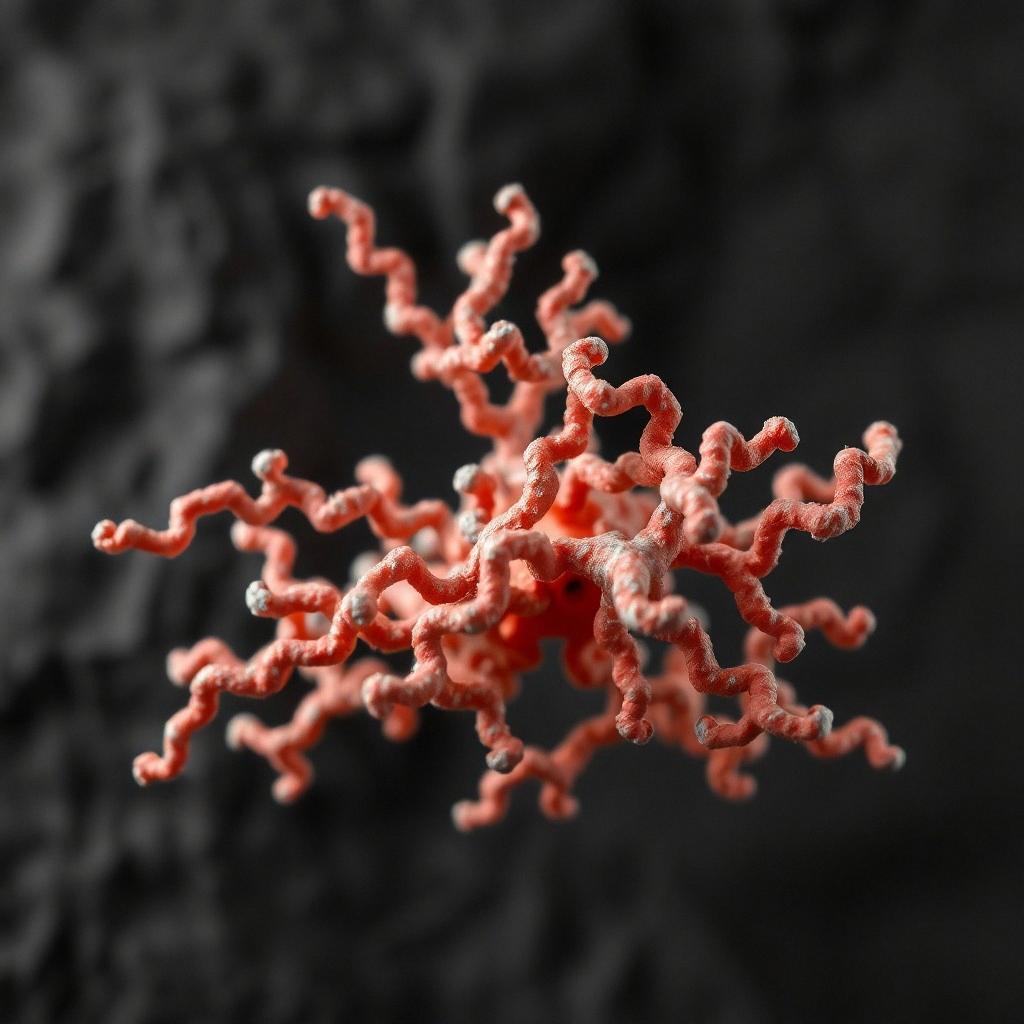
    Paper Review: NEDD8 links cullin-RING ubiquitin ligase function to the p97 pathway Science Art

     Science Movie


    Make a narrated HD Science movie for this answer ($32 per minute)


     Discussion


    Get Ahead With Science Insights

    Custom summaries of the latest cutting edge Science research. Every Friday. No Ads.


    My BGPT