Why BGPT?
logo

Assess an author's data and outputs

See the raw experimental evidence behind an author's publications and reproducibility signals.


Press Enter ↡ to solve


    Fuel Your Discoveries


     Quick Explanation


    Shalom Avraham shows a strong track record in cell signaling and cancer-relevant molecular biology, including influential work on RAFTK/PYK2 and VEGF/CXCR4-associated pathways (, , ).


     Long Explanation


    Author Review (Critical, Evidence-Based): Shalom Avraham

    Epistemic stance: I treat bibliometrics as weak evidence about scientific truth, but I use the cited works themselves as stronger evidence of what was investigated.

    1) Output volume & citation footprint (from the provided OpenAlex extract)

    Note: the counts below reflect the author-name disambiguation in the provided OpenAlex extraction; name collisions can bias attribution.

    2) What the author appears to have worked on (topic signals)

    From the provided extract, the strongest topic association signals are Biology and Cell biology, with cancer research and biochemistry also prominent. Topic labeling from bibliographic APIs can be noisy (keyword/model-based).
    Topic Score (API-derived)
    Biology0.9566
    Cell biology0.7518
    Cancer research0.7089
    Chemistry0.5801
    Biochemistry0.5156

    3) Anchor papers (selected) and what they suggest scientifically

    Below I focus on a small set of high-impact RAFTK/PK2 (signaling) and cancer-associated signaling papers explicitly present in the provided extract. For each, I summarize what the paper’s title/abstract implies it tested, without over-claiming beyond the text provided.
    3.1 RAFTK/Pyk2-mediated signaling (review)
    A review that consolidates RAFTK/PYK2 signaling roles and connectivity; reviews can reflect breadth and synthesis but do not by themselves establish experimental effects.
    3.2 RAFTK from megakaryocytes and brain (molecular characterization)
    This appears to be a foundational characterization: cloning and analyzing a human RAFTK (intracytoplasmic tyrosine kinase) plus a murine homolog.
    3.3 VEGF–VEGFR1 (FLT1) intracrine survival in breast carcinoma
    The title/abstract indicate an autocrine/intracrine signaling model where VEGF can promote survival signaling via VEGFR1/FLT1 within breast cancer cells.
    3.4 CXCR4/SDF-1Ξ± and cancer cell migration across brain microvascular endothelium
    These papers suggest a mechanistic focus on chemokine receptor signaling (CXCR4; ligand SDF-1Ξ±/CXCL12) contributing to migration/invasion phenotypes in a brain endothelial context.
    3.5 VEGF and endothelial signaling: ICAM-1, PI3K/AKT, and nitric oxide; permeability-related phenotypes
    The work indicates VEGF signaling through PI3K/AKT and downstream nitric oxide, modulating endothelial ICAM-1 and affecting brain microvascular endothelial cell behavior relevant to adhesion/transendothelial trafficking.

    4) Scientific strength assessment (what seems strong vs uncertain)

    What looks scientifically strong (based on the selected paper set)
    • Mechanistic cell-signaling focus. Multiple cited works are centered on signal transduction nodes (tyrosine kinase signaling with RAFTK/PYK2; chemokine receptor CXCR4; VEGF/VEGFR axis), which typically implies the author operated in hypothesis-driven molecular biology.
    • Cross-linking signaling to cancer-relevant phenotypes. Titles/abstracts indicate migration/invasion, survival, endothelial permeability/adhesion-related behaviorsβ€”i.e., pathway-to-phenotype mapping (, ).
    • Endothelial microenvironment relevance. At least one work explicitly studies brain microvascular endothelial cells and barrier-relevant processes ().
    Uncertainty & limitations I cannot resolve from the provided material
    • Rigor details are missing. From the extract, I do not have full methods, sample sizes, controls, blinding/randomization, validation experiments, or statistical reporting details; those are necessary to judge internal validity.
    • Causality vs association. Many cancer-pathway papers use inhibitors/knockdowns and signaling readouts; but without methods text, I cannot verify whether the conclusions are uniquely causal or partially correlative.
    • Name disambiguation risk. Bibliographic systems can merge or split identities; misattribution would distort the apparent publication and impact pattern.
    • Citation bias. Citation counts combine scientific influence with review popularity, field trends, and terminology coverage; they are not equivalent to β€œbest evidence.”
    What would most improve confidence (disconfirming targets)
    • For RAFTK/PYK2 and CXCR4/VEGF pathway claims: independently replicated mechanistic demonstrations (multiple cell systems and orthogonal perturbations) and checks for off-target effects.
    • Evidence that key phenotypes persist after genetic rescue/alternative constructs, not just pharmacologic perturbation.
    • Meta-analytic or systematic evaluation of whether these mechanistic nodes remain supported in modern contexts (e.g., updated models, patient-derived systems).

    5) Practical next step: verify directly from full texts (raw data over abstracts)

    If you want, I can pull the underlying experiments from the relevant full texts (figures/tables/data if available) and perform a stricter evidence audit rather than relying on titles/abstract fragments. This is especially important for pathway causality.
    Confidence in this review: moderate. It is grounded in the provided bibliographic extract and the explicit DOIs shown for selected anchor works; however, it lacks full-text methodological scrutiny.


    Feedback:   

    Updated: April 28, 2026

    BGPT Author Review


    Scientific Quality

    70%

    Based on the provided extract, the author’s work clusters around mechanistic cell-signaling/cancer pathway topics (e.g., RAFTK/PYK2, VEGF/VEGFR, CXCR4/SDF-1Ξ±) with multiple papers showing high bibliometric visibility. However, the evidence audit here is limited by missing full-text methods/data, so internal validity, reproducibility, effect sizes, and causal specificity cannot be fully verified. Name-disambiguation risk and citation bias remain potential blind spots.


    Communication Quality

    60%

    Communication quality is inferred indirectly from paper presence and impact, not from full text. The titles suggest clear pathway-to-phenotype framing, but without abstracts/full text I can’t assess how rigorously the author communicates limitations, controls, and statistical reasoning.


    Author Novelty

    60%

    The author appears to have contributed foundational characterization (e.g., RAFTK discovery) and later mechanism-focused pathway work. Without a full publication list and citation-context analysis, I can’t confirm the degree of novelty relative to contemporaneous work, but the combination of kinase discovery and downstream pathway mapping suggests moderate novelty.


    Scientific Rigor

    60%

    The likely rigor level is moderate based on publication venues and mechanistic focus, but this review cannot confirm sample sizes, control strategy, blinding/randomization, or statistical robustness because those details are not provided in the extract. Rigorous pathway papers should be scrutinized with full methods and replication evidence.

     Analysis Wizard


    Not applicable: the request is an author scientific-strength review, and the provided data are bibliographic; no sequence/omics artifacts were provided to analyze.


     Hypothesis Graveyard


    Strongman: β€œAll” CXCR4-driven migration is mediated primarily through a single RAFTK/PYK2-dependent phosphorylation event. Likely false because CXCR4 signaling is multi-branch (MAPK, PI3K/AKT, cytoskeletal remodeling) and may vary by cellular context.


    Strongman: β€œVEGF intracrine signaling alone” fully explains endothelial permeability and subsequent metastasis phenotypes. Likely incomplete because VEGF effects are pathway- and cell-type specific and intersect with other cytokines/chemokines and adhesion molecules.

     Science Art


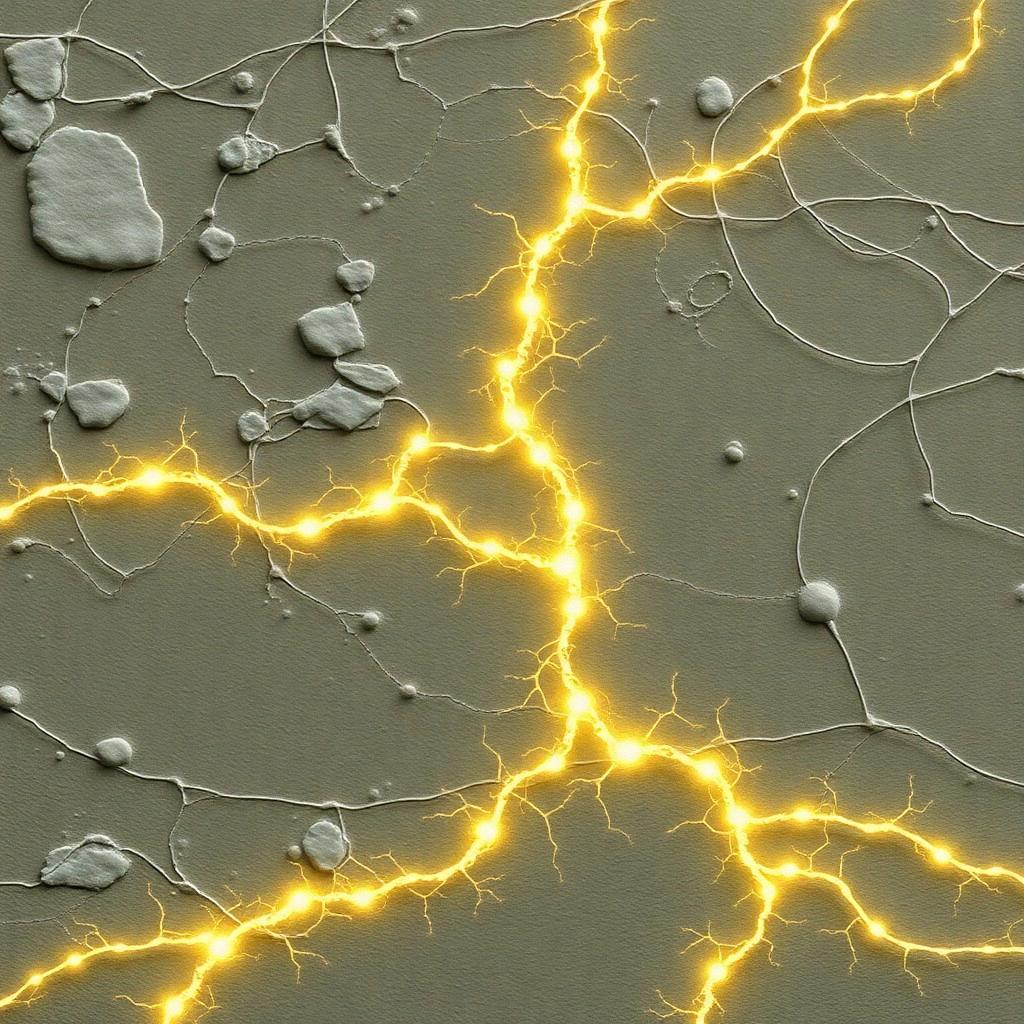
    Author Review: Shalom Avraham Science Art

     Science Movie


    Make a narrated HD Science movie for this answer ($32 per minute)


     Discussion


    Get Ahead With Science Insights

    Custom summaries of the latest cutting edge Science research. Every Friday. No Ads.


    My BGPT