Check each claim against its experiments, reported results, scope, and stated limitations.Know what the science actually supports before you trust the answer.
Press Enter ↵ to start review
Explore by Goal
"Imagination is more important than knowledge. Knowledge is limited. Imagination encircles the world."
- Albert Einstein
Quick Explanation
Copied
Skeletal verdict
Blay’s 2010/2011 narrative review argues that the PI3K–Akt–mTOR axis is frequently dysregulated in sarcomas and that mTOR inhibitors can generate mostly cytostatic clinical benefit (especially SD/PR) in selected contexts, while emphasizing resistance biology, imaging/endpoints issues, and the need for better patient selection.
Key evidence in the provided full text includes mechanistic pathway logic and reported clinical activity signals for temsirolimus, everolimus, and ridaforolimus across sarcoma-relevant studies.
Long Explanation
Paper Review (full-text provided): Updating progress in sarcoma therapy with mTOR inhibitors
Journal DOI: 10.1093/annonc/mdq307 • Publication date shown in header: 29 June 2010 / volume context noted as Feb 2011.
Type: narrative review (not a new experimental study), synthesizing pathway rationale + preclinical/clinical literature signals for rapalogs in sarcoma.
Funding/COI hints in provided text: ARIAD grant support for drafting and author honoraria/consultancy relationships across multiple pharma (including Novartis, Pfizer, Roche, GSK, PharmaMar).
1) Visual map: where the review spends its mechanistic effort
PI3K–Akt–mTOR signaling logic (mTORC1 vs mTORC2; upstream sensors; downstream outputs)
The review’s core mechanistic thesis is that multiple sarcoma subtypes show dysregulation along the PI3K→Akt→mTOR axis, and that pharmacologic blockade of mTOR complexes can blunt growth/proliferation outputs and potentially interfere with resistance.
Directed knowledge graph (conceptual)
Note: the graph is conceptual, directly reflecting the mechanistic sequence and complex-specific statements in the review.
2) Evidence synthesis: what clinical signals the review highlights
2A) Temsirolimus (soft-tissue sarcoma phase II) — limited activity signal in the review
The review describes a phase II multicenter study in soft-tissue sarcoma: weekly IV temsirolimus, with ~41 assessable patients and an estimated median time to progression of ~2 months, and grade 3 adverse events reported in 42% of patients. It also contrasts these results against a retrospective benchmark expectation for an “active” first-line agent (6-month PFS rate ≥30%).
2B) Ridaforolimus (AP23573/deforolimus) — sarcoma phase II clinical benefit dominated by SD/PR
The review summarizes an advanced sarcoma phase II with N=216 across histologies (bone, leiomyosarcoma, liposarcoma, other soft tissue sarcomas) reporting RECIST-defined responses and a clinical benefit rate (CBR) of 29% including five partial responses, with many responses being prolonged stable disease (≥16 weeks) and no significant difference across the histology subgroups.
3) Visual comparison: ridaforolimus maintenance vs placebo in metastatic sarcoma (phase III data provided)
The review itself is a narrative synthesis, but the provided research bundle also includes a later phase III ridaforolimus vs placebo maintenance trial reporting modest PFS benefit without OS improvement.
Reported safety differences are substantial for grade ≥3 AEs and treatment discontinuation due to AEs.
4) Skeptical critique: what’s strong vs what’s method-limited
What the review does well
Mechanistic coherence: it consistently maps upstream regulation (PI3K/PTEN/Akt, energy sensing via LKB1/AMPK, TSC complex control) to mTORC1 outputs (S6K1, 4E-BP1) and emphasizes complex-specific pharmacologic susceptibility.
Clinical realism about cytostasis: it highlights that RECIST size-based outcomes can miss early benefits for cytostatic agents, and discusses alternative imaging/endpoint logic (DCE-MRI, DCE-US, FDG-PET) and the need for validation.
Where the reasoning is method-limited (important blind spots)
Narrative review selection risk: the article is not a systematic review; it explicitly says the author selected references with PubMed/EMBASE searches with topic-dependent terms. That structure can introduce selection bias and incomplete coverage.
Heterogeneity of sarcoma biology: “sarcoma” is a diverse label; the review notes that studies often pool subtypes, which makes histology-specific inference difficult—this limits generalizability of any mTOR-targeted conclusion across all sarcomas.
Endpoint interpretation risk: cytostatic drugs can yield prolonged SD without proportional OS gains; the review argues for this interpretation, but it also means that comparative benefit across trials can be nontrivial to evaluate.
Balance of benefit vs toxicity requires careful trial-level reading: phase III maintenance data provided with the bundle show modest PFS benefit and no OS advantage, with higher grade ≥3 AEs and discontinuations. That can partially constrain the “exciting opportunity” framing when applied to broad metastatic sarcoma populations.
5) Reviewer-style bottom line (with confidence statement)
Most defensible conclusion from the provided text
The paper’s defensible core claim is that the PI3K–Akt–mTOR pathway is mechanistically plausible as a sarcoma vulnerability (based on upstream/downstream regulatory structure described) and that mTOR inhibitors show signals of disease control (often SD-dominant/cytostatic) in some sarcoma contexts, while also underscoring the need for better patient selection, better response assessment, and thoughtful combination strategies.
Confidence: moderate in pathway plausibility and cytostatic-benefit framing (strong mechanistic narrative), but only moderate in the strength of generalizable clinical benefit across sarcoma histologies because the evidence base described includes pooled/heterogeneous sarcoma cohorts and cytostasis that may not translate into OS—consistent with provided phase III ridaforolimus maintenance results showing no OS benefit despite PFS gain.
What would most strongly disprove/redirect the paper’s implied direction? Robust prospective evidence demonstrating that mTOR inhibition does not materially improve clinically meaningful endpoints (OS, quality-adjusted survival, or validated imaging surrogates correlated with survival) in adequately selected histology/molecular-defined subgroups, especially if toxicity negates any PFS-only advantage. (This is an epistemic criterion; the paper itself calls for better selection and endpoints.)
Author review links (bespoke)
J.-Y. Blay
Feedback:
Updated: April 29, 2026
BGPT Paper Review
Study Novelty
60%
Novelty is moderate because it is a narrative synthesis of a known, established signaling axis (PI3K–Akt–mTOR) and rapalog development; novelty comes mainly from updating sarcoma-specific clinical progress and endpoint/assessment concerns rather than introducing new experimental mechanisms.
Scientific Quality
70%
Scientific quality is solid for a narrative review: it provides coherent pathway biology, discusses complex-specific rapamycin sensitivity, and addresses endpoint measurement limitations for cytostatic drugs. However, as a narrative review, it has inherent selection-bias risk and cannot substitute for systematic evidence grading; additionally, author funding/consulting relationships introduce interpretive caution.
Study Generality
60%
General relevance is limited by sarcoma heterogeneity and subtype-specific signaling differences; while the PI3K–Akt–mTOR axis is broadly important in oncology, the review’s actionable conclusions are necessarily narrower because sarcoma evidence is pooled and histology-specific.
Study Usefulness
70%
Useful as a mechanistic orientation and clinical-trial signal map for mTOR inhibitors in sarcoma, especially regarding cytostatic endpoint challenges and imaging surrogates. It is less useful for definitive clinical decision-making because it is a narrative review and evidence includes heterogenous cohorts and mixed outcomes.
Study Reproducibility
60%
Reproducibility is moderate: the review states it uses PubMed/EMBASE searches with topic-dependent terms, but it does not provide a full systematic protocol or extraction spreadsheet in the provided full text, limiting exact replication of inclusion/exclusion decisions.
Explanatory Depth
80%
Depth is high on mechanistic explanation: it lays out upstream pathway logic, complex-specific roles (mTORC1 vs mTORC2), and downstream targets, then connects that framework to resistance and to why endpoints/biomarkers matter.
Extract key numeric endpoints (PFS/OS, HRs, CBR, AE rates) from the provided full-text and phase III section, then generate publication-style comparison plots and a trial-evidence table for rapid cross-trial scrutiny.
Get emailed when your analysis is done!
We'll email you the results when your analysis is finished.
Hypothesis Graveyard
A global “all sarcomas depend on mTOR” hypothesis is disfavored because the review itself stresses subtype pooling and heterogeneous activated pathway drivers, and the later phase III pattern shows modest PFS gains without OS in a broad metastatic maintenance population.
“RECIST response equivalently predicts survival for mTOR inhibitors” is unlikely because the review explicitly cautions that cytostatic effects may not involve size changes and that surrogates must be validated against clinical outcomes.

 Explore by Goal
 Quick Explanation
 Long Explanation
 Top Data Sources
 Ask a Follow-Up
 Key Insight
 Keep Exploring
 Analysis
  Hypothesis Graveyard
 Potential Experiments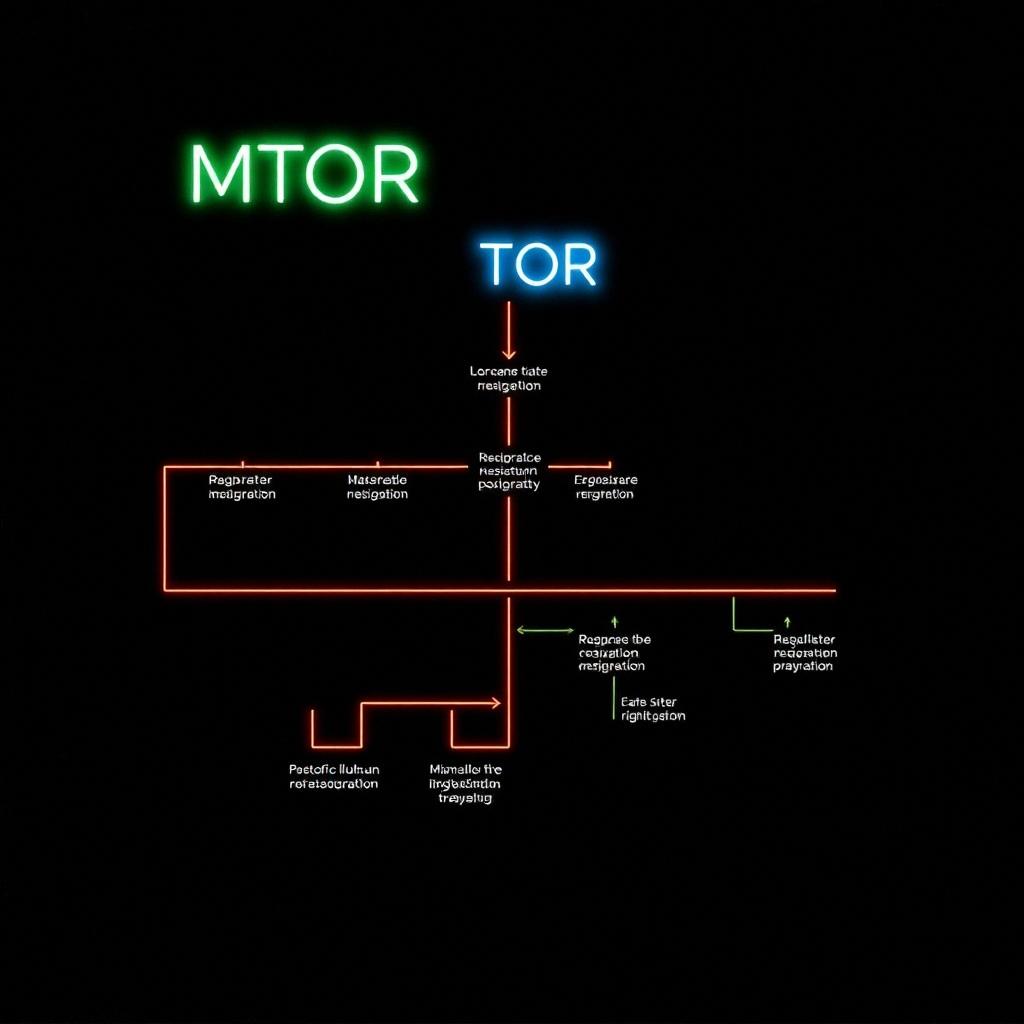
 Discussion