Why BGPT?
logo

The Evidence Layer for Scientific AI

Ask questions across claims linked to experiments, exact results, limitations, and sources.Know what the science actually supports before you trust the answer.

Press Enter ↡ to search evidence


     Long Response


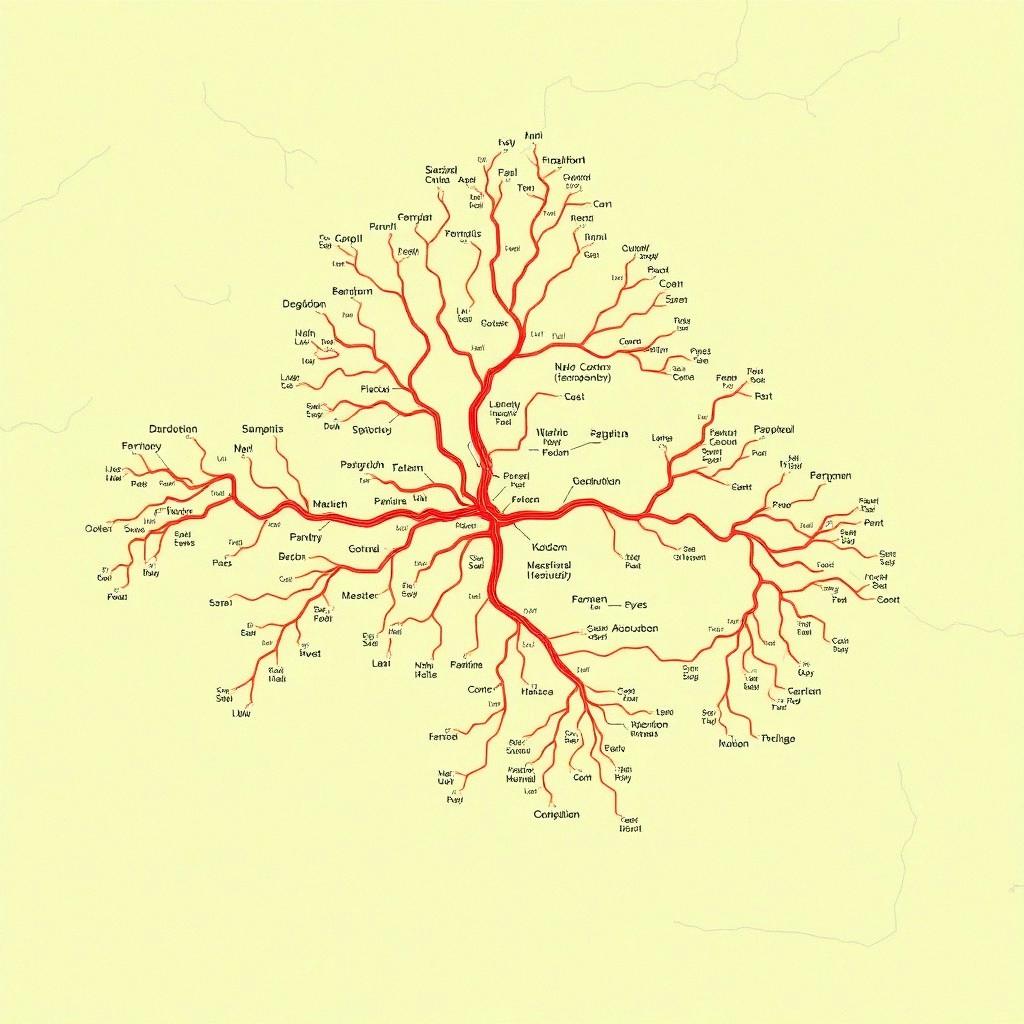
    HSP60 Pathway Map: ROS β€’ UPR β€’ Apoptosis β€’ Inflammation (evidence-linked)

    Scope note (skeptical + evidence-constrained): Your provided corpus contains (i) a bacterial GroEL-like HSP60 study showing ERK1/2-driven proliferation in HaCaT cells, (ii) a TLR signaling review proposing HSP60 as a potential TLR4 endogenous ligand, (iii) UPR/mitochondrial UPR (UPRmt) reviews that list HSP60 as part of UPRmt networks (esp. cancer contexts), and (iv) apoptosis-related HSP reviews describing dual roles for HSP60/HSP10. However: the supplied data do not include a single, direct, end-to-end experimental chain β€œHSP60 β†’ ROS β†’ UPR β†’ apoptosis β†’ inflammation” measured in one system. The map below therefore labels arrows as strongly supported vs context/indirect vs mechanistic but not directly demonstrated here.
    Evidence anchors for the bar chart
    • ERK1/2 phosphorylation is activated rapidly and sustained after bacterial hsp60 exposure in HaCaT cells (vs recombinant human hsp60, which lacks this effect).
    • p38 phosphorylation is also activated but transiently; ERK1/2 and p38 are discussed as balancing signals in the proliferation outcome.
    • Proliferation increases by ~30% in HaCaT cells with bacterial hsp60; MEK inhibition (PD 98059) blocks the proliferation response.
    Critical limitation: This is an in vitro single-line model (HaCaT). Receptor identity and in vivo relevance are explicitly uncertain in the provided dataset.
    How to read the concept support indices
    • Strong when the provided paper directly reports the relevant molecular/readout association (e.g., bacterial hsp60 β†’ ERK1/2, proliferation).
    • Moderate when the connection is discussed mechanistically or contextually but not directly demonstrated across the full ROSβ†’UPRβ†’apoptosisβ†’inflammation chain in the provided corpus.
    • Moderate/weak for UPRmt network membership and apoptosis dual-role because the provided data are reviews that summarize multiple systems and emphasize context dependence/heterogeneity.
    • Dual-role apoptosis modulation is described in a HSP apoptosis review; mechanistic direction depends on context/stimulus.
    Skeptical integration note
    The ROS/p38 findings come from a mitophagy study (Parkin/PINK1-dependent mitophagy). In the provided dataset, hsp60 is used as a mitochondrial marker, not as the perturbation that generates ROS. Therefore, the ROSβ†’p38 arrow can only be treated as a plausibility module for how ROS may couple to p38 signaling in related stress contexts, not as direct evidence for β€œHSP60 induces ROS.”

    HSP60 Pathway Map (module-style; arrows labeled by evidence level)

    Legend: Strong = directly reported in the provided experiment; Moderate = proposed/related in reviews; Indirect = different initiating agent/system (used as a plausibility module only).
    Map-specific evidence statements (only from provided corpus):
    • bacterial hsp60 β†’ ERK1/2 and hsp60-dependent proliferation in HaCaT cells.
    • bacterial hsp60 β†’ p38 (transient) with observed balancing effects on proliferation.
    • HSP60 as potential TLR4 endogenous ligand is proposed within a TLR signaling review emphasizing MyD88-dependent signaling and complexity.
    • UPRmt review: UPRmt involves stress-driven mitochondrial proteostasis signaling networks (ATFS-1/ATF5), with HSP60 included among components considered for targeting; crosstalk with ER stress and ROS signaling is discussed, and context/cell-type-specific dual effects are emphasized.
    • Apoptosis duality for HSPs: HSP60/HSP10 can be described as promoting proenzyme maturation (e.g., caspase-3) under some conditions, while other HSPs are generally antiapoptotic; overall outcome depends on balance and stimulus/context.
    • ROS ↔ p38 module: superoxide is reported to drive progression of Parkin/PINK1-dependent mitophagy via p38 signaling; this is indirectly relevant as a stress-coupling plausibility module, not as evidence that HSP60 is the ROS initiator. (Note: The citation is used to support ROSβ†’p38, but not the HSP60β†’ROS step.)

    What could break this map (uncertainty & blind spots)

    • HSP60 source matters: the ERK/p38/proliferation evidence is from bacterial hsp60 (GroEL-like), and recombinant human hsp60 lacks the observed effect in that study, implying that β€œHSP60” is not uniform across preparations.
    • Endogenous ligand proposals: HSP60 as a TLR4 ligand is discussed as a proposal within a signaling review; without direct experimental demonstration in the provided corpus, the arrow HSP60β†’TLR4β†’inflammation remains contextual.
    • Dual roles in apoptosis: HSPs can be anti- or pro-apoptotic depending on cell type, stimulus, and balance of chaperone interactions.
    • ROS module mismatch: the ROSβ†’p38 evidence comes from a mitophagy model where ROS is manipulated by inducers/scavengers; HSP60 is used as a marker, so the ROS arrow does not establish HSP60 as the upstream cause.
    • Review selection & heterogeneity: some nodes rely on narrative reviews (TLR signaling; UPRmt; HSP apoptosis), which may be vulnerable to selection bias and cross-model heterogeneity.


    Feedback:   

    Updated: May 02, 2026

     Top Data Sources ExportMCP


     Analysis Wizard


    Builds an evidence-weighted directed graph from the provided papers, extracting node types (TLR4/ERK/p38/UPRmt/apoptosis/ROS) and generating adjacency data for plotting the pathway map.


     Science Art


    Create Graphs: HSP60 Pathway Map (ROS UPR Apoptosis Inflammation) Science Art

     Science Movie


    Make a narrated HD Science movie for this answer ($32 per minute)


     Discussion


    Stay current without chasing every paper.

    Know what changed, what holds up, and what remains uncertain. Every Friday. No ads.


    My BGPT