Check whether claims match experiments, exact reported results, and stated limitations.Know what the science actually supports before you trust the answer.
Press Enter ↵ to review paper
Explore by Goal
"Biology gives you a brain. Life turns it into a mind."
- Jeffrey Eugenides
Quick Explanation
Copied
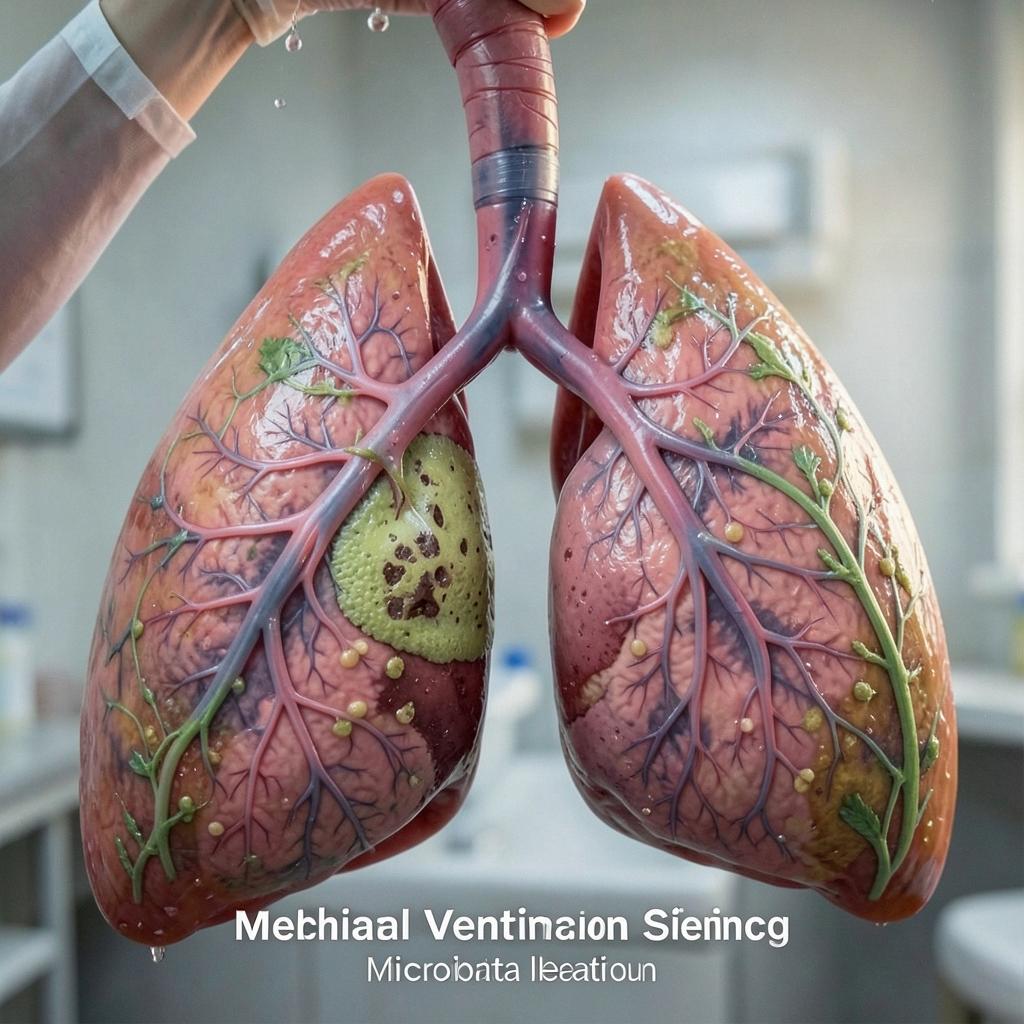
This PRISMA-compliant systematic review (16 studies, 2018–2025, PROSPERO CRD42023461618) concludes that prolonged invasive mechanical ventilation (>72 h) reduces lung microbial diversity and promotes colonization by gram-negative bacteria and fungi, contributing to ventilator-associated pneumonia and mortality . The conclusions rest on non-randomized, heterogeneous observational studies with pervasive unblinding, antibiotic confounding, and no pooled effect estimates, so they should be read as hypothesis-generating rather than causal proof.
Long Explanation
What the Review Did and Found
Tadeusz Zielonka et al. searched PubMed, SCOPUS, and Web of Science (completed 12 March 2025), screened 492 records → 477 after deduplication → 19 full texts → 16 included studies after excluding ~20% for MINORS scores below 10 . Populations spanned 13.6 months (pediatric) to 76 years, were 64.2% male, and covered pneumonia, ARDS, sepsis, head trauma, and COVID-19 cohorts. The dominant reported signal: reduced microbial diversity during ventilation, with dominant isolates Prevotella spp. (28.5%), Streptococcus spp. (25%), Staphylococcus spp. (17.8%), Pseudomonas spp. (14.2%), and Acinetobacter spp. and Bacteroidetes (10.7% each) of 28 detected microorganisms; Candida was the only fungus reported.
The review reported a 75% (n=9) rate of antibiotic therapy documentation, cephalosporins being the most used class, and strikingly heterogeneous mortality: failed extubation pneumonia 63.2%, VAP pneumonia-positive group 54.9%, sepsis 45%, COVID-19 ICU mortality 48.6% vs 25–33% elsewhere, and no deaths in three studies .
Critical Appraisal — Strengths and Blindspots
Strengths: PRISMA adherence, prospective PROSPERO registration, dual independent screening and extraction, blinded MINORS assessment, and explicit acknowledgement that antibiotics are confounders, not merely co-factors of IMV dysbiosis.
Key weaknesses the authors partially addressed but that remain decisive: (1) No meta-analysis or pooled effect sizes — all synthesis is narrative, so the diversity-reduction signal cannot be quantified; (2) the review itself concedes that 15 of 16 studies lacked a control or comparison group and that comorbidities and antibiotic exposure were not consistently adjusted; (3) only the authors' acknowledgment of publication bias and English-only linguistic bias is provided — no funnel-plot or sensitivity analysis is possible with 16 heterogeneous studies; (4) MINORS thresholds were applied to non-randomized designs whose principal limitation (absence of blinding) is structural and acknowledged but unresolved; (5) sampling heterogeneity (bronchoalveolar lavage vs tracheal aspirates) and sequencing-platform differences — flagged by the authors — likely explain inter-study microbial-composition discrepancies more than biology. One internal inconsistency deserves note: Table 1 lists search dates of "3 October 2025" and "3 December 2025" despite the paper stating the search was "completed 12 March 2025" — a red flag for reporting accuracy. Some taxa (e.g., Streptococcus, Prevotella) are commensal oropharyngeal residents; their overrepresentation may reflect microaspiration rather than pathogenic dysbiosis, a mechanistic leap the review does not fully disentangle .
What Would Change the Conclusion
A longitudinal, within-patient design with pre-intubation baseline sampling, fixed antibiotic timing, standardized BAL sampling, and quantitative diversity metrics (Shannon/Bray-Curtis) showing no diversity decline independent of antibiotic exposure would falsify the central claim. Conversely, an adequately powered RCT of microbiota-preserving ventilation/antibiotic-stewardship protocols demonstrating reduced VAP would convert this association into causal evidence. Neither exists yet.
Feedback:
Updated: October 26, 2026
BGPT Paper Review
Study Novelty
50%
The finding that prolonged ventilation reduces lung microbial diversity and promotes gram-negative/fungal colonization is well-established (Zakharkina 2017, Kitsios 2020 cited within); this review consolidates but does not generate new mechanistic insight.
Scientific Quality
50%
Sound PRISMA/MINORS framework, but purely narrative synthesis with no meta-analysis, no pooled effect sizes, near-absent control groups, a search-date inconsistency in Table 1, and acknowledged antibiotic/comorbidity confounding limit scientific rigor.
Study Generality
60%
Mechanisms (microaspiration, oxygen toxicity, VILI, gut-lung axis) are listed but not mechanistically dissected; no quantitative diversity trajectories or longitudinal dynamics are modeled.
Study Usefulness
60%
Useful consolidation for ICU clinicians and microbiome researchers, highlighting dysbiosis as a VAP risk marker and motivating biomarker development; however, no actionable clinical protocol emerges.
Study Reproducibility
50%
PROSPERO registration, explicit search equations, and MINORS scoring enable replication of the review process, but the search-date discrepancy and lack of systematic data-supplement detail weaken confidence.
We'll email you the results when your analysis is finished.
Hypothesis Graveyard
Sterile lung dogma: pre-16S rRNA sequencing assumption that healthy lungs are sterile — falsified by culture-independent sequencing showing resident taxa in healthy airways.
Ventilation as the sole driver of dysbiosis: weakened by this review's own admission that antibiotics, enteral nutrition, and acid suppression independently reshape the microbiota, making IMV duration an unreliable standalone predictor.

 Explore by Goal
 Quick Explanation
 Long Explanation
 Top Data Sources
 Ask a Follow-Up
 Key Insight
 Keep Exploring
 Hypothesis Graveyard
 Potential Experiments
 Discussion
