Why BGPT?
logo

Paper Review — verify claims with raw data

Extract figures, tables, methods, and underlying data to audit results.

Press Enter ↵ to review



    Explore by Goal


     Quick Explanation


    Core result
    Conditional deletion of ERα in kisspeptin (Kiss1) neurons (KERKO) causes a dramatic advancement of puberty onset (vaginal opening) and elevated juvenile LH, but fails to support normal estrous cyclicity and ovulation into adulthood—implying two sequential, nucleus-specific ERα-dependent mechanisms in ARC vs AVPe kisspeptin populations.
    Evidence is directly from the paper’s conditional genetics, hormonal measurements, kisspeptin expression quantification, and ovarian histology.


     Long Explanation


    Paper Review (skeptical, evidence-first): ERα in kisspeptin neurons gates female puberty timing vs completion
    Target paper: Mayer et al., PNAS (2010)
    1) What the paper set out to test (mechanistic hypothesis)
    • Central question: Does ERα signaling in kisspeptin neurons mediate both (i) juvenile restraint of GnRH/LH and (ii) pubertal activation/completion of reproductive maturation?
    • Predicted structure: Two nucleus-specific roles—ERα in ARC kisspeptin as a brake vs ERα in AVPe kisspeptin as an accelerator—operating sequentially.
    2) Key readouts and what they imply
    Puberty onset
    Vaginal opening is advanced in ERα kisspeptin knockouts, indicating earlier activation of the reproductive axis.
    Juvenile serum LH is elevated (P15 and P25), consistent with premature GnRH/LH axis engagement.
    Puberty completion
    KERKO females show abnormal estrous cyclicity—persistent vaginal cornification and often persistent diestrus/acyclic states—with only occasional breakthrough cycles.
    Ovarian histology shows absence of corpora lutea by P35 in KERKO females, with follicular cysts, consistent with anovulation.
    Mechanistic bridge (kisspeptin expression dynamics)
    Kisspeptin neuron peptide expression in AVPe develops normally in WT but is reduced in KERKO at P25 and P35.
    In contrast, Kiss1 mRNA in mediobasal hypothalamus (MBH) is increased at P25 in KERKO, while ARC peptide immunoreactivity (fiber-based) appears diminished; the paper interprets this as opposite ERα roles across nuclei.
    Postpubertal GnRH/LH secretory capacity
    Adult KERKO females have blunted LH response to ovariectomy, suggesting reduced capacity for GnRH/LH axis activation once ovarian feedback is removed.
    3) Figures reproduced from the paper’s extracted numeric highlights
    (All numeric values below are taken from the provided full-text excerpt/figure legends included with the dataset.)
    WT LH values at P15/P25 are not numerically provided in the excerpt; the paper reports “six- to sevenfold” differences and shows LH kinetics across ages.
    AVPe counts are reported as immunostained kisspeptin-IR cell numbers in the figure legend text.
    4) Assessment: strengths vs skeptical concerns
    Strengths (mechanistic clarity from genetics)
    • Cell-type targeting: Cre expression is verified with reporter lines and immunofluorescence showing high overlap between kisspeptin neurons and reporter activation, plus region-specific ERα co-expression proportions.
    • Phenotype triangulation: The paper links endocrine readouts (LH), reproductive function (estrous cyclicity, ovarian histology), and circuit markers (kisspeptin expression changes) rather than relying on a single proxy.
    Skeptical concerns / limitations
    • ARC vs AVPe “opposite roles” rely on different measurement modalities. The paper notes that ARC quantification is limited due to dense fibers and that ARC cellular expression isn’t assessed via the same counting approach as AVPe, plus qPCR is performed on whole MBH. This creates potential mismatch between “fiber immunoreactivity” and “cellular ERα-dependent gene expression.”
    • Estradiol measurements are not central to the causal chain. Serum estradiol values are reported as “low or undetectable” at P15/P25 in the excerpt, but the overall mechanistic model depends on ERα signaling without directly manipulating estrogen levels during juvenile/transition periods.
    • LH is an indirect readout for GnRH neuron dynamics. The authors acknowledge feedback confounds in intact animals and therefore include OVX comparisons. Still, serum LH is downstream and integrates pituitary and peripheral feedback effects.
    • Generalization across species/time is discussed but not tested here. The paper explicitly notes species differences (e.g., rhesus monkey puberty/ovarian independence and potential ligand-independent receptor activation), but the current experimental data are mouse-specific.
    Do new limitations appear beyond what the paper already addresses?
    A limitation not fully resolved by this work is the cell-intrinsic vs circuit-integration distinction: the study establishes necessity of ERα in Kiss1 neurons for timing/completion, but it does not directly measure GnRH pulse frequency/pattern (e.g., microdialysis/tail-tip LH pulsatility) in juvenile transition with circuit-level activation, so “brake vs accelerator” remains an inference from LH and kisspeptin expression.
    5) What would most strongly disprove the paper’s central mechanistic claim?
    • If ERα deletion in Kiss1 neurons advanced onset without elevating LH, the “brake” inference would weaken. (The paper shows both advancement and elevated juvenile LH.)
    • If KERKO females achieved normal estrous cyclicity and ovulation (corpora lutea present) despite altered kisspeptin expression, the “accelerator” necessity claim would weaken. (The paper reports failure of cyclicity and absence of corpora lutea at P35.)
    • If the observed kisspeptin changes were non-specific to ERα but due to off-target recombination/Cre burden, then phenotypes could be attributed to technical artifacts. The paper performs validation of reporter activation in kisspeptin neurons and localized loss of ERα in KERKO AVPe cells while ERα remains robust elsewhere, reducing—but not eliminating—this concern.
    6) How this paper fits with later, more pathway-resolved work (context)
    Later studies using more targeted knockdown and circuit-resolution approaches continue to emphasize that estrogen receptor signaling intersects with specific kisspeptin subcircuits controlling surge vs pulse modes. For example, an eLife 2023 study uses CRISPR-mediated ESR1 knockdown in preoptic VGAT neurons to show ESR1-dependent triggering of estrogen-positive feedback LH surge/estrous cycles while largely preserving pulsatile LH—conceptually consistent with “separable mechanisms” rather than a single undifferentiated estrogen effect. While not identical (different region/cell class and developmental stage), it reinforces the plausibility of the Mayer paper’s “multiple roles” framing.


    Feedback:   

    Updated: July 15, 2026

    BGPT Paper Review


    Study Novelty

    90%

    By using conditional genetics to delete ERα specifically in Kiss1 neurons and showing both advanced puberty onset and impaired pubertal completion, the study introduces a clear nucleus-specific dual-role model (brake in ARC vs accelerator in AVPe) that is mechanistically distinctive at the time.


    Scientific Quality

    90%

    High-quality conditional targeting with multiple orthogonal assays (vaginal opening, serum LH, estrous cytology, ovarian histology, kisspeptin expression) plus reporter-based validation. Main quality reduction comes from inference strength regarding ARC cellular vs fiber measures and the indirectness of LH for GnRH pulsatility during the juvenile transition.


    Study Generality

    70%

    Findings are strongly established in female mice, but cross-species extrapolation to primates/humans remains speculative because ovarian steroid independence and possible ligand-independent ER activation are discussed without direct testing.


    Study Usefulness

    80%

    Useful as a mechanistic template: it identifies ERα as a necessary node in kisspeptin neurons for both onset and completion, motivating targeted follow-up experiments in surge vs pulse circuitry and in other kisspeptin subpopulations.


    Study Reproducibility

    70%

    Methods are described (mouse lines, qPCR approach, LH assays, estrous cytology protocol, histology) and the phenotype is large-effect. However, the excerpted full text does not provide all detailed experimental numbers/replication metadata and Kisspeptin quantification in ARC depends on fiber-based immunoreactivity constraints.


    Explanatory Depth

    80%

    The study advances mechanistic understanding by proposing sequential ERα-dependent gating (brake vs accelerator) across two kisspeptin nuclei, linking expression changes to endocrine and reproductive outcomes. Remaining gaps are the direct measurement of GnRH pulse dynamics at the relevant developmental transitions.


    🎁 Authors: Collect 500 Free Science Tokens (≈ $50.0 USD)

    Claim My Author Tokens

    Use for 125 days of free BGPT access (4 tokens = 1 day) or trade/sell (≈ $50.0 USD)

     Top Data Sources ExportMCP


     Analysis Wizard


    Extract numeric highlights (vaginal opening, LH at P15/P25/P35, AVPe kisspeptin counts) from the provided full-text excerpt and generate Plotly plots for onset vs maturation signatures.


     Hypothesis Graveyard


    A “single-threshold estrogen sensitivity” hypothesis (ERα in Kiss1 neurons simply sets how much estradiol is needed for puberty) is unlikely because estrous cyclicity completion fails despite advanced onset, implying additional maturation-specific requirements beyond onset threshold.


    A “purely developmental delay/acceleration” artifact explanation (that the phenotype is only timing mismatch without circuit-level causality) is weakened by the adult OVX LH blunting and the presence/absence of ovulatory markers (corpora lutea), indicating an impaired functional maturation rather than merely earlier developmental stage.

     Science Art


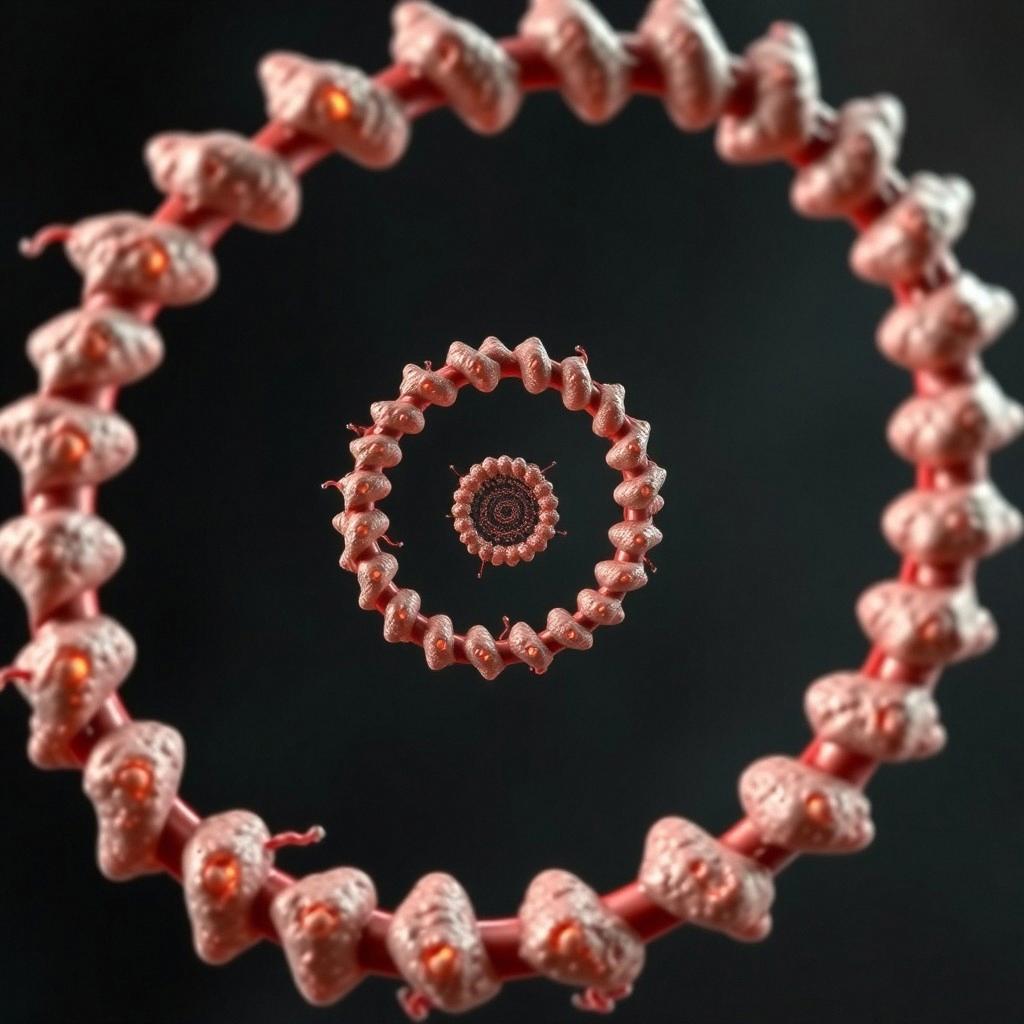
    Paper Review: Timing and completion of puberty in female mice depend on estrogen receptor α-signaling in kisspeptin neurons Science Art

     Science Movie


    Make a narrated HD Science movie for this answer ($32 per minute)


     Discussion


    Follow the Evidence

    New scientific claims, supporting evidence, and important limitations. Every Friday. No ads.


    My BGPT