Why BGPT?
logo

Review papers with raw data transparency

Quickly verify claims by accessing the underlying experimental data and figures.


Press Enter ↡ to solve


    Fuel Your Discoveries


     Quick Explanation


    Concise critique: The review (10.32604/or.2025.067445) is a timely, well-sourced synthesis of UCAR-T advances (gene editing, cell platforms, clinical early-phase results) and a balanced account of barriers (GvHD/HvG, persistence, TME, CRS, regulatory). It summarizes trial-level ORR/CR signals but relies on heterogeneous early-phase data and narrative synthesis rather than meta-analysis, so conclusions about broad clinical utility are provisional and hypothesis-generating rather than definitive
    Want trial-level graphs or an authors' bias-check? Click a bespoke action below.


     Long Explanation


    Visual analysis β€” Universal (UCAR) CAR-T: advances, evidence, and gaps

    Visual summary (evidence-backed points)

    • Clinical efficacy (hematologic): multiple early-phase UCAR products report ORR/CR signals in relapsed/refractory B-cell malignancies and myeloma (examples: ALLO-501, CTX110, UCART22, ALLO-715, TruUCAR GC502) but sample sizes are small and heterogeneous; durability and randomized comparisons are lacking
    • Key enabling technologies: multiplex gene editing (CRISPR, TALENs, base editors) to disrupt TRAC/TRBC and HLA or add stealth transgenes (HLA-E/G fusions, CD47 modules) is central to reducing GvHD/HvG but introduces on-target/off-target editing risks and regulatory complexity
    • Safety landscape: CRS and neurotoxicity remain central risks; UCAR origin may alter immunogenicity dynamics (HvG) and interact with lymphodepletion or anti-CD52 strategies; safety-switches and stealth transgenes are promising mitigations but need long-term validation
    • Mechanistic blindspots: limited long-term persistence data, incomplete mapping of HvG in clinical settings, and underpowered evidence for solid tumor efficacy given TME barriers (ECM, myeloid suppression, antigen heterogeneity)

    Where the review succeeds (strengths)

    1. Comprehensive catalog of gene-editing and engineering strategies (CRISPR, TALENs, base editors, shRNA, stealth fusions) with trial examples and mechanistic rationale
    2. Balanced discussion of non-Ξ±Ξ²-T platforms (Ξ³Ξ΄T, NKT, DNT, iPSC-derived) that can reduce GvHD risk and broaden target scope

    Critical limitations and potential biases

    • Narrative (not systematic) synthesis: the paper compiles trial outcomes but does not perform meta-analysis or standardized effect-size calculations β€” this reduces quantitative rigor and risks selection/publication bias (positive early-phase trials preferentially reported)
    • Overinterpretation risk: early ORR/CR from phase I cohorts (N often < 40) are hypothesis-generating; the review occasionally frames these as promising without emphasizing need for randomized controls and durability metrics (PFS/OS)
    • Editing risks glossed: CRISPR and other editors have off-target and chromosomal rearrangement risks; the review mentions these but does not deeply quantify frequencies from clinical programs (safety surveillance and long-term genotoxicity remain open)

    Evidence gaps the paper highlights (and that matter most)

    1. Durability: long-term persistence and relapse rates after UCAR vs autologous CAR-T across randomized trials.
    2. HvG/NK interactions: real-world rates of host immune clearance and impact of stealth transgenes on infection risk or oncogenesis.
    3. Solid tumor translation: standardized preclinical-to-clinic benchmarks (infiltration, metabolic adaptation, ECM modulation) and combinatorial regimens with checkpoint/anti-stromal agents.

    Concrete, short recommendations for authors and field

    • Standardize reporting of early-phase UCAR trials (population, lymphodepletion, product edits, cellular kinetics, persistence, CRS/ICANS grading) to allow pooled analyses.
    • Prioritize mechanistic studies linking editing strategy β†’ HvG/ NK sensitivity β†’ persistence using standardized in vitro/in vivo assays and publish negative results to reduce publication bias.
    • Design randomized platform trials for high-priority indications (e.g., r/r LBCL) comparing UCAR vs autologous CAR-T with harmonized endpoints (PFS, OS, durability, cost-effectiveness).

    What would disprove the paper's main optimistic conclusion?

    If large, randomized trials show that UCAR products cannot match autologous CAR-T for persistence and durable remission or if insurmountable safety/genotoxicity issues (GvHD/long-term clonal events) emerge across multiple programs, the rationale for widespread off-the-shelf UCAR deployment would be undermined

    Interactive next steps

    To continue: run a focused meta-analysis of ORR/CR across UCAR hematologic trials, or produce a forest plot of persistence metrics (AUC CAR copies/time) if you want BGPT to extract raw trial data and compute aggregated estimates. (You can start the iterative AI agent below.)

    Key citations used in this critique


    Feedback:   

    Updated: March 13, 2026

    BGPT Paper Review


    Study Novelty

    60%

    The paper synthesizes many recent UCAR advances (CRISPR/TALEN/base editing, novel cell platforms, stealth transgenes) and compiles early clinical data β€” useful and timely but not conceptually revolutionary because prior reviews (e.g., 2020–2024) covered similar themes; novelty stems from updated 2024–2025 trial and engineering results.


    Scientific Quality

    70%

    Quality is good for a narrative review: well-referenced across primary trials and engineering papers, balanced strengths/limitations sections, and concrete trial tables; weaknesses: narrative (not systematic) search strategy, heterogeneous trial reporting, no meta-analysis, and limited quantification of editing off-target risk.


    Study Generality

    80%

    Covers broad topics (gene editing, multiple cell platforms, hematologic and solid tumors, manufacturing/regulatory considerations) and therefore generalizes across CAR field and immunotherapy, increasing its interdisciplinary utility.


    Study Usefulness

    80%

    Practically useful: provides a roadmap of engineering strategies, trial examples, and translational bottlenecks valuable to researchers, translational teams, and regulators; immediate utility for designing next-stage trials and manufacturing decisions.


    Study Reproducibility

    60%

    As a narrative review with no new data, reproducibility refers to literature-synthesis transparency: the paper lists references and trials but lacks explicit systematic search methodology, data extraction tables with raw numbers for independent re-analysis, and shared code/data.


    Explanatory Depth

    70%

    Provides mechanistic links between editing strategies and immunologic consequences (GvHD/HvG, NK recognition), reviews preclinical evidence for tumor microenvironment interventions, but falls short of deep quantitative modeling of HvG kinetics or long-term genotoxicity risk.


    🎁 Authors: Collect 225 Free Science Tokens (β‰ˆ $22.5 USD)

    Claim My Author Tokens

    Use for 56 days of free BGPT access (4 tokens = 1 day) or trade/sell (β‰ˆ $22.5 USD)

     Top Data Sources ExportMCP


     Analysis Wizard


    Extracts trial outcome tables from the review and referenced DOIs, harmonizes ORR/CR and cohort sizes, and computes pooled random-effects estimates and forest plots for UCAR ORR across hematologic trials.


     Hypothesis Graveyard


    Allogeneic UCAR cells will universally replace autologous CAR-T within 5 years β€” falsified because persistence and HvG interplay are patient- and regimen-dependent; broad replacement requires durable safety and cost-effective manufacturing shown in randomized trials.


    Gene-editing off-targets are clinically irrelevant β€” rejected by accumulating evidence (CRISPR-edited clinical reports) showing the need for long-term genotoxicity surveillance and careful editing validation.

     Science Art


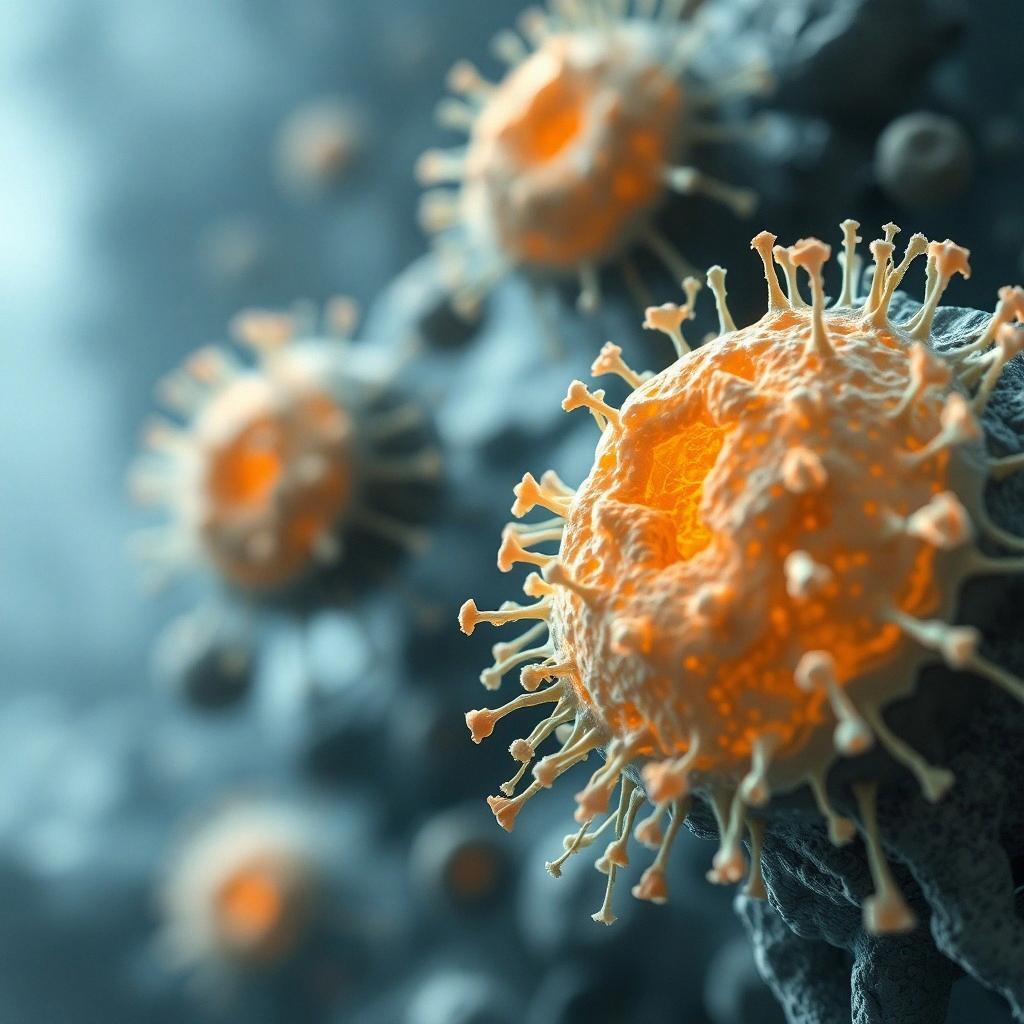
    Paper Review: Universal CAR-T Cell Therapy for Cancer Treatment: Advances and Challenges Science Art

     Science Movie


    Make a narrated HD Science movie for this answer ($32 per minute)


     Discussion


    Get Ahead With Science Insights

    Custom summaries of the latest cutting edge Science research. Every Friday. No Ads.


    My BGPT