Check each claim against its experiments, reported results, scope, and stated limitations.Know what the science actually supports before you trust the answer.
Press Enter ↵ to start review
Explore by Goal
"In the fields of observation chance favors only the prepared mind."
- Louis Pasteur
Quick Explanation
Copied
This single-author narrative review (J. Mountain Research, DOI 10.51220/jmr.v21-s1.1) argues agroforestry is the most viable sustainable farming model for Uttarakhand's hills, but it offers no systematic search strategy, no quantitative synthesis, and no original data, so its recommendations remain expert opinion rather than evidence-based guidance.
Long Explanation
What the paper reports
Todaria (HNB Garhwal University) reviews sustainable farming practices for the Uttarakhand hills and concludes that agroforestry is the only practice both suitable for the terrain and already traditional there, describing a fodder-based, low-input subsistence system on ~0.20 ha holdings, with tree-crop components varying along altitudinal gradient (e.g., ~142 trees/ha at 300–1000 m vs ~102 trees/ha above 2000 m)
The paper's most substantive empirical content is its 10+ years of laboratory allelopathy experiments (largely by the author's own group) ranking 12 tree species for compatibility with food crops, finding species like Ougeinia oojeinensis and Celtis australis relatively safe near crops, and recommending land-capability-based siting, KVK extension hubs in every district, liberalized tree-felling rules, and 'green credit' incentives for tree farming
Critical assessment
Methodological red flags: the methodology section is one sentence; there is no systematic search, no inclusion criteria, no PRISMA-type flow, and no quantitative synthesis. Several claims rest on references that are dated or internally garbled (e.g., 'Anon 1979' cited for the Fig.1 entry; land-capability percentages like Class VII-VIII '11.24' missing a '%' sign). The allelopathy findings are laboratory germination assays, which the author himself flags, yet the text extrapolates them to field-level 'safe to cultivate' claims—a known limitation since lab phytotoxicity rarely translates directly to field interactions.
Strengths worth keeping: the paper is candid that only ~2–3% of hill land is highly suitable for agriculture and ~57–58% is unsuitable, which is a defensible, policy-relevant framing; it also correctly notes the Supreme Court forest-land rule chilling private tree planting—a real institutional constraint.
Blind spots: no farmer survey data, no yield or economics comparisons, no counterfactual for the claim that removing felling restrictions will 'turn the hills into a tree-farming hub' (risk of reversing conservation gains is not analyzed), and the green-credit proposal is discussed without any market design or leakage assessment. Comparable quantitative benchmarks from other hill systems exist in the supplied record set (e.g., NZ hill country action research showed measured improvements in sediment, livestock, and farm surplus after land-use change ; energy-budget comparisons for NE Indian hill agro-ecosystems found a 10-year jhum cycle best balanced output/input ), which the Uttarakhand paper does not engage with quantitatively.
Confidence: Moderate—the description of the traditional system is consistent with the author's long field experience and peer-reviewed prior work, but the improvement prescriptions are untested hypotheses, not demonstrated outcomes.
Feedback:
Updated: October 04, 2026
BGPT Paper Review
Study Novelty
20%
A familiar regional review restating well-known sustainable-farming concepts and the author's own decades-old allelopathy work; the only fresher elements are the 2025 MoEFCC green-credit draft and tree-felling policy discussion.
Scientific Quality
40%
Single-author narrative review with a one-line methodology, garbled references, missing units, self-citation concentration, no systematic search or synthesis, and laboratory allelopathy results extrapolated to field recommendations.
Study Generality
50%
Boilerplate sustainable-farming sections are generic, while the core value (altitude-specific tree-crop compatibility, land-capability classes) is narrowly site-specific to Uttarakhand.
Study Usefulness
40%
Useful as a policy-agenda document (KVKs, seed systems, felling-rule reform, green credit) for practitioners in the region, but not as rigorous scientific evidence.
Study Reproducibility
10%
No data, no methods detail, no statistical analysis, and no data availability; the review cannot be independently reproduced or directly tested.
Explanatory Depth
30%
Describes mechanisms (allelopathy, erosion, carbon sequestration) at a textbook level; only the author's laboratory allelopathy ranking provides any measured mechanistic basis, and even that is not quantified in the text.
We'll email you the results when your analysis is finished.
Hypothesis Graveyard
Replacing subsistence hill farming wholesale with market-oriented tree plantations will automatically benefit communities: contradicted by the paper's own admission that farmers now farm 'under compulsion' and by green-credit leakage risks; livelihood mixtures, not monoculture conversion, remain the best-supported model.

 Explore by Goal
 Quick Explanation
 Long Explanation
 Top Data Sources
 Ask a Follow-Up
 Key Insight
 Keep Exploring
 Hypothesis Graveyard
 Potential Experiments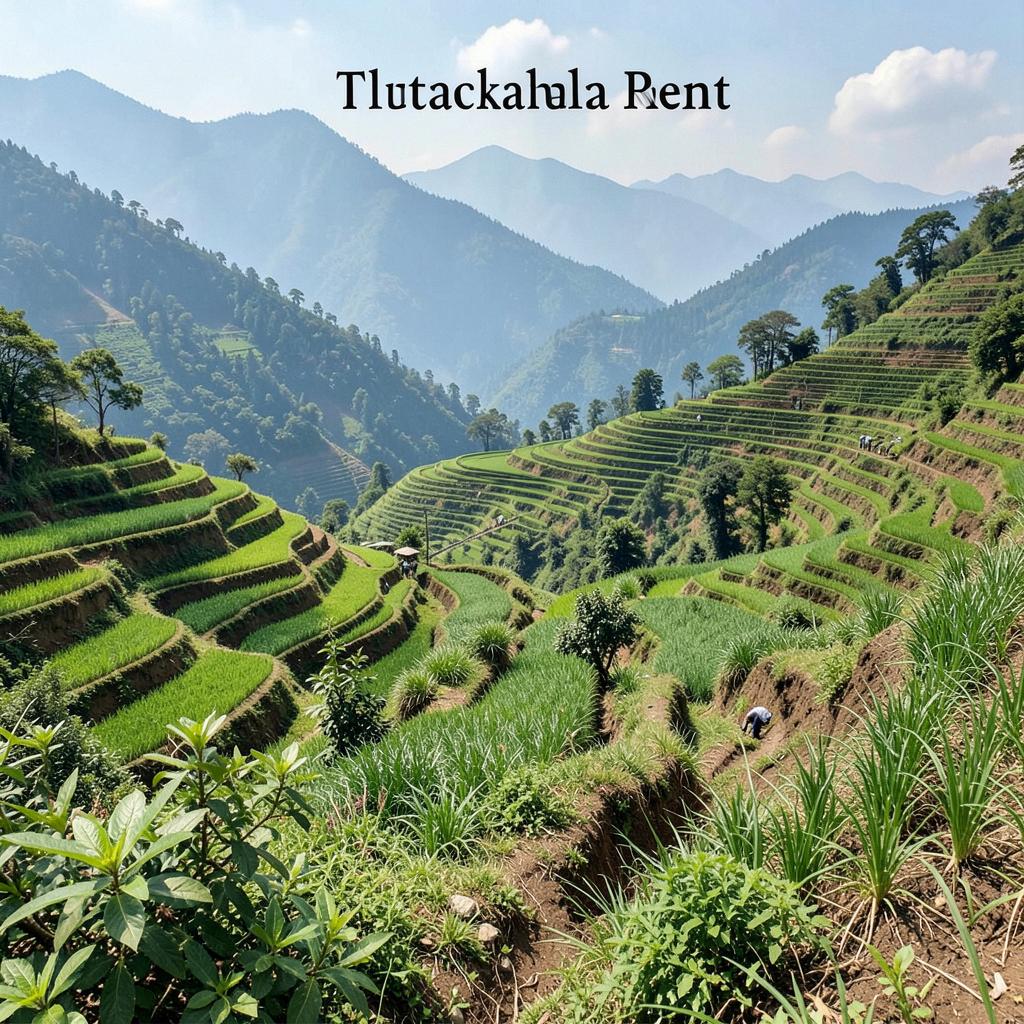
 Discussion