Check a paper's claims against linked experiments, exact results, stated scope, and limitations.Know what falsifiable science actually supports before you trust the answer.
Press Enter ↵ to search evidence
Explore by Goal
"Somewhere, something incredible is waiting to be known."
- Carl Sagan
Quick Explanation
Copied
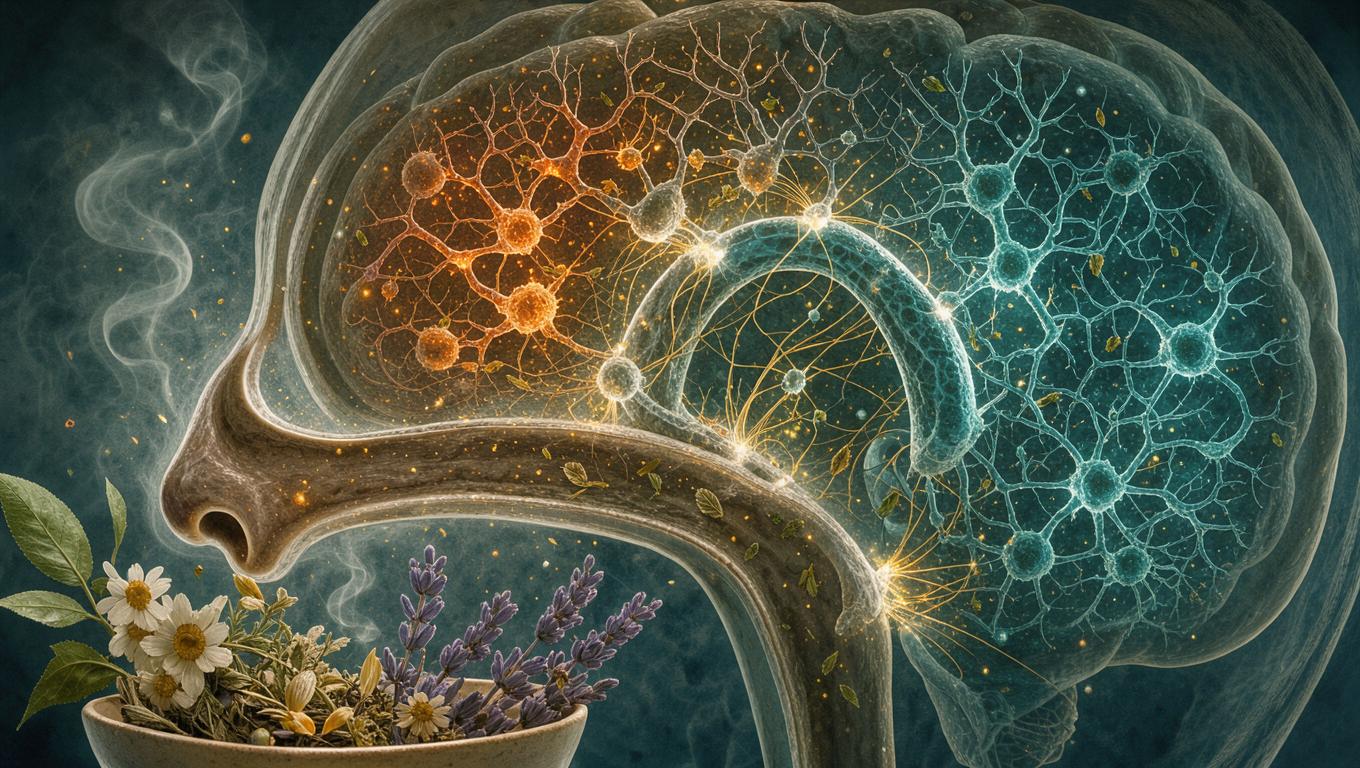
This paper reports that Cang-Ai volatile oil (CAVO), administered via nebulization, mitigates LPS-induced depressive-like behaviors in mice by reducing pro-inflammatory microglial activation (M1→M2 shift), upregulating BDNF/CREB signaling via AKT, and downregulating ERK1/2 and NF-κB p65 pathways. The study is methodologically reasonable but has notable limitations including absence of a CAVO-only control, use of supraphysiological LPS doses, and reliance on male-only mice with a single acute depression model.
Long Explanation
Critical Review: Cang-Ai Volatile Oil in LPS-Induced Depression
This study from Yunnan University of Chinese Medicine investigates whether CAVO—a 10-herb volatile oil formulation with 74 identified constituents (99.42% of composition)—can reverse depressive-like behaviors in a lipopolysaccharide (LPS) mouse model by modulating microglial phenotype and the BDNF/CREB signaling axis
Key Behavioral Findings: LPS increased FST immobility by 64.15% and TST immobility by 80.25% versus controls. CAVO at all three doses significantly reduced immobility in both tests (P<0.01 for highest dose), with the highest dose (20.8 μL/kg) showing the most robust effects. Sucrose preference decreased by 37.82% with LPS and was significantly restored by CAVO, ketamine (10 mg/kg i.p.), and celecoxib (52 mg/kg i.g.)
Molecular Mechanism Findings
The mechanistic data are internally consistent: CAVO reduced hippocampal IL-1β, TNF-α, and IL-6 while increasing IL-4, IL-10, and BDNF. Western blot confirmed upregulated p-AKT, p-CREB, and BDNF with downregulated p-ERK1/2. In BV2 cells, flow cytometry showed CD86 (M1) reduction and CD163 (M2) elevation, with NO release suppressed. NF-κB p65 (Ser-536) phosphorylation was dose-dependently reduced
Critical Limitations and Concerns
No CAVO-only group: The authors acknowledge this themselves, leaving the independent biological effects of CAVO unaddressed.
Supraphysiological LPS: 1 μg/mL in vitro and 0.5 mg/kg in vivo exceed physiological infection scenarios, limiting translational relevance.
Male-only mice: No sex-as-a-biological-variable analysis; sex differences in neuroinflammation and depression are well-established.
Acute model: LPS-induced behaviors at 24h reflect sickness behavior more than chronic depression pathology, raising concerns about construct validity.
Nebulization delivery: Dose reaching the brain is not directly quantified, introducing uncertainty about the active concentration at target tissue.
Complex mixture: With 74 identified constituents, the active compound(s) remain unidentified, precluding pharmacokinetic profiling or structure-activity relationships.
The CREB literature shows that CREB phosphorylation can have context-dependent effects—activation in nucleus accumbens produces anhedonia in rats , whereas hippocampal CREB facilitates long-term potentiation and neuroprotection . This regional specificity is not discussed, though the present study focuses on hippocampal/PFC CREB where the antidepressant interpretation is more defensible.
Assessment of Study Design Quality
The study employs appropriate positive controls (ketamine, celecoxib), reasonable sample sizes (n=12 for behavioral, n=4 for immunofluorescence, n=8 for ELISA, n=3-6 for BV2), and standard statistical approaches (one-way ANOVA with LSD or Dunnett T3). However, the lack of randomization reporting, blinding procedures, and a preregistered protocol reduce confidence in the findings. The 2-hour delay between CAVO administration and behavioral testing is unusually short for neurotrophic factor changes, suggesting behavioral effects may precede the measured molecular changes rather than being caused by them.
Positive Controls and Published Trial Context
A registered clinical trial (NCT07384312) investigating Cang-ai volatile oil's antidepressant effects using near-infrared functional brain imaging and the NT-Trk signaling pathway has been completed , suggesting translational interest, though results are not yet published.
Author Deep-Dive Links
Feedback:
Updated: November 11, 2026
BGPT Paper Review
Study Novelty
60%
The link between microglial M1/M2 polarization, BDNF/CREB signaling, and depression is well-established in the literature. The novelty lies primarily in identifying CAVO as a novel multi-constituent volatile oil that modulates this pathway via nebulization, rather than in discovering new biology.
Scientific Quality
70%
Reasonable experimental design with positive controls and multiple dose levels. Statistical reporting is thorough. However, no CAVO-only group, no blinding disclosure, no randomization details, no sex-balancing, and the acute LPS model's construct validity for depression are meaningful concerns.
Study Generality
50%
Findings are limited to one acute inflammatory depression model in male mice with a complex, poorly characterized herbal mixture. The mechanism (M1→M2 + BDNF/CREB) is generalizable but the specific intervention is niche and translational relevance is unclear.
Study Usefulness
70%
Provides preclinical support for a clinically accessible intervention route (nebulization) and connects it to a well-characterized molecular pathway. Useful for the TCM/anti-inflammatory depression field, though far from clinical application.
Study Reproducibility
60%
Methods are described in sufficient detail for behavioral tests, ELISA, Western blot, and flow cytometry. However, no raw data sharing, no protocol preregistration, and the complex 10-herb oil composition introduces batch-to-batch variability concerns.
Explanatory Depth
70%
The paper provides a coherent mechanistic narrative connecting behavior to microglial phenotype to signaling pathway, but causality is inferred from correlation. No pathway inhibitors, knockouts, or rescue experiments were used to confirm that BDNF/CREB is necessary and sufficient for CAVO's effects.
Building a dose-response model of CAVO effects on hippocampal cytokine levels and BDNF/CREB signaling using the paper's reported F-statistics and dose levels to predict therapeutic windows.
Get emailed when your analysis is done!
We'll email you the results when your analysis is finished.
Hypothesis Graveyard
CAVO acts via a single dominant bioactive constituent analogous to a classical small-molecule drug—unlikely because the 74-constituent mixture and broad cytokine modulation suggest synergistic multi-target effects that cannot be attributed to one compound without isolation studies.
The M1/M2 binary framework fully captures microglial states in depression—increasingly challenged by single-cell transcriptomics showing microglial states exist on a continuum, making the simplified CD86/CD163 flow cytometry readout an oversimplification.

 Explore by Goal
 Quick Explanation
 Long Explanation
 Top Data Sources
 Ask a Follow-Up
 Key Insight
 Keep Exploring
 Analysis
 Hypothesis Graveyard
 Potential Experiments
 Discussion
