Check a paper's claims against linked experiments, exact results, stated scope, and limitations.Know what falsifiable science actually supports before you trust the answer.
Press Enter ↵ to search evidence
Explore by Goal
"An expert is a person who has made all the mistakes that can be made in a very narrow field."
- Niels Bohr
Quick Explanation
Copied
This 2017 review by Leick and Levis provides a well-sourced synthesis of FLT3-mutated AML biology, first- and second-generation inhibitors, and resistance mechanisms, correctly anticipating approval of more potent selective TKIs . Its RATIFY interpretation and transplant-forward algorithm were validated by subsequent phase III success, though gaps in standardized assays and resistance biology remain.
Long Explanation
Evidence Base and Predictive Accuracy of the Review
Leick and Levis (Current Hematologic Malignancy Reports, 2017) synthesize ~110 references spanning FLT3 biology, PCR assay artifacts, TKI clinical trials, resistance mechanisms, and allogeneic transplant strategy. Their central clinical anchor is RATIFY: 717 newly diagnosed FLT3-mutated AML patients randomized to midostaurin plus chemotherapy, with OS HR 0.77 (p = 0.007), later published with median OS 74.7 vs 25.6 months .
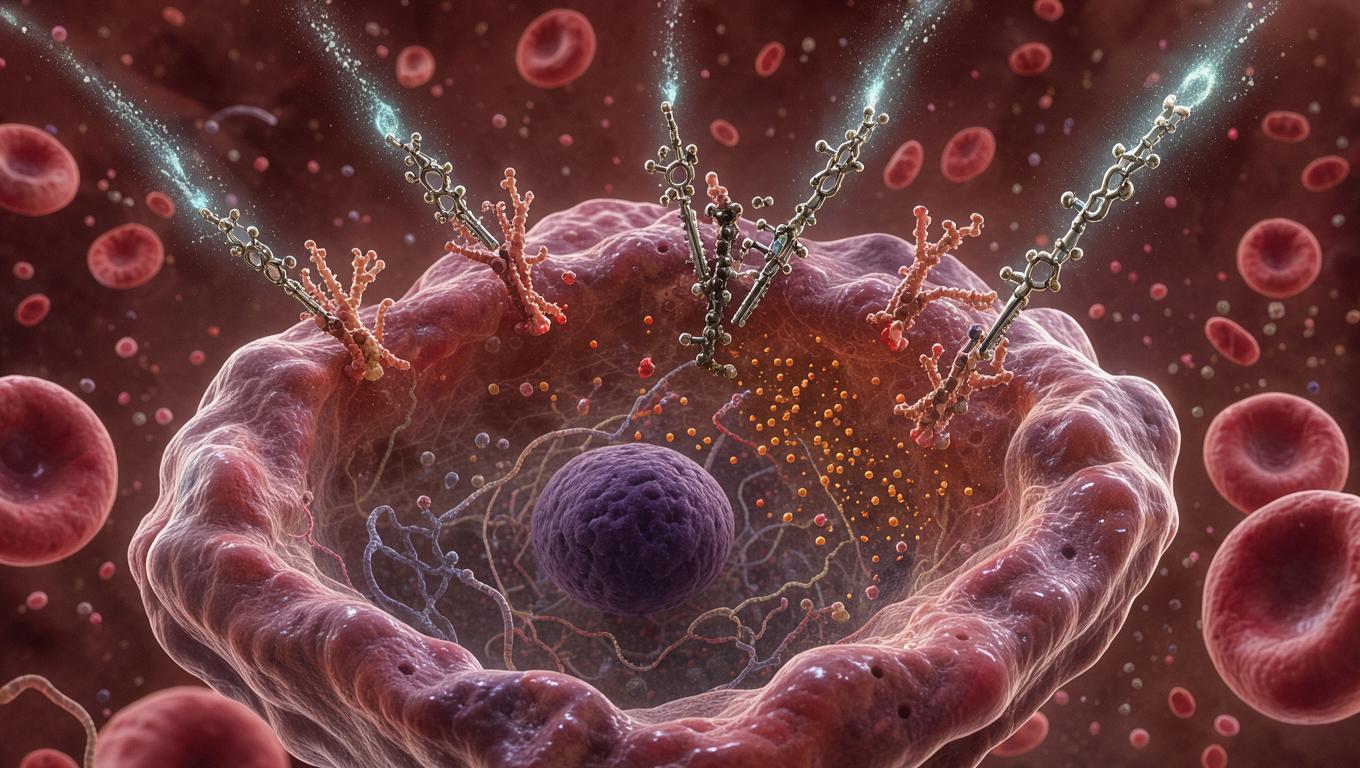
The review's most distinctive contribution is mechanistic pharmacology: it argues older inhibitors failed clinically because plasma protein binding (e.g., midostaurin IC50 shifts from 3 nM in medium to 1,700 nM in plasma) prevented sustained FLT3 inhibition, while AC220 (quizartinib) retained potency (18 nM in plasma) :
This explains the lenalidomide-era failures of lestaurtinib (phase III negative) and sorafenib's toxicity-limited profile, and correctly flags D835/F691 point mutations as resistance drivers — subsequently validated by irreversible inhibitors such as FF-10101 designed against D835/F691L resistance (GI50 0.81 μM against D835Y, though 10 μM against F691L, showing F691L remains hard to overcome) .
Assay Standardization — Prescient but Unsolved
The review's critique of FLT3-ITD allelic-ratio assays (PCR bias, heterozygosity/uniparental disomy, arbitrary lab cutoffs producing false "mutation loss" at relapse) anticipated later evidence: only ~6% of 680 FLT3-mutated MDACC patients showed status changes, but these significantly altered survival , and the CLEVO cohort (2026) still documented ~15% mutation gain/loss and falling retest rates by first relapse, confirming the standardization problem persisted a decade later .
Critical Limitations
Conflicts of interest: Levis reports grants from Novartis/Astellas and consultancies for Novartis/Daiichi-Sankyo — the sponsors of midostaurin and quizartinib/gilteritinib respectively — introducing potential sponsor bias in the enthusiastic RATIFY interpretation and transplant-plus-maintenance algorithm . Unchallenged assumptions: the sequential "chemo debulk → rapid transplant → selective TKI maintenance" algorithm is presented as reasonable despite the review itself acknowledging sorafenib worsened outcomes in elderly patients and no randomized evidence supported midostaurin specifically improving remission quality before transplant. Blind spots: stromal/microenvironmental resistance and FLT3-ligand surges are discussed but no clinical strategy addresses them; retrospective era-improvement data (OS 9.6→17.8 months 2000–2014) confound inhibitor adoption with transplant intensification . What would falsify the review's thesis: evidence that FLT3-addicted subclones are dispensable at relapse, or that selective maintenance after transplant adds no OS benefit in randomized settings — partially tested subsequently, with real-world gilteritinib data (median OS 2.1 vs ADMIRAL's 9.3 months in a 6-patient Indian cohort) showing toxicity can undermine trial efficacy in resource-limited settings .
Bottom line: a rigorous, mechanistically grounded review whose plasma-potency and resistance-mutation insights held up well; its transplant-centric treatment algorithm and COI-tinged enthusiasm for early, prolonged TKI exposure warrant independent skepticism.
Feedback:
Updated: November 21, 2026
BGPT Paper Review
Study Novelty
60%
A competent synthesis of established FLT3 biology and trials; its distinctive value lies in the plasma inhibitory activity framework and prescriptive transplant algorithm, but no fundamentally new data or concepts.
Scientific Quality
80%
Well-referenced, mechanistically rigorous, and transparent about assay limitations; tempered by disclosed industry COIs, dependence on pre-publication RATIFY data, and some algorithmic recommendations extrapolated beyond randomized evidence.
Highly practical for clinicians and translational researchers; its quizartinib/gilteritinib predictions and resistance framework were validated by subsequent approvals and studies.
Study Reproducibility
70%
Review itself is not empirical; its cited trial data are verifiable, though the FLT3 allelic-ratio assay nonstandardization it highlights limits reproducibility of the field's biomarker claims.
Explanatory Depth
80%
Deep mechanistic coverage of PCR bias, plasma protein binding, resistance mutations (N676K, D835, F691), FLT3-ligand dynamics, and stromal protection, with a coherent clonal-evolution treatment model.
Cross-referencing FLT3-ITD allelic burden distributions and inhibitor IC50 datasets from cited studies to quantify how plasma binding shifts the therapeutic window across generations of FLT3 TKIs.
Get emailed when your analysis is done!
We'll email you the results when your analysis is finished.
Hypothesis Graveyard
'FLT3-ITD is an unstable marker unsuitable for MRD' — the review itself partially dismantles this, attributing apparent instability to PCR assay bias; NGS later confirmed high sensitivity.
'More potent is always better for FLT3 inhibitors' — undermined by D835 emergence under quizartinib and by F691L resistance to irreversible inhibitors.

 Explore by Goal
 Quick Explanation
 Long Explanation
 Top Data Sources
 Ask a Follow-Up
 Key Insight
 Keep Exploring
 Analysis
 Hypothesis Graveyard
 Potential Experiments
 Discussion
