Check a paper's claims against linked experiments, exact results, stated scope, and limitations.Know what falsifiable science actually supports before you trust the answer.
Press Enter ↵ to search evidence
Explore by Goal
"The art and science of asking questions is the source of all knowledge."
- Thomas Berger
Long Explanation
Copied
Critical Review: Grin & Streutker, Archives of Pathology & Laboratory Medicine (2015)
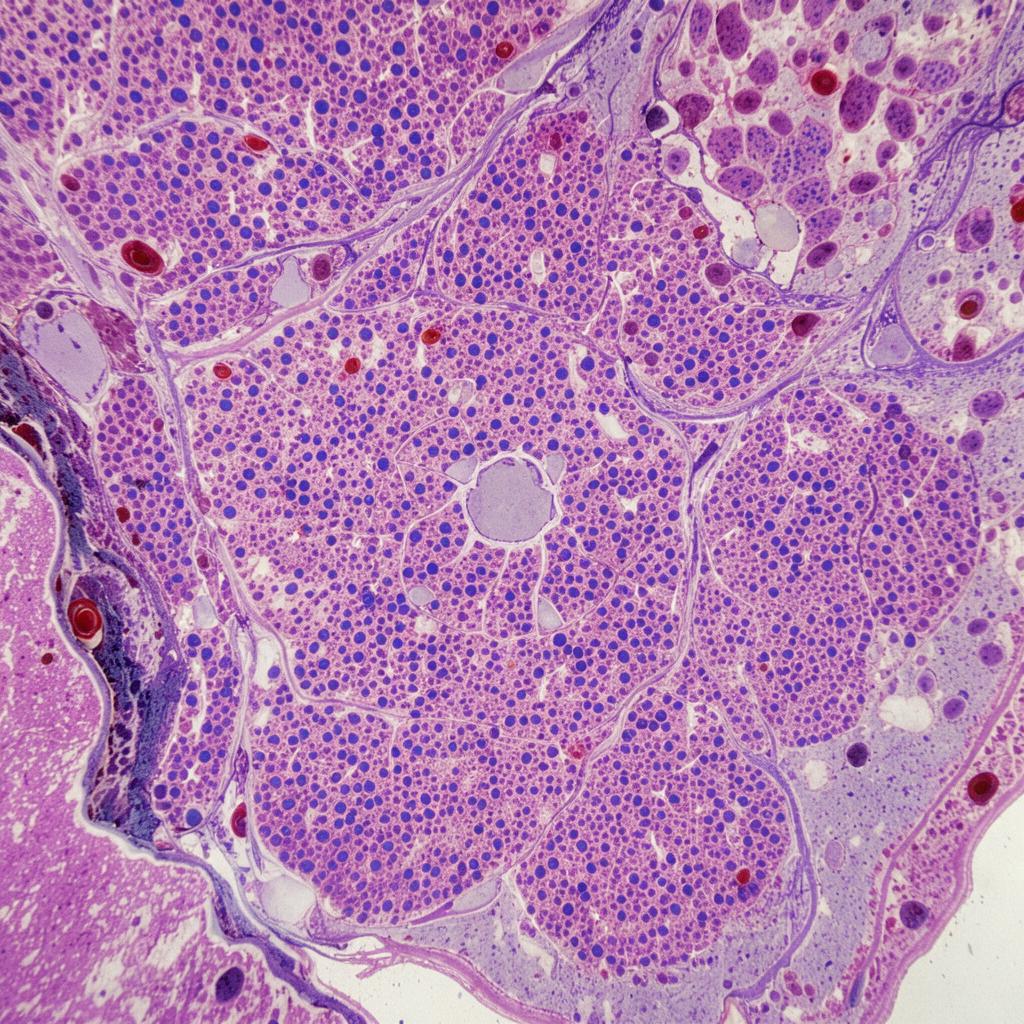
This narrative review (55 references, 7 pages) synthesizes epidemiology, histology, immunohistochemistry, site-specific subtypes, grading, staging, and genetics of luminal GI neuroendocrine tumors (NETs). Its central, well-supported conclusion: despite histologic homogeneity, behavior varies dramatically by site, and mitotic index/Ki-67 grading combined with size/stage remains the strongest behavior predictor.
Key quantitative content. The review reports a 5-fold SEER incidence rise (1.09 to 5.25 per 100,000, 1973–2004), attributing much of it to improved detection rather than confirmed true incidence increase . Grading thresholds (G1 <2%, G2 3–30%, G3 >20% Ki-67/mitotic index; counting ≥500, preferably 2000 cells in hotspots across 50 HPFs) are accurately summarized, and the authors candidly note the 3% G1/G2 cutoff lacks empirical clinical validation — a genuinely critical point rare in reviews of that era.
Critical assessment. Strengths: practical pathology guidance (Solcia-based ECL hyperplasia criteria with 5-cell/150 µm/500 µm thresholds; psammoma-body clue for duodenal somatostatinomas; CDX-2 vs TTF-1 lineage markers; MANEC vs neuroendocrine-marker-positive adenocarcinoma distinction), and honest acknowledgment that ENETS and AJCC/UICC staging diverge, notably for appendiceal T2/T3 criteria .
Blindspots and limitations. No systematic search strategy or PRISMA methodology; no meta-analytic synthesis; genetic coverage is thin (only Banck and Francis/CDKN1B studies cited). The esophagus section rests on 4-case and 3-case series — anecdotal by design. Incidence trends conflate detection effects with biology without quantification. No funding or COI statements appear in the available text, limiting transparency assessment. The WHO 2010 framework cited has since been superseded (2019 edition introduced G3 well-differentiated NET vs NEC distinctions), so grading claims have a limited knowledge half-life — a weakness inherent to a fast-moving field, which the authors themselves anticipated.
What would change the conclusions: validated large-cohort data redefining the G1/G2 boundary, or sequencing studies overturning the CDKN1B/p27 tumor-suppressor model for small-intestinal NETs would directly falsify core claims.
Feedback:
Updated: November 20, 2026
BGPT Paper Review
Study Novelty
50%
A competent synthesis of known GI-NET pathology for practicing pathologists; no new data, model, or framework — novelty lies mainly in candid critique of grading cutoffs.
Scientific Quality
80%
Accurate, well-referenced, clinically pragmatic; but narrative (non-systematic), no search methodology, thin genetics coverage, and absent funding/COI statements reduce rigor.
Study Generality
70%
Covers the full luminal GI tract broadly and informs diagnostic pathology generally, though site-specific details limit universal applicability.
Study Usefulness
80%
Study Reproducibility
60%
As a review, reproducibility means traceability of claims to literature; 55 references enable this, but no search strategy means selection cannot be independently replicated.
Explanatory Depth
60%
Descriptive-mechanistic (gastrin-ECL axis, lineage markers) rather than deep molecular mechanism; genetics section is superficial, which the authors acknowledge.
We'll email you the results when your analysis is finished.
Hypothesis Graveyard
'Carcinoid' implies benignity — falsified historically by Oberndorfer's own expanding case series and by midgut NET metastasis data; hence the NET reclassification.

 Explore by Goal
 Long Explanation

 Top Data Sources
 Ask a Follow-Up
 Key Insight
 Keep Exploring
 Hypothesis Graveyard
 Potential Experiments
 Discussion
