Check a paper's claims against linked experiments, exact results, stated scope, and limitations.Know what falsifiable science actually supports before you trust the answer.
Press Enter ↵ to search evidence
Explore by Goal
"The most important scientific revolutions all include, as their only common feature, the dethronement of human arrogance from one pedestal after another of previous convictions about our centrality in the cosmos."
- Stephen Jay Gould
BGPT Odds of True
35%
80% Confidence
The hypothesis — that erythritol exposure correlates with platelet reactivity in controlled human feeding studies independent of confounders — is untested in the supplied evidence; no human platelet data exist. Zebrafist thrombosis signals and known endogenous erythritol confounding justify a low-to-moderate estimate.
Hypothesis Novelty
65%
Linking erythritol ingestion specifically to platelet reactivity in controlled human settings is a relatively fresh, mechanistically unexplored question building on recent cardiovascular concern.
Quick Answer
Copied
No controlled human feeding study in the supplied evidence measured platelet reactivity after erythritol exposure; the relevant human crossover (n=20) tested only glucose, GLP-1, PYY and intake . Thrombosis-type findings exist only in zebrafish embryos at 3–7 mg/mL exposure . The correlation question remains untested in humans here.
Long Answer
Evidence gap: no human feeding study measures platelet reactivity
The hypothesis cannot be confirmed from the supplied evidence. The only controlled human erythritol feeding study provided is a three-way crossover in 20 adults (10 lean, 10 obese) testing sucrose vs erythritol custard meals; its outcomes were glucose, insulin, GLP-1, PYY, satiety ratings, and ad libitum intake — no platelet aggregation, coagulation markers, or thrombosis endpoints were assessed .
Peripheral but relevant signals: zebrafish embryos exposed to erythritol (3–7 mg/mL) showed increased thrombus formation attributed to oxidative stress and inflammation, though this is non-human, high-dose, short-term, and uses developmental embryos . Separately, endogenous erythritol arises from the pentose-phosphate pathway and tracked adiposity gain in young adults (baseline ~60.8 vs 4.1 µM in incident vs stable groups), meaning circulating erythritol is confounded by glucose metabolism itself .
What is missing: randomized human feeding studies with pre/post platelet function testing (e.g., aggregation, flow cytometry), dose–response design, dietary glycemic control, and adjustment for baseline cardiometabolic state. Without these, the independence-from-confounders clause is untestable here.
Feedback:
Updated: November 21, 2026
BGPT Paper Review
Study Novelty
40%
The 2025 narrative review is a familiar synthesis of polyol microbiota/metabolic literature without primary data.
Scientific Quality
60%
Narrative (non-systematic) review; no systematic search or bias appraisal; acknowledges heterogeneity, publication bias, and dosing inconsistency; no primary data — adequate but not rigorous.
Study Generality
60%
Covers multiple sweeteners and outcomes broadly, but synthesis depth per compound is shallow.
Study Usefulness
60%
Useful as a primer and research-gap map; not decision-grade for safety or clinical guidance.
Study Reproducibility
40%
Explanatory Depth
50%
Mechanisms listed (SCFA, pH modulation) are plausible but inferential; no quantitative pathway analysis.
Simulating expected dose-response of platelet aggregation indices versus plasma erythritol, stratified by endogenous PPP flux, to design a falsifiable human crossover experiment.
Get emailed when your analysis is done!
We'll email you the results when your analysis is finished.
Hypothesis Graveyard
Erythritol is inert in humans and has zero systemic biological effects beyond glycemic neutrality — weakened by zebrafish thrombosis signals and endogenous PPP synthesis demonstrating bioactivity.
All polyols share identical safety profiles — the supplied review's pooling of polyols obscures compound-specific systemic fates, e.g., erythritol's near-complete urinary excretion vs xylitol's caloric content.
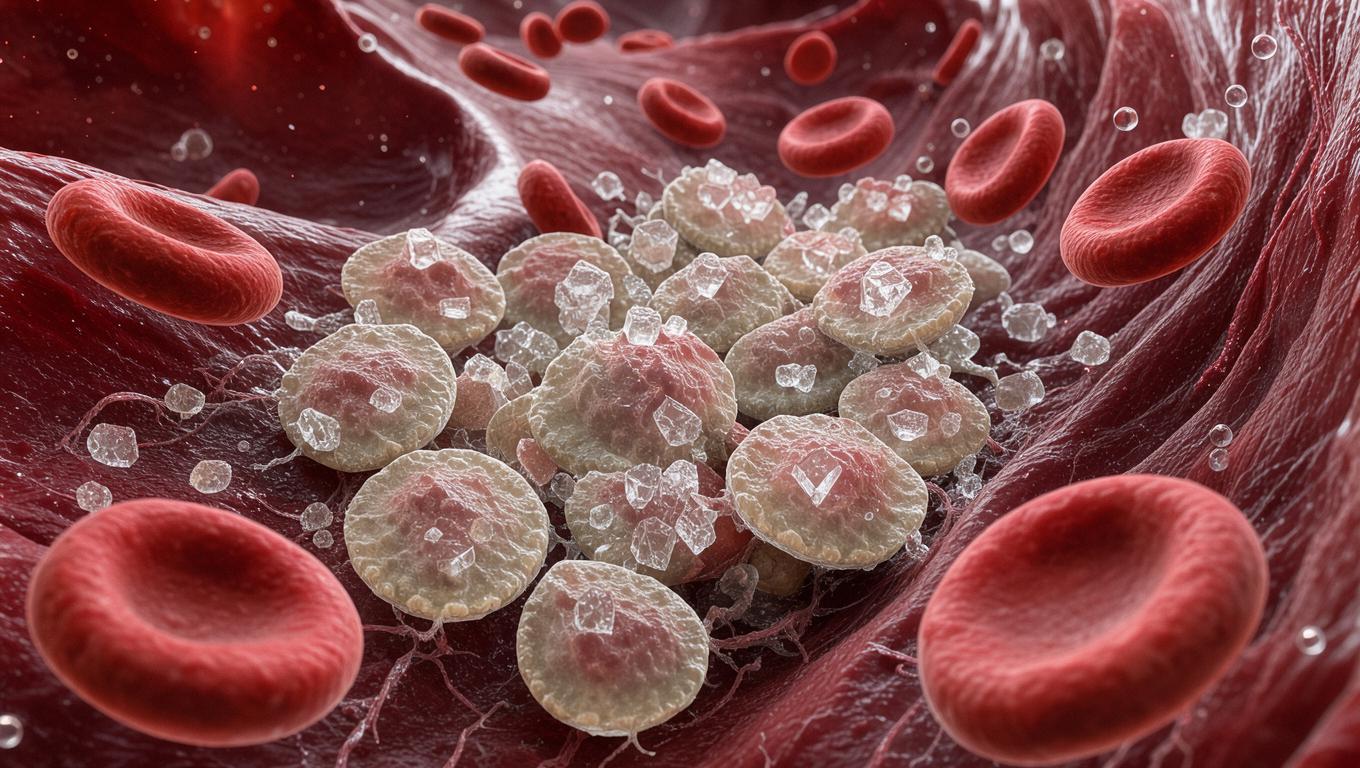
Science Art
Science Movie
Make a narrated HD Science movie for this answer ($64 per minute)

 Explore by Goal

 Hypothesis Novelty
 Quick Answer
 Long Answer
 Top Data Sources
 Ask a Follow-Up
 Key Insight
 Keep Exploring
 Analysis
 Hypothesis Graveyard
 Discussion
