Why BGPT?
logo

Paper Review — verify claims with raw data

Extract figures, tables, methods, and underlying data to audit results.

Press Enter ↵ to review



    Explore by Goal


     Quick Answer


    Scientist-style review of “Hidden microalgae diversity in reef systems…”

    The paper reanalyzes coral-associated 16S microbiome datasets to extract plastidial 16S (plastidiomes), producing a large SWA-Atlantic inventory (272 libraries) and a case study in Mussismilia harttii (Abrolhos Bank), reporting clear coral vs water community differences and reef-site spatial structuring. Evidence base: the authors’ methods and reported results are explicitly described in the PeerJ article itself .


     Long Answer


    Paper Review (critical, evidence-based): Plastidiome diversity in SWA coral reefs

    Target question the authors address: What diversity of plastid-bearing photosynthetic microeukaryotes (“plastidiomes”) is associated with corals in the Southwestern Atlantic, and how does it differ from reef water and vary among reefs?
    What they do computationally: (i) Systematic literature search; (ii) retrieve public 16S datasets; (iii) extract chloroplast/plastid-origin reads via a sequential SILVA→PR2 workflow; (iv) denoise using DADA2; (v) use diversity and indicator analyses on a water matrix reference; and (vi) analyze an Abrolhos Bank time series in M. harttii.

    1) Visual synthesis of the paper’s reported “headline numbers”

    Key quantitative outputs explicitly stated: 272 plastid-bearing amplicon libraries; 196 plastid genera across 41 classes; for corals in situ, Ostreobium (81.4%) and Calliarthron (48.8%) dominate the reported top genera; and taxonomic richness by sequencing strategy varies (metabarcoding > shotgun > bacterial cloning). .

    2) What is scientifically convincing vs. what is methodologically fragile?

    2.1 Strong points (supported by explicit methods/results)

    • Large-scale inventory using a consistent “plastid extraction + classification” concept: extracting chloroplast/plastid-origin sequences through a sequential SILVA→PR2 workflow is a defensible strategy for moving from generic 16S pipelines to plastid-focused community profiling. Methodologic underpinning: PR2 is a curated small-subunit rRNA reference database for unicellular eukaryotes, enabling plastidial placements when the correct marker is present.
    • Use of DADA2 denoising to infer amplicon sequence variants (ASVs) rather than clustering, which typically improves repeatability and reduces arbitrary OTU-threshold effects compared with older clustering-only approaches. The paper explicitly reports DADA2 use in the metabarcoding branches.
    • Conceptual separation of coral-associated signals from the water matrix using water samples as reference, then reporting coral indicators vs water indicators in the case study.

    2.2 Key methodological fragilities (where inference can break)

    • Cross-study heterogeneity is unavoidable: combining datasets across years, hosts, sequencing platforms, primer targets, and depths limits abundance-comparable statements. The paper explicitly acknowledges that sequence-length/depth/16S-target differences prevent “abundance-based metrics” comparisons and uses prevalence.
      Critique: prevalence is more robust than raw relative abundance, but it still depends on detection power (primer bias, library depth, rarefaction/processing choices). Those can vary systematically by study, making “frequency” partially reflect method sensitivity.
    • Plastid rDNA abundance is not necessarily proportional to organism abundance due to organellar copy number variation and plastid genome structure differences across taxa. The paper discusses this as a limitation (“differences in plastid genome structure and copy number … may bias abundance estimates”).
      Critique: this directly limits causal ecological interpretations about “nutritional importance” when based on sequence proportions. The paper’s discussion includes mechanistic interpretations (lipid-rich diatoms, ROS potential). Those claims should remain as hypothesis-level until validated with quantitative functional assays or metatranscriptomes.
    • Taxonomic uncertainty at lower ranks (e.g., corallicolids): the manuscript notes unresolved corallicolid taxonomy based on plastid markers and uses workaround BLAST guidance (“conducted BLASTn … with sequences classified as Colpodellida … highly abundant …”).
      Critique: classification fixes help, but they can also introduce circularity (a re-labeling guided by observed local abundance rather than by an independent taxonomic reference alignment).
    • Compositional data pitfalls: microbiome community analyses are compositional; naive distance/diversity analyses can yield biased inference unless handled with appropriate transformations. The paper uses “robust Aitchison distance” for beta diversity. But the paper’s specific robustness choices aren’t fully justified in the excerpt you provided; without the supplemental methods/details, the exact assumptions behind “robust Aitchison distance” are hard to fully audit here.
    • Potential macroalgal plastid carryover: the paper explicitly reports that they detected plastid sequences from macroalgae (e.g., Ectocarpus, Calliarthron) and suggests sampling should avoid visible macroalgae to reduce confounding.
      Critique: in a reanalysis setting, you can rarely re-sample; thus confounding may persist for some original libraries.

    3) Interpretation audit: do the results justify the ecological claims?

    3.1 Coral vs water separation

    The paper reports that plastid communities differ strongly between coral tissues and reef water in both inventory and the Abrolhos case study framing, and uses indicator species analysis to identify coral- vs water-associated genera.
    Confidence note: The existence of a separation is plausibly supported by strong filtering differences between compartments, but the excerpt does not provide effect sizes for all tests (beyond some F/p values in the case study section). In absence of full tables, confidence in exact magnitude is limited.

    3.2 “Not passively settling” claim

    The authors argue that coral plastidiomes are not merely “sunken plankton” but reflect structured subsets shaped by environmental filtering and host selection.
    Critical point: coral-vs-water community difference does not uniquely identify mechanism. It is consistent with selection, but it could also arise from differential persistence/retention in coral-associated compartments, differential DNA preservation, or sampling biases. Without direct ecological experiments (e.g., colonization/turnover rates), mechanism remains underdetermined.

    4) Reproducibility & auditability

    • Code and scripts are reportedly available on GitHub, and an accompanying Zenodo release is provided for the Mussismilia harttii dataset. The paper also cites GitHub repository availability.
    • Statistical workflow is specified: Shannon index, Welch’s test, ANOVA with post-hoc adjustments, robust Aitchison distance with MDS, PERMANOVA, indicator species analysis; and R environment is specified for the case study.

    5) What would most likely change the paper’s conclusions?

    • If plastid classification were systematically less reliable than assumed (e.g., due to database mismatch, or primer-length/region specificity causing misclassification), coral-vs-water separation could partially reflect classification artifacts rather than biological compartment differences. The paper’s reliance on PR2 classification makes this testable by re-running the classification with alternative reference constraints and tracking changes in coral indicator taxa identity.
    • If “macroalgae carryover” were more prevalent than the authors assume for reanalyzed libraries, then indicator taxa interpreted as coral-associated microalgae could instead be partly driven by local surface/coral neighborhood macroalgal DNA. The authors explicitly flag this sampling confound and recommend avoiding visible macroalgae, but reanalysis cannot always recover original sampling context.
    • If diversity comparisons are dominated by rare taxa with high method sensitivity, then the reported spatial structuring might shrink/shift under different rarefaction depths, filtering thresholds, or denoising parameterization. The paper rarefies to a fixed depth for the case study and reports rarefaction sufficiency for Shannon diversity.

    6) Bottom-line assessment

    This PeerJ study makes a data-integration and marker-focused contribution: it leverages a reanalysis framework to move beyond the usual coral microbiome emphasis on bacteria and Symbiodiniaceae, generating a large plastid-bearing inventory and reporting compartment- and reef-structured patterns using a case study in M. harttii.
    Primary caution: the ecological mechanism behind indicator taxa (host selection vs retention vs sampling artifacts) is not uniquely resolved by marker-based community structure alone; functional claims about nutrition/ROS should be treated as plausible but not yet experimentally verified by this study’s data.


    Feedback:   

    Updated: July 12, 2026

    BGPT Paper Review


    Study Novelty

    80%

    Novelty is high because it repurposes coral 16S microbiome datasets to construct a plastid-focused community inventory (plastidiomes) with a compartment-aware coral vs water framing, rather than only analyzing prokaryotes/Symbiodiniaceae; this is a focused methodological/marker reanalysis move applied at SWA scale.


    Scientific Quality

    70%

    Scientific quality is moderate-high: workflow and stats are described, and the use of curated plastid references plus compositional-aware beta diversity is appropriate. Main quality risks are inherent to cross-study integration (heterogeneous primers/targets/platforms), reliance on plastid 16S for abundance inference (copy-number/marker bias), and underdetermined mechanism (community structure ≠ causal selection).


    Study Generality

    70%

    Generalizable as a framework (plastid-focused reanalysis + compartment-aware comparison), but evidence is region- and marker-dependent; the strongest empirical component is within SWA and the Abrolhos case study hosts.


    Study Usefulness

    80%

    Useful for ecologists and microbiome analysts because it operationalizes plastidiome discovery from existing coral 16S datasets and provides a reproducible pipeline/data release for future reanalyses and biomarker hypotheses.


    Study Reproducibility

    80%

    Reproducibility appears strong due to code and dataset release plus explicit bioinformatics/stats steps, but full auditability depends on supplemental tables and the completeness of public accession mappings for every included library (not shown in the excerpt).


    Explanatory Depth

    60%

    Explanatory depth is moderate: it explains how plastid marker extraction can reveal structured community patterns, and provides plausible ecological narratives (filtering/host selection, roles during bleaching). However, functional mechanisms and causality (e.g., ROS/feeding effects) are not directly tested within the presented sequence-only analyses.


    🎁 Authors: Collect 301 Free Science Tokens (≈ $30.1 USD)

    Claim My Author Tokens

    Use for 75 days of free BGPT access (4 tokens = 1 day) or trade/sell (≈ $30.1 USD)

     Analysis Wizard


    It will parse the paper’s reported plastid inventory summary to generate two Plotly-ready comparison plots: coral top-genus prevalence and plastid-genus richness by sequencing strategy, using only stated numeric values.


     Hypothesis Graveyard


    If indicator genera (e.g., Ostreobium, Calliarthron, corallicolids) mainly reflect DNA carryover from nearby macroalgae/surfaces, then coral-vs-water separation would persist even without host selection; this would disfavor the interpretation that coral holobiont filtering is the dominant driver.


    If PR2/SILVA classification errors systematically misassign plastid sequences at genus level (e.g., clustered unknowns as lower-resolution “Florideophyceae.__.__.__”), then the ecological conclusions about specific taxa being indicators would collapse into a broader “plastid presence” effect rather than genus-resolved patterns.

     Science Art


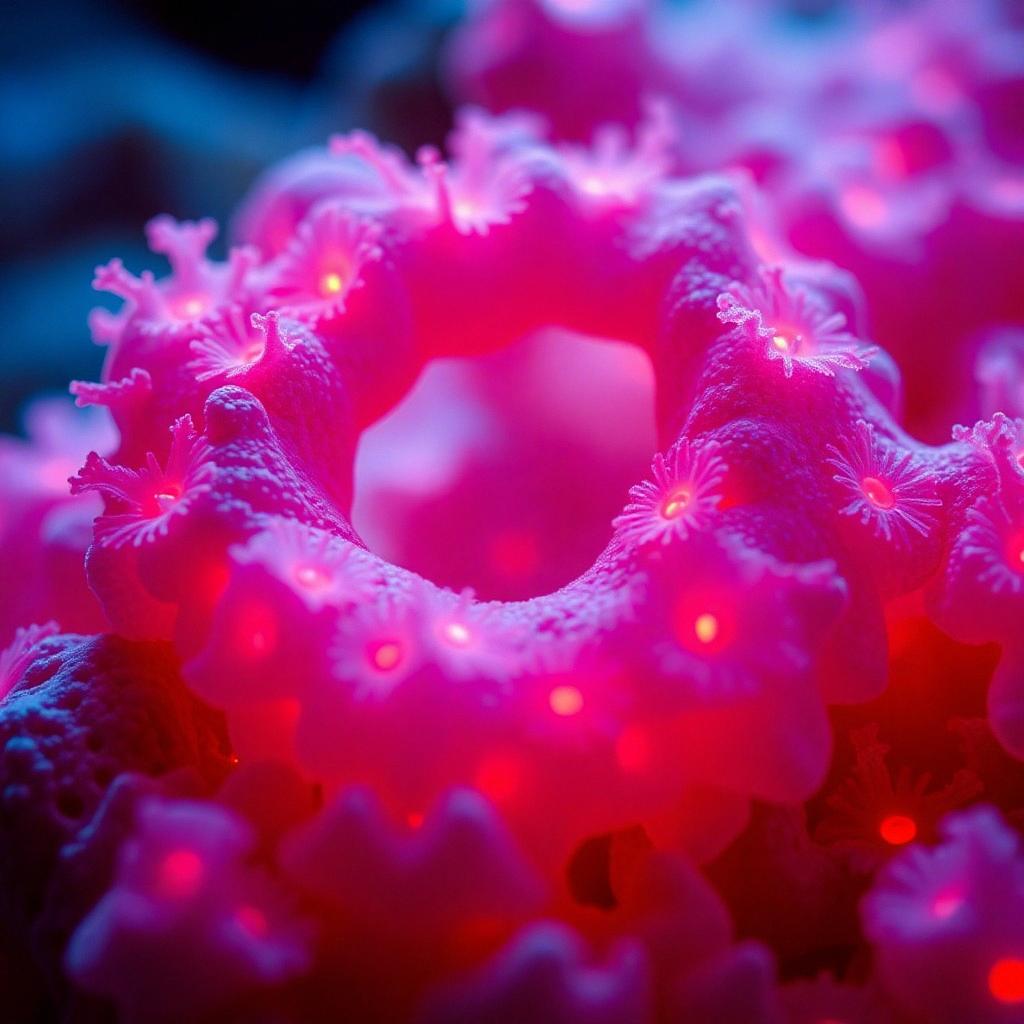
    Paper Review: Hidden microalgae diversity in reef systems: reanalysis of coral microbiomes reveals spatial patterns of coral-associated plastid communities in the Southwestern Atlantic Ocean (SWAO) Science Art

     Science Movie


    Make a narrated HD Science movie for this answer ($32 per minute)


     Discussion


    Follow the Evidence

    New scientific claims, supporting evidence, and important limitations. Every Friday. No ads.


    My BGPT