Review an author's claims as they appear in the record: linked experiments, exact results, limitations, and sources.Know what falsifiable science actually supports before you trust the answer.
Press Enter ↵ to search evidence
Explore by Goal
"The goal of science is not to open the door to infinite wisdom, but to set a limit to infinite error."
- Bertolt Brecht
Quick Explanation
Copied
Matthew A. Pasek is a leading, highly cited specialist in prebiotic phosphorus chemistry and geochemistry (OpenAlex h-index 40, ~5,384 citations across 182 works), whose landmark PNAS papers reframed the early-Earth 'phosphorus problem' around reactive schreibersite and reduced phosphorus species.
Long Explanation
Citation Metrics and Impact Trajectory
Matthew A. Pasek (OpenAlex ID A5029369255) has an h-index of 40 with 5,384 citations across 182 works, with annual citations rising steeply from ~68 (2012) to ~584 (2026), indicating sustained and growing influence [1]. His most-cited first-authored work, Rethinking early Earth phosphorus geochemistry (PNAS, 2008; 309 citations), proposed schreibersite corrosion as a prebiotic reactive-phosphorus source [2]. Other landmark papers include the aqueous corrosion of phosphide minerals from iron meteorites (Astrobiology, 2005; 279 citations) [3] and geochemical evidence for reduced phosphorus species in the early Archean ocean (PNAS, 2013; 237 citations) [4].
Core Scientific Contribution: The Phosphorus Problem
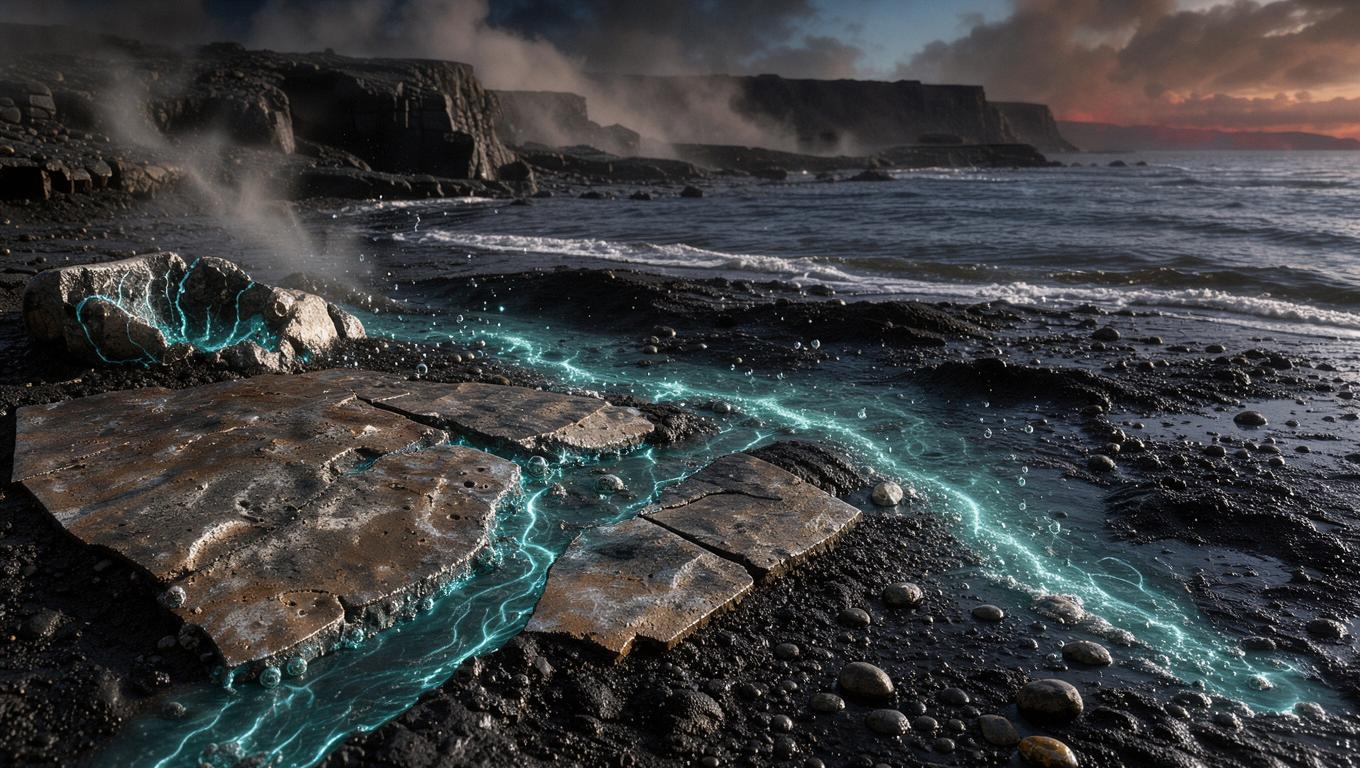
Pasek's program targets how prebiotic phosphorylation could occur given that orthophosphate minerals (e.g., apatite) are poorly reactive. His 2014 review outlines four prebiotic phosphorylation routes and argues meteoritic schreibersite [(Fe,Ni)₃P] supplied reactive phosphorus, noting phosphite detected in 3.5 Ga Australian limestone and an inferred early-ocean phosphite concentration of ~0.1 mM [5]. That review is explicitly conceptual—speculative early-Earth conditions, unquantified yields, and no new empirical data are acknowledged limitations [5].
His experimental work is stronger: the 2017 Life study demonstrated kaolinite silicate promotion of glycerol phosphorylation in non-aqueous solvents, with total yields of 12% (NaH₂PO₄ + kaolinite), 76% (trimetaphosphate + kaolinite), and 28% (struvite + kaolinite), analyzed by ³¹P-NMR and mass spectrometry with declared no conflicts of interest [6]. These quantitative, reproducible results substantially support the schreibersite-adjacent hypothesis that non-aqueous environments facilitate prebiotic organophosphate synthesis [6].
Breadth, Blindspots, and Contested Claims
Pasek's portfolio spans schreibersite corrosion, fulgurite/lightning geochemistry, phosphorus redox on Titan, Europa, and Enceladus, and applied work on Florida phosphate mining spills—unusual breadth for one researcher. Blindspots: prebiotic claims are inherently difficult to test against the actual Hadean environment; schreibersite fluxes and the provenance of Archean phosphite remain model-dependent; and several outputs (e.g., the Biochemist review [5], RNA-first timing commentary [7]) are conceptual syntheses with limited new data. Confidence: high for his empirical standing and metrics; moderate for the ultimate correctness of his prebiotic hypotheses, which remain conjectural.
Feedback:
Updated: November 21, 2026
BGPT Author Review
Scientific Quality
80%
Pasek is the field-leading figure on early-Earth phosphorus geochemistry: h-index 40, 5,384 citations, 182 works, multiple highly-cited first-author PNAS/GCA/Nature Geoscience papers. He uniquely integrates experimental chemistry, geochemical modeling, and planetary science. Deductions: some outputs are conceptual reviews with speculative early-Earth assumptions and unquantified yields; core claims (schreibersite flux, Archean phosphite provenance) remain model-dependent and partially contested; citation density is solid but not elite for a 20+ year career.
Communication Quality
70%
Pasek communicates specialized phosphorus geochemistry clearly in both technical and semi-popular venues (e.g., The Biochemist review is accessible and well-structured). However, his subject matter is inherently niche, and some works assume substantial background in geochemistry without adequate scaffolding for general readers.
Author Novelty
80%
Pasek originated and matured the schreibersite/meteoritic reactive-phosphorus hypothesis, the reduced-phosphorus Archean ocean argument, and lightning/fulgurite P-reduction pathways—genuinely novel reframing of the classical 'phosphate problem' in origins-of-life research. Later work extends rather than opens new frameworks.
Scientific Rigor
70%
Strong experimental rigor: quantitative 31P-NMR yield measurement, controlled mineral comparisons, an eight-year meteorite extraction study. Weaker in speculative scenario-building where early-Earth conditions, fluxes, and yields are inferred rather than measured; his own review acknowledges optimistic biases toward feasible prebiotic scenarios.
We'll email you the results when your analysis is finished.
Hypothesis Graveyard
Terrestrial apatite dissolution at pH <2 as the dominant prebiotic phosphate source—superseded because such extreme-pH environments capable of liberating millimolar phosphate were likely rare and localized compared with meteoritic schreibersite delivery.
Hydrothermal orthophosphate condensation as the main polyphosphate route—diminished because the ~30 kJ/mol ATP formation barrier and rapid hydrolysis make it implausible without strong concentration mechanisms.

 Explore by Goal
 Quick Explanation
 Long Explanation
 Top Data Sources
 Ask a Follow-Up
 Key Insight
 Keep Exploring
 Hypothesis Graveyard
 Potential Experiments
 Discussion
