Compile and compare specific findings across multiple studies into unified evidence records.Know what the science actually supports before you trust the answer.
Press Enter ↵ to analyze aggregation
Explore by Goal
"The most beautiful experience we can have is the mysterious."
- Albert Einstein
Long Analysis Plan
Copied
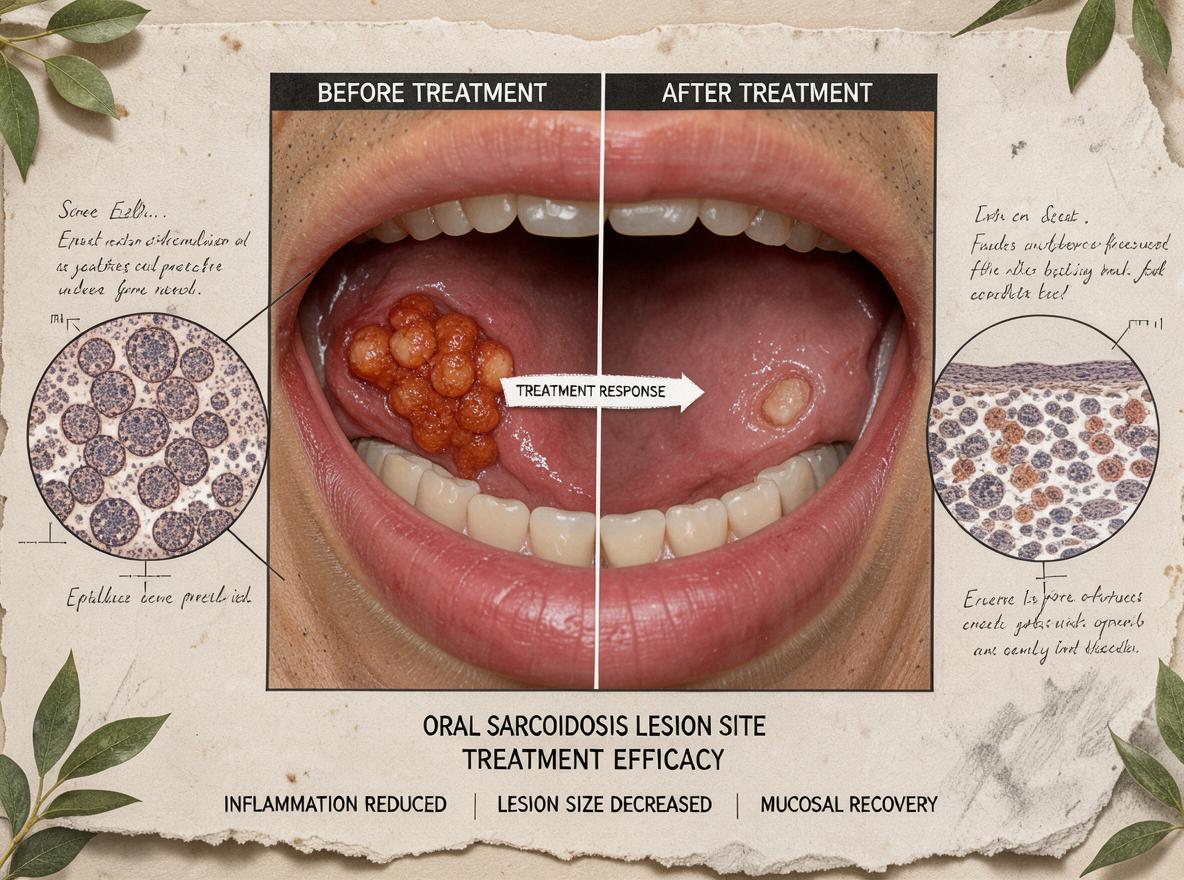
Evidence Gap: Oral Sarcoidosis Not Covered by Supplied Sources
The supplied evidence records do not contain any data on oral sarcoidosis (gingival, labial/salivary, buccal, or palatal lesions), their treatment outcomes, or lesion-site-specific responses. A valid meta-analysis of treatment outcomes by oral lesion site cannot be planned from these sources; graphing would require inventing data, which is not acceptable.
What the records do support: sarcoidosis is a multisystem disease where lesion-site and phenotype strongly modify prognosis and management priorities, as outlined in the NHLBI high-risk phenotype framework (fibrotic pulmonary, cardiac, neurologic, and multisystem involvement) that explicitly calls for standardized data elements, registries, and biomarker-driven trial designs to overcome heterogeneity of small observational series . That framework is directly transferable as the methodological backbone for an oral-lesion-site case-report meta-analysis.
Missing to proceed: primary oral sarcoidosis case reports with lesion site, intervention, dose, duration, and outcome definitions; without them the premise cannot be executed. The closest supplied analogue is a descriptive subcutaneous sarcoidosis series (n=10) reporting systemic corticosteroid response in 4–8 weeks, illustrating the case-series evidence tier such a meta-analysis would pool .

 Explore by Goal
 Long Analysis Plan
 Top Data Sources
 Ask a Follow-Up
 Key Insight
 Keep Exploring
 Science Movie
 Discussion
