Check your idea against supporting claims, contradicting results, and falsification criteria.Know what the science actually supports before you trust the answer.
Press Enter ↵ to test hypothesis
Explore by Goal
"The scientist is not a person who gives the right answers, he's one who asks the right questions."
- Claude Lévi-Strauss
BGPT Odds of True
72%
80% Confidence
The hypothesis posits that karyotypic differentiation persists within a single IBD species in northern Lepilemur. Strong genomic evidence (R²=0.24–0.29 clinal IBD, no sympatry, 83% morphospace overlap) supports single-species status, making persistence of karyotypic variation within one species likely. Uncertainty stems from lack of direct karyotype-genomic integration and no reproductive isolation data.
Hypothesis Novelty
55%
The idea that karyotypic differentiation can persist within a single species is well-established in other taxa (e.g., killifishes), but applying it specifically to Lepilemur with recent genomic evidence is moderately novel, challenging previous species delimitations.
Quick Analysis Plan
Copied
Yes. Genomic evidence from 84 northern Lepilemur individuals shows clinal isolation-by-distance (R²=0.24–0.29), no sympatry, and ~83% morphospace overlap, supporting a single species where karyotypic differentiation persists as intraspecific variation rather than a speciation driver . This challenges chromosomal rearrangements as primary speciation drivers in the genus, paralleling killifish evidence .
Long Analysis Plan
Evidence That Karyotypic Differentiation Can Persist Within One IBD Species
The 2026 genomic study of 84 northern Lepilemur individuals (L. ankaranensis n=48, L. milanoii n=33, Analafiana n=3) provides the most direct test. PCA and NgsADMIX clustering revealed no individuals of distinct nuclear genomic background in sympatry at Andrafiamena-Andavakoera (n=16), despite previous claims of co-occurrence . Genomic differentiation between L. ankaranensis and L. milanoii is clinal and explained by geographic distance (R²=0.24 and 0.29), fitting an intraspecific isolation-by-distance model .
Morphometric PCA from 18 variables across the same 84 adults shows continuous variation with ~83% morphospace overlap between L. ankaranensis and L. milanoii . The authors conclude L. milanoii is a junior synonym of L. ankaranensis. Because northern Lepilemur historically show documented karyotypic differences (diploid number variation among populations), these findings imply that karyotypic differentiation can indeed persist within a single IBD species without driving reproductive isolation.
What This Implies for Chromosomal Rearrangements as Speciation Drivers
If karyotypic differentiation persists within one continuous species, chromosomal rearrangements in Lepilemur are more likely passengers than drivers of speciation. This is corroborated by an independent system: Chromaphyosemion killifishes show dramatic 2n variation (24–40) and NOR phenotypes across seven species, yet the authors conclude rearrangements are not the primary drivers of speciation . Conversely, in Saccharomyces paradoxus, chromosomal rearrangements do accompany partial reproductive isolation in hybrid lineages (SpD with ~44.7% introgressed ancestry and 65–94% spore viability) , suggesting rearrangements can contribute to isolation but typically require additional barriers (ecological, behavioral, or genic) to complete speciation .
Improved Hypothesis
Karyotypic differentiation in northern Lepilemur persists within a single isolation-by-distance species because chromosomal rearrangements alone do not generate reproductive isolation; they require complementary barriers (ecological divergence, mate choice, or Dobzhansky–Muller incompatibilities) to drive speciation, implying rearrangements in Lepilemur are consequences of drift in small populations rather than causes of species formation.
Limitations and Blind Spots
No karyotype data were collected in the 2026 study itself; the inference relies on historical cytogenetic reports combined with new genomic data.
No reproductive-isolation or behavioral data were collected, limiting the species-delimitation conclusion.
The IBD R² values (0.24–0.29) leave 71–76% of genetic variation unexplained by distance, so other processes (selection, drift) contribute.
Only 3 individuals from Analafiana were sampled, limiting statistical power for that comparison.
Generalizing from killifish and yeast to Lepilemur requires caution due to fundamental differences in genome organization and reproductive biology.
Chromosomal rearrangements as primary speciation drivers in Lepilemur: Weakened because the clinal IBD pattern with no sympatry and high morphospace overlap supports a single species where karyotypic differentiation coexists with gene flow.
Sympatric coexistence of L. ankaranensis and L. milanoii: Rejected by genomic data showing no individuals of distinct nuclear backgrounds co-occurring (n=16 sampled).

 Explore by Goal
 Hypothesis Novelty
 Quick Analysis Plan
 Long Analysis Plan
 Top Data Sources
 Ask a Follow-Up
 Key Insight
 Keep Exploring
 Potential Hypothesis
 Hypothesis Graveyard
 Potential Experiments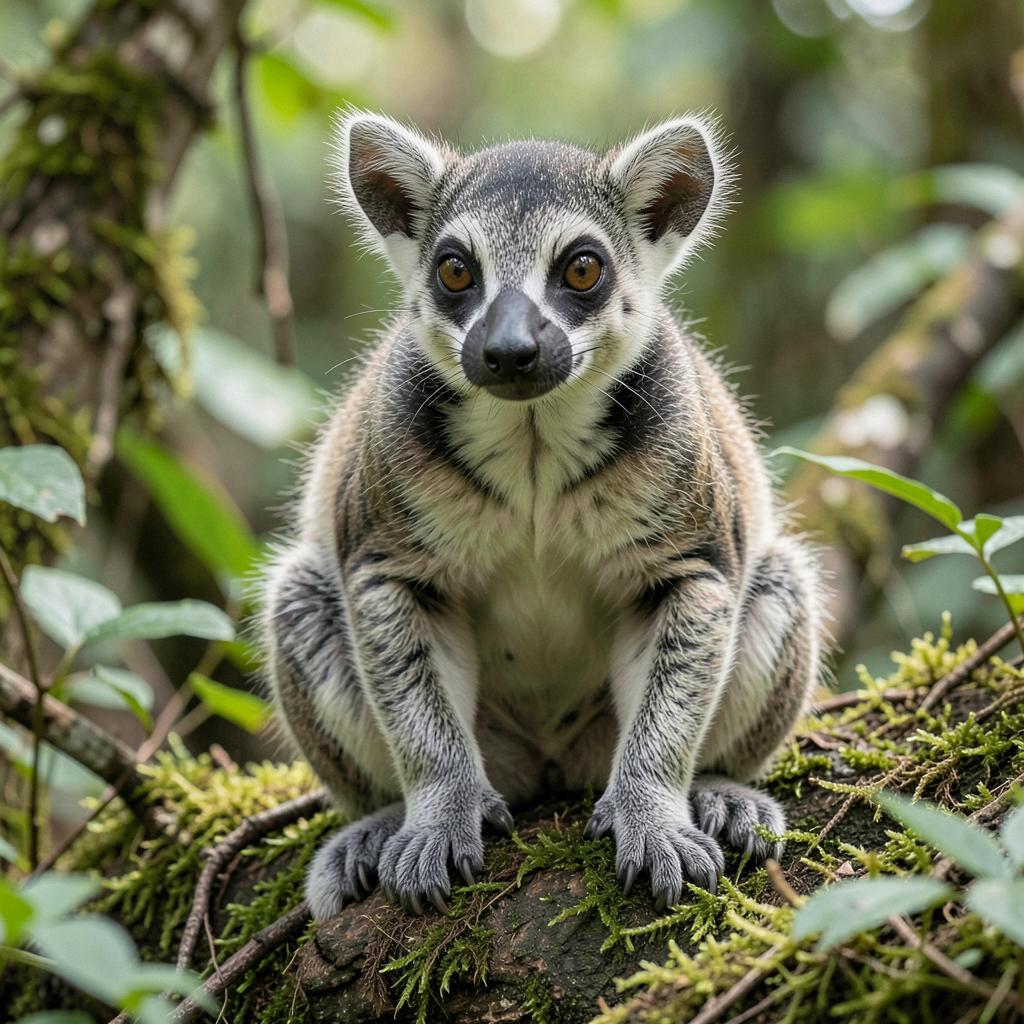
 Discussion