Check your idea against supporting claims, contradicting results, and falsification criteria.Know what the science actually supports before you trust the answer.
Press Enter ↵ to test hypothesis
Explore by Goal
"The aim of science is not to open the door to infinite wisdom, but to set a limit to infinite error."
- Bertolt Brecht
BGPT Odds of True
30%
80% Confidence
The hypothesis (smartphone near-field emissions shift biofilm metatranscriptomes without taxonomic shifts) has never been tested directly. Precedent exists for EM fields altering gene expression without cytotoxicity (mammalian cells) and altering biofilm taxa (PEMF), but nothing links smartphone-realistic exposures to expression-only biofilm effects; low-to-moderate likelihood.
Hypothesis Novelty
70%
Dissociating functional (metatranscriptomic) from taxonomic responses to realistic consumer-device exposures is a fresh, well-posed question; prior work used therapeutic PEMF or 16S-only endpoints.
Quick Analysis Plan
Copied
The hypothesis is untested: no supplied study has measured biofilm metatranscriptomics under realistic near-field smartphone emissions. Adjacent evidence shows pulsed electromagnetic fields can alter biofilm composition (16S taxonomy) in vitro and in a small human pilot and can modulate gene expression without cytotoxicity in human cells , but dissociating expression-only effects from taxonomy changes specifically for smartphone-like exposures remains unknown.
Long Analysis Plan
What the supplied evidence does and does not show
No supplied study tested the hypothesis directly. No experiment measured biofilm metatranscriptomics under realistic smartphone near-field emissions (SAR-matched RF, pulsed duty cycles, phone-glass substrates). The closest direct evidence is a 2025 miniaturized PEMF device study: in vitro polymicrobial salivary biofilms plus a 3-day palatal-appliance pilot in 5 volunteers found that PEMF activation reduced 23 implant-infection-associated species and altered co-occurrence networks — measured by 16S rRNA (taxonomy), not transcriptomics, and using therapeutic PEMF parameters, not smartphone RF. The authors themselves flag the small sample, brief exposure, and need for clinical validation . Notably, this study shows taxonomy did change under PEMF — the opposite dissociation from the one hypothesized.
Gene-expression-without-composition-change is mechanistically precedented but in different systems. ELF-PEMF (15 mT, 120 Hz) altered angiogenic gene expression (HIF-1α, CTGF, VEGFA, MMP-2, cathepsin-D, E2F3) in human RPE cells in a time-dependent pattern (down at 5 min, rebound up at 10–15 min) with zero cytotoxicity — a clean expression-only, taxonomy-irrelevant effect in n=4 donor cultures . PEMF also restored CREB/BDNF signaling and mitochondrial potential in stressed PC12 cells (e.g., phospho/total CREB rising from 85±4% to 121±8% under H₂O₂), again purely transcriptional/signaling readouts . These support the plausibility of sub-compositional transcriptional sensitivity to EM fields — but in mammalian cells at field strengths far from phone near-field RF.
Critical blind spots: (1) PEMF exposure geometry, field strength, and frequency in all supplied studies differ from smartphone emissions; extrapolation is weak. (2) 16S-based biofilm studies cannot detect expression changes, so a null taxonomy result would not falsify the hypothesis. (3) The implant biofilm study's COI disclosure (one author works at the PEMF device company) warrants caution . (4) What would settle it: paired metatranscriptomic + 16S sampling of multispecies biofilms exposed to SAR-calibrated smartphone emissions on phone-surface substrates, blinded, with sham temperature control — this experiment does not yet exist in the supplied literature.
Building a paired metatranscriptomic-versus-taxonomic differential analysis pipeline that quantifies whether expression shifts occur without 16S composition change in exposed versus sham biofilms.
Get emailed when your analysis is done!
We'll email you the results when your analysis is finished.
Hypothesis Graveyard
RF exposure always alters microbiome composition: contradicted by the dissociation premise and by the absence of human smartphone-to-microbiome causal data; correlative swab/observational studies cannot establish compositional change from emissions.
Therapeutic PEMF effects generalize to smartphone RF: PEMF studies use millitesla low-frequency fields with specific pulse trains; smartphone near-field emissions are GHz-range with pulsed duty cycles — different biophysical coupling regimes.
Science Art
Science Movie
Make a narrated HD Science movie for this answer ($32 per minute)

 Explore by Goal
 Hypothesis Novelty
 Quick Analysis Plan
 Long Analysis Plan
 Top Data Sources
 Ask a Follow-Up
 Key Insight
 Keep Exploring
 Analysis
  Hypothesis Graveyard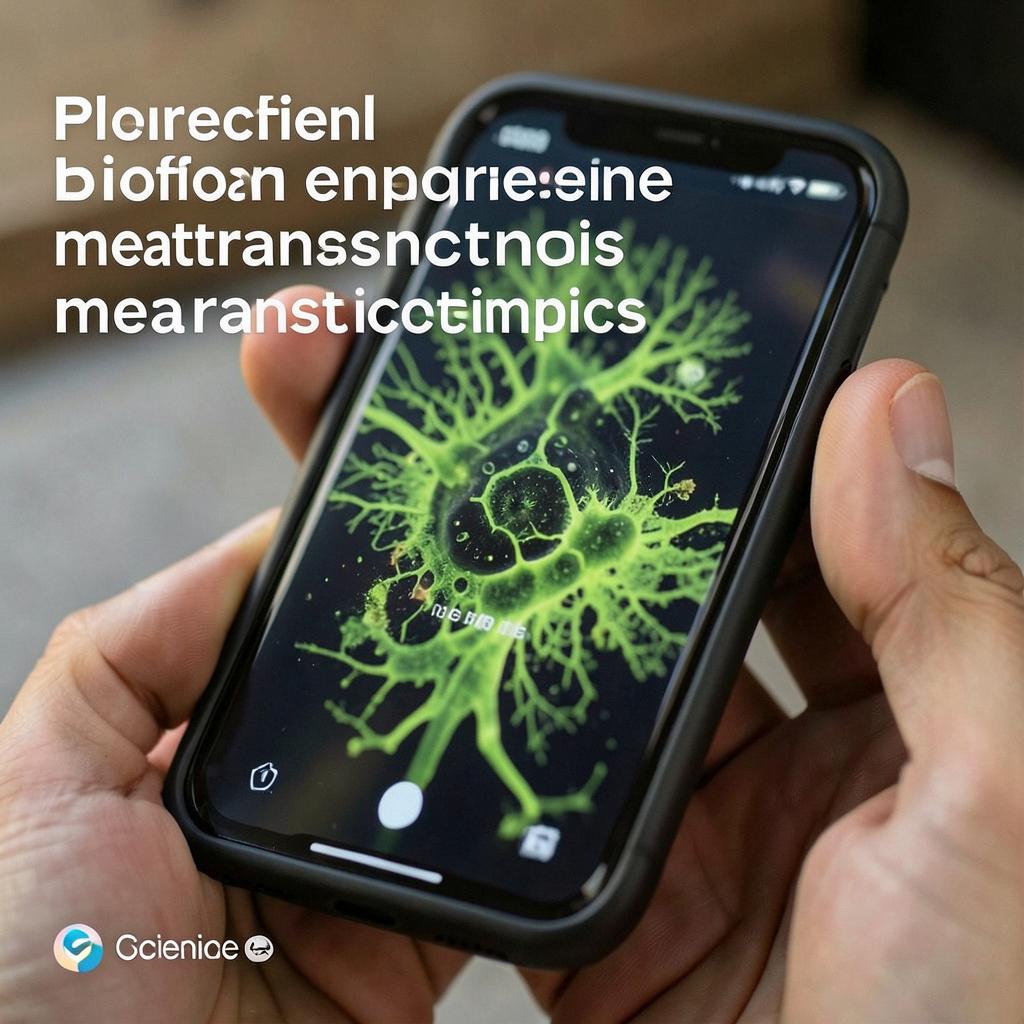
 Discussion