Why BGPT?
logo

Review papers with raw data transparency

Quickly verify claims by accessing the underlying experimental data and figures.


Press Enter ↵ to solve


    Fuel Your Discoveries


     Quick Answer


    Gut–brain hypothesis in a “regressive autism + enterocolitis” subgroup
    The paper argues that a subset of children with autism regression shows gastrointestinal inflammation/permeability (“autistic enterocolitis”) that could plausibly mediate neurodevelopmental change via gut–brain pathways, using markers like fecal calprotectin and reported intestinal permeability measures.


     Long Answer


    Paper Review (science-focused, skeptical, evidence-based)
    “The Gut–Brain Axis in Childhood Developmental Disorders” (Journal of Pediatric Gastroenterology and Nutrition, 2002)
    DOI: 10.1097/00005176-200205001-00004
    Visual map (what the paper claims → what would need to be true)
    The schematic reflects the paper’s argument structure: GI pathology/inflammation and permeability changes are presented as upstream of neurobehavioral change, with mechanistic plausibility via gut–brain routes and clinical analogies (especially hepatic encephalopathy).
    What’s novel in this specific paper?
    The paper frames a mechanistic “gut–brain axis” explanation for a regressive autism subgroup, emphasizing GI inflammation markers and intestinal permeability, plus immune cell patterning and “encephalopathy” analogy.
    Main evidence type used
    Mostly hypothesis-building and synthesis of clinical observations and earlier studies; the provided text includes reported symptom prevalence comparisons and references to GI inflammation/permeability markers and intestinal pathology descriptions.
    Figure 1 — Reported GI symptom frequency in autistic vs control children (as quoted in the paper)
    The paper cites an “unselected” cohort analysis reporting clinically significant GI symptoms in 46% of 385 autistic-spectrum children vs 10% of 97 controls (odds ratio 7.4; CI 3.60–15.65; p<0.0001).
    Skeptical note on interpretation
    Even if symptom frequency is elevated, this remains correlational; the paper itself argues it is essential to test whether symptoms reflect underlying GI pathology rather than “expected” co-occurrence.
    Figure 2 — Marker logic presented (GI injury/inflammation → permeability/inflammation → neuroactive mediation)
    The paper presents a chain of evidence: low serum α1-antitrypsin as intestinal protein loss, increased fecal calprotectin as a marker of active neutrophilic inflammation, and increased intestinal permeability as mucosal integrity dysfunction; it further describes immune/histopathology patterns and frames “gut-derived mediators” as plausibly reaching the brain.
    What’s plausible biologically (and where the paper is under-specified)
    Known/strongly grounded gut–brain communication routes
    • The field of the microbiota–gut–brain axis is supported by multiple mechanistic routes (immune signaling, autonomic/enteric neural pathways, microbial metabolites such as SCFAs and bile acids, and tryptophan-derived signaling), with animal models providing stronger causal leverage than most human studies.
    • The broader literature also emphasizes that early-life microbiota perturbations can shape neurodevelopmental trajectories, but that translational human causality remains limited and confounded in many studies.
    Where this 2002 paper is methodologically constrained
    The paper relies heavily on (i) clinical observation, (ii) marker differences reported in other studies, and (iii) inference/analogy from established GI-to-brain encephalopathy contexts (hepatic encephalopathy and other intestinal encephalopathies).
    Concretely, the paper (as provided) does not supply, in-line, modern causal tests that would distinguish:
    • “GI pathology causes regression” vs “regression/immune/genetic factors cause GI pathology.”
    • Direct mediation by specific molecules vs downstream marker correlation.
    This is consistent with later reviews noting that much of the human evidence is correlational and heterogeneous, requiring rigorous longitudinal and mechanistic designs to establish causality.
    Industry/financial influence check (for later-related literature)
    While this 2002 paper’s text excerpt provided does not include a COI statement, it is important for the broader MGBA field that some contemporary reviews report author ties (honoraria/consultancies/funding), which can introduce interpretation bias risk in narrative syntheses.
    Figure 3 — “Upper GI findings” frequency reported by the paper (subset with GI symptoms)
    The paper cites a study of 36 autistic children with GI symptoms and reports reflux esophagitis in 25/36 (69%), chronic gastritis in 15/36 (42%), chronic duodenitis with Paneth cell hyperplasia in 24/36 (67%), and decreased digestive enzyme activity in 21/36 (58%).
    Critical constraint
    These frequencies apply to a small symptomatic subgroup (n=36), which can inflate apparent effect sizes and cannot, by itself, establish causality for neurodevelopmental regression in the general autism spectrum.
    Counterpoints / blind spots (what could disprove or weaken the model)
    • Correlation vs causation: GI pathology and immune abnormalities can co-occur with neurodevelopmental regression, but temporality and causal direction are not established within the excerpt; later reviews emphasize the general difficulty of causality in human microbiome/brain associations.
    • Subgroup definition risk: The paper’s proposed “autistic enterocolitis” and “regression after 12–15 months” phenotype may not map cleanly to modern ASD heterogeneity; without reproducible biomarkers and unbiased recruitment, effect estimates can shift across cohorts.
    • Mechanism specificity: The paper uses mechanistic plausibility and analogy (hepatic encephalopathy) and mentions opioid-biochemistry abnormalities and neuroactive peptides, but does not fully resolve which molecules, pathways, and thresholds mediate effects in autism regression.
    How a modern causality check would be designed (conceptual, not an intervention recommendation)
    Given what the paper proposes (GI inflammation/permeability → neurobehavioral regression), the most direct falsification would require temporal causality and mediator specificity. This aligns with the general field perspective that robust causal evidence needs longitudinal and mechanistic study designs.
    This “causal-direction” framing is a critique lens, not a claim that any one alternative scenario is true in autism; it highlights the missing empirical requirement of temporality/causal testing.
    Author-focused follow-ups (bespoke BGPT links)


    Feedback:   

    Updated: April 11, 2026

    BGPT Paper Review


    Study Novelty

    80%

    The novelty is the targeted hypothesis about a GI-pathology-associated autism subgroup, framed as an “enterocolitis/encephalopathy” gut–brain mechanism with specific marker logic and mechanistic analogy to hepatic encephalopathy.


    Scientific Quality

    50%

    Scientific quality is limited by the nature of the provided text as a hypothesis-focused talk/short paper: it uses reported marker differences and histopathologic descriptions but does not provide robust, internally presented causal testing, temporality, or mediator specificity. The claim therefore carries substantial risk of correlation-to-causation overreach (a common challenge emphasized in later MGBA literature).


    Study Generality

    60%

    It is relatively specific to childhood developmental disorders—especially autism—and even more specific to a regression-associated subgroup with GI pathology markers, which limits broad generalization across heterogeneous ASD presentations.


    Study Usefulness

    60%

    Usefulness is mainly as an early mechanistic framing that motivates subgroup-focused biomarker/cause testing. However, as a standalone scientific artifact it provides less direct, reproducible causal evidence than modern mechanistic/translational standards would require.


    Study Reproducibility

    30%

    Reproducibility is constrained because the provided text does not include full methods, analytic pipelines, or raw datasets; it largely summarizes prior reports and describes findings without enough procedural detail to replicate.


    Explanatory Depth

    60%

    The paper provides a plausible multi-step narrative (GI inflammation/permeability and immune pathology → neuroactive/immune/toxic mediation → encephalopathic neurobehavior), with analogy to hepatic encephalopathy. But it remains mechanistically under-specified regarding specific causal mediators and experimentally validated pathway steps within autism regression.


    🎁 Authors: Collect 51 Free Science Tokens (≈ $5.1 USD)

    Claim My Author Tokens

    Use for 12 days of free BGPT access (4 tokens = 1 day) or trade/sell (≈ $5.1 USD)

     Top Data Sources ExportMCP


     Analysis Wizard


    Extract the paper’s reported GI symptom and upper-GI finding percentages into a tidy table, then plot comparative bar charts and compute odds ratios from quoted counts (where counts are provided).


     Hypothesis Graveyard


    “All autism is caused by GI pathology.” This is weakened because the paper explicitly frames only a subset and because modern ASD heterogeneity makes a single-cause model unlikely.


    “GI symptoms are merely an epiphenomenon unrelated to upstream neurodevelopmental change.” This is also incomplete as a strongman because the field’s mechanistic routes provide plausibility for bidirectional influences; however the burden of proof remains on temporality and mediation.

     Science Art


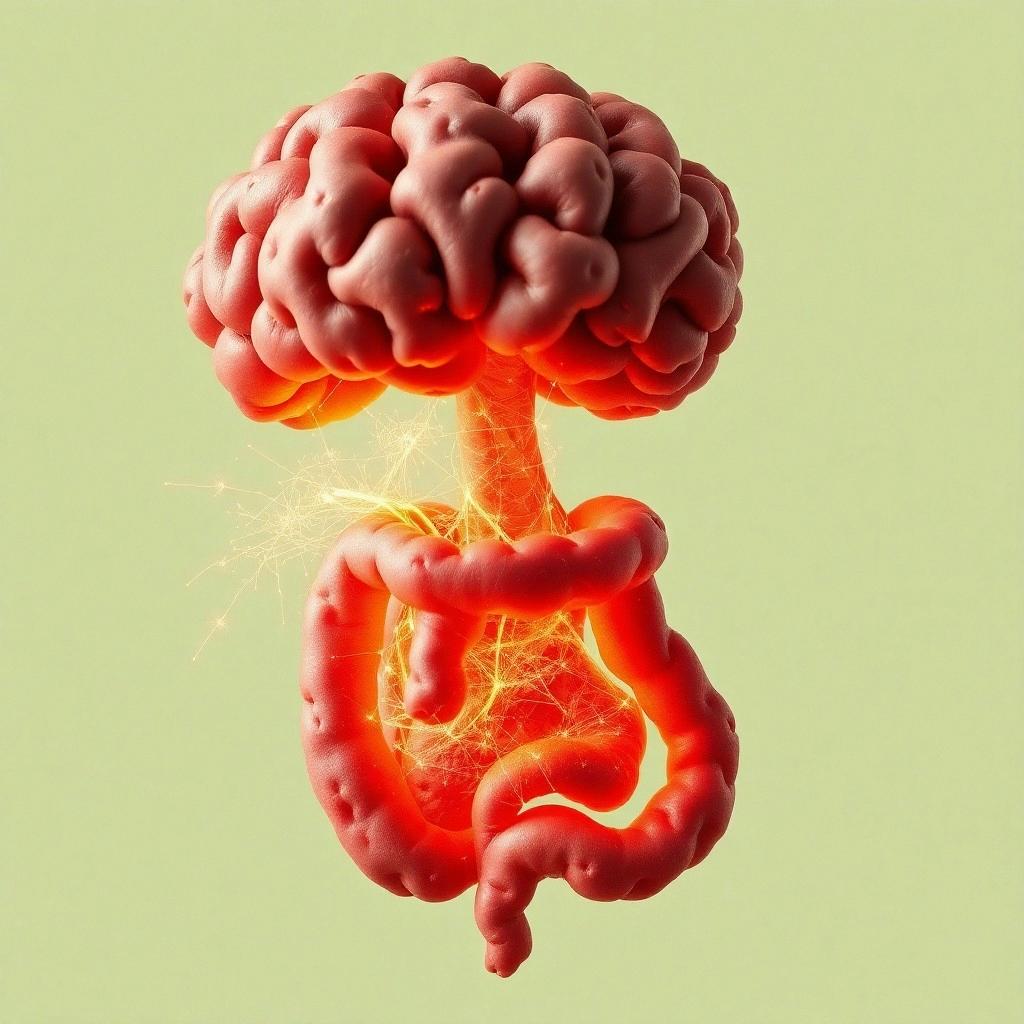
    Paper Review: The Gut–Brain Axis in Childhood Developmental Disorders Science Art

     Science Movie


    Make a narrated HD Science movie for this answer ($32 per minute)


     Discussion


    Get Ahead With Science Insights

    Custom summaries of the latest cutting edge Science research. Every Friday. No Ads.


    My BGPT