Why BGPT?
logo

Review papers with raw data transparency

Quickly verify claims by accessing the underlying experimental data and figures.


Press Enter ↵ to solve


    Fuel Your Discoveries


     Quick Explanation


    What this review is (and is not)
    This Annual Review synthesizes how the cardiac cell–ECM interface (integrins, ECM composition) and the protein–substrate linker (e.g., covalent vs adsorption, PA vs PDMS) shape cardiomyocyte (CM) adhesion, mechanotransduction, and in vitro maturation. It is not a primary-data paper, so mechanistic claims should be treated as consensus from multiple studies rather than single causal demonstrations.
    Paper: Micromechanobiology: Focusing on the Cardiac Cell–Substrate Interface


     Long Explanation


    Paper Review (Evidence-Skeptical): Micromechanobiology: Focusing on the Cardiac Cell–Substrate Interface
    Date context (user): April 17, 2026 • Review target DOI:
    Visual Map: The review’s causal chain (as argued)
    Nodes/edges summarize the review’s organizing logic: native cardiac microenvironments change integrin/ECM state with development/disease; in vitro “biointerface” includes both cell–ECM and protein–substrate linker/substrate that controls protein presentation/adhesion strength, which then influences outside-in signaling and CM phenotypes.
    What’s known vs inferred (from the review text you provided)
    • Known (as stated): In vitro cardiac systems require PSC-derived cardiomyocytes to adhere to a substrate, but they interact with the substrate indirectly through ECM proteins attached via physisorption or chemisorption/linkers; the combined region is termed the “cell-substrate interface” / “biointerface.”
    • Known (as stated): Development and disease are associated with temporal dynamics in cardiomyocyte integrin expression and myocardial ECM composition; integrin expression profiles are discussed as shifting with development, birth, and injury (MI/hypertrophy).
    • Known (as stated): Protein immobilization differs between PA hydrogels and PDMS; PA can require surface modifications/chemistries (e.g., sulfo-SANPAH is used as a linker), while PDMS is hydrophobic and often uses adsorption after plasma treatment or covalent chemistries (e.g., APTES/GA; protein density ranking is mentioned).
    • Inferred / model-based (needs extra verification): The review argues that systematically tuning ligand composition + stiffness + dimensionality/topography and using strategies that recapitulate temporal in vivo microenvironment evolution can improve PSC-CM maturity/utility; this is an evidence-backed hypothesis but not conclusively proven in a single study.
    Quantitative figures extractable from your provided text
    ECM collagen composition (range stated for adult myocardium)
    The review states that myocardial collagen I is ~75–80% and collagen III is ~11–20%, with remaining collagen IV/V/VI making up the rest.
    Protein–substrate interface: where reproducibility risks arise (skeptical critique)
    1) Linker chemistry changes “protein presentation,” not just attachment stability
    The review emphasizes that protein immobilization strategies can be nonspecific (e.g., covalent chemistries targeting amines/side chains) and can yield variability in both the number and location of binding sites, which can then alter cell adhesion and downstream signaling.
    2) PA vs PDMS is not a “single knob” experiment
    The review describes PDMS as hydrophobic with weak van der Waals adsorption (and plasma treatment to hydrophilize), while PA often requires chemistries for covalent attachment; therefore swapping PA↔PDMS changes: adsorption vs covalent immobilization regime, surface chemistry, and possibly viscoelastic behavior, not only stiffness.
    3) Linker–protein mechanics should be measured, not assumed
    The review highlights that protein-substrate adhesion strength can be quantified and used to compare results across platforms, and it reports an example mechanical test comparison of protein-substrate binding strength on PDMS for adsorption vs covalent binding.
    Dose–response-like “platform knobs” (qualitative)
    The review organizes biomaterial tuning by ligand composition, stiffness, dimensionality, and topography.
    Key open questions & blind spots (as science, not opinions)
    Temporal dynamics: a stated limitation
    The review explicitly states that many current in vitro approaches lack temporal changes in the microenvironment’s biochemical and biophysical properties that recapitulate heart development, and that PSC-CMs typically display fetal-to-late-fetal characteristics.
    Translation and species/model dependence
    The review repeatedly flags that species differences may exist in integrin expression and ECM composition trends, which constrains generalization—especially when extrapolating from mouse/rat/PSC-CM systems to adult human physiology.
    Table-driven figure (qualitative): collagen components vs stated roles
    This chart is a qualitative “role map” based on descriptions in your provided review text (e.g., collagen I as stiff/strength support; collagen III as compliant network and collagen I fibrillogenesis regulator; collagen IV as basement membrane component; laminin as anchoring/cross-linking; fibronectin in development/wound healing; elastin in elasticity).
    Bottom line (skeptical, evidence-weighted)
    • Strength: The review’s central contribution is reframing CM mechanobiology around the biointerface (cell–ECM plus protein–substrate interface), emphasizing that linker chemistry and substrate properties control ligand presentation and thus outside-in signaling.
    • Practical implication: For experimental interpretation, “platform differences” (PA vs PDMS, adsorption vs covalent, undefined vs site-specific immobilization) can act as confounders unless binding strength and presentation are characterized.
    • Major limitation: As stated, many in vitro platforms lack temporal evolution of microenvironment properties that mirror development/disease; thus mechanistic conclusions about “maturity” may be temporally incomplete.


    Feedback:   

    Updated: April 18, 2026

    BGPT Paper Review


    Study Novelty

    60%

    Moderately novel framing: while integrin–ECM mechanobiology and biomaterials are established areas, the review’s explicit emphasis on the cardiac biointerface as a coupled cell–ECM + protein–substrate linker/substrate system provides a useful synthesis lens for experimental design and interpretation.


    Scientific Quality

    90%

    High quality as a narrative Annual Review: clear conceptual definitions (biointerface, outside-in signaling), structured coverage of integrin/ECM dynamics and in vitro interface-engineering strategies (PA vs PDMS linking, binding strength characterization, biomaterial design knobs). Limitations are inherent to narrative synthesis (no new primary experiments; risk of selection/heterogeneity), but the review itself explicitly states open challenges and temporal mismatch.


    Study Generality

    80%

    Broadly useful to the general problem of engineering cell–matrix interfaces for mechanically regulated phenotypes, while staying focused on cardiac/CM context; the design framework (ligand composition, stiffness, dimensionality, topography, and linker/attachment strength) is widely transferable across mechanobiology platforms.


    Study Usefulness

    90%

    Actionable for experimental interpretation/design: it highlights key confounders (linker nonspecificity, PA vs PDMS differences, protein presentation variability) and the need to characterize binding strength and recapitulate temporal evolution to improve PSC-CM maturation.


    Study Reproducibility

    70%

    As a review, reproducibility of the synthesis is limited by heterogeneity and selection typical of narrative reviews; however, it is reproducibility-relevant because it consolidates interface engineering variables and points to measurable quantities (e.g., binding strength) rather than relying only on qualitative descriptions.


    Explanatory Depth

    80%

    Mechanistic depth is strong for interface-level causal structure (integrin outside-in signaling; how linker/substrate changes protein presentation and adhesion strength; how ECM composition varies with development/disease). Remaining uncertainty lies in how fully temporal, multi-parameter recapitulation maps to adult human CM maturity.


    🎁 Authors: Collect 435 Free Science Tokens (≈ $43.5 USD)

    Claim My Author Tokens

    Use for 108 days of free BGPT access (4 tokens = 1 day) or trade/sell (≈ $43.5 USD)

     Top Data Sources ExportMCP


     Hypothesis Graveyard


    A ‘single-knob’ hypothesis that CM maturation depends primarily on substrate stiffness (independent of linker chemistry and protein presentation) is weaker given the review’s emphasis that protein presentation variability and binding strength differences can change adhesion and cytoskeletal organization even for similar stiffness contexts.


    A ‘ligand identity only’ hypothesis (ligand type without regard to attachment/linker mechanics) is less likely because the review describes nonspecific chemistries producing variable binding-site number/location and points to binding strength characterization as essential for cross-platform comparisons.

     Science Art


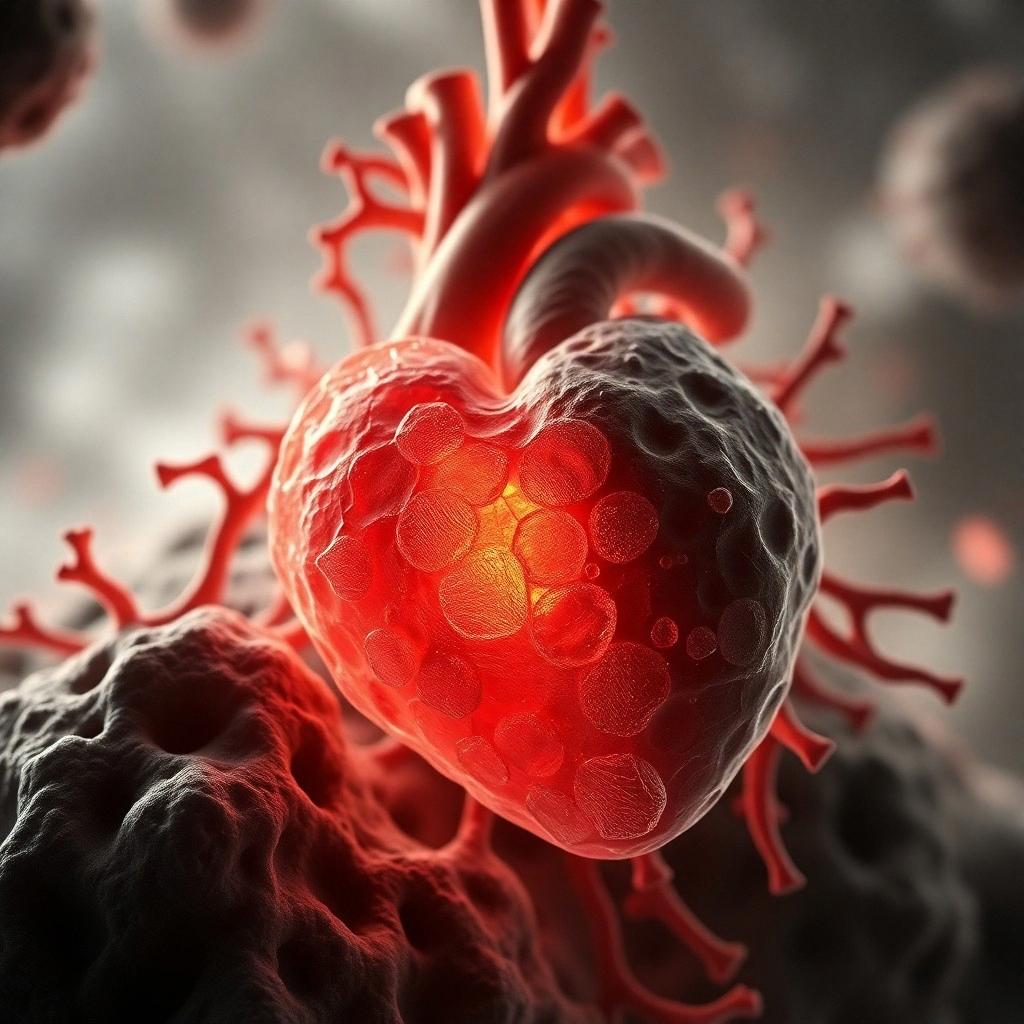
    Paper Review: Micromechanobiology: Focusing on the Cardiac Cell–Substrate Interface Science Art

     Science Movie


    Make a narrated HD Science movie for this answer ($32 per minute)


     Discussion


    Get Ahead With Science Insights

    Custom summaries of the latest cutting edge Science research. Every Friday. No Ads.


    My BGPT