Check whether claims match experiments, exact reported results, and stated limitations.Know what the science actually supports before you trust the answer.
Press Enter ↵ to review paper
Explore by Goal
"The most important scientific revolutions all include, as their only common feature, the dethronement of human arrogance from one pedestal after another of previous convictions about our centrality in the cosmos."
- Stephen Jay Gould
Quick Explanation
Copied
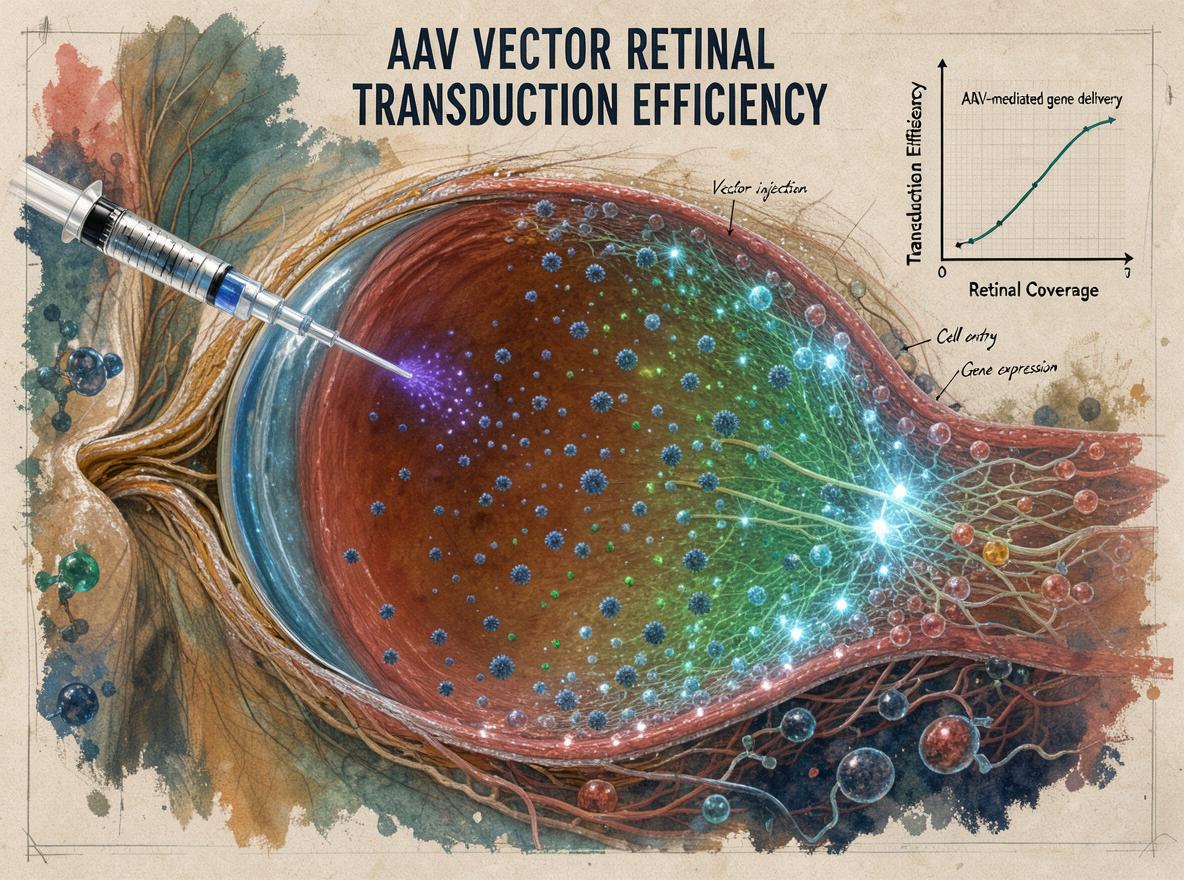
This 2004 Gene Therapy review by Rolling correctly forecast that AAV2/2-mediated RPE65 gene replacement in the Briard dog would become the first ocular gene therapy trial—a prediction validated by subsequent RPE65-LCA trials. It accurately identified serotype-specific retinal tropism, transgene regulation, and large-animal biodistribution as the key translational hurdles, though its largely narrative, author-cohort-weighted synthesis lacks systematic methodology.
Long Explanation
Historical Accuracy and Forecasting
Rolling's review concluded that "gene therapy for childhood-onset retinal dystrophy, due to a defect in RPE65 gene, may become the first human ocular gene therapy trial," explicitly conditioning this on safety, biodistribution, and toxicity studies in large animals . This prediction was subsequently borne out, with later work citing this review directly in the gene therapy literature .
The serotype cross-packaging strategy underpinning this table had just been established , and the review's claim that AAV2/4 mediates exclusive RPE transduction across rat, dog, and primate came from the author's own work .
Critical Strengths and Blind Spots
Strengths: The review correctly flagged CNTF's discordant morphology-vs-function results as a safety signal, anticipated the need for regulatable expression systems (tet, rapamycin, HRE), and honestly reported the author's own uncharacteristic uveitis finding in 75% of rAAV-rpe65-treated dog eyes. Blind spots: Insertional mutagenesis risk was not addressed—a concern later substantiated when neonatal AAV injection produced hepatocellular carcinoma in 33–56% of treated mice versus 8.6% of controls . Immune responses to capsid were underweighted relative to what later work showed about inflammatory context determining cytotoxic T-cell elimination of transduced cells . The review also relied on small-n rodent studies (n=3/serotype in the underlying rat data) and gave no systematic methodology, PRISMA-style search, or quantitative meta-analysis—typical of 2004-era reviews but a limitation by modern standards.
Confidence and Falsifiability
Confidence in the historical-accuracy conclusion is high given the direct citation trail; confidence in the mechanistic critiques is moderate because ocular immune dynamics differ from hepatic ones. The review's central claims would be disconfirmed if RPE65 trials had failed or if large-animal biodistribution had revealed prohibitive gonadal/liver integration—but neither occurred in ways the review failed to anticipate structurally.
Feedback:
Updated: October 27, 2026
BGPT Paper Review
Study Novelty
70%
In 2004, systematically comparing rAAV serotype tropism across four species and framing six explicit translational requirements was ahead of its time; however, the underlying primary data were largely already published.
Scientific Quality
80%
Well-organized, honest about negative results (CNTF functional decline, dog uveitis), and mechanistically grounded; limited by narrative-only methodology, reliance on author's own unpublished data ('data not shown'), and omission of insertional mutagenesis risk.
Study Generality
60%
Focused specifically on rAAV retinal transfer; the translational framework (serotype screening, regulation, large-animal biodistribution) generalizes to other AAV gene therapy contexts.
Study Usefulness
80%
Directly informed vector selection and preclinical trial design for what became Luxturna-class therapies; its six-step roadmap was practically actionable.
Study Reproducibility
50%
As a review, reproducibility applies to its synthesis; some key claims rest on the author's own unpublished data ('data not shown'), which cannot be independently verified from the paper.
Explanatory Depth
70%
Explains why serotype choice matters, why CNTF failed functionally, and why RPE-specific promoters would be safer—genuine mechanistic reasoning, not just cataloging.
We'll email you the results when your analysis is finished.
Hypothesis Graveyard
AAV is entirely non-integrating and therefore cannot cause insertional mutagenesis—falsified by neonatal mouse HCC studies showing 33–56% tumor incidence with proviral integration at a specific chromosome 12 locus.
CNTF universally protects photoreceptors—falsified by the review's own cited evidence that intravitreal CNTF reduced ERG amplitudes despite morphological protection.

 Explore by Goal
 Quick Explanation
 Long Explanation
 Top Data Sources
 Ask a Follow-Up
 Key Insight
 Keep Exploring
 Hypothesis Graveyard
 Potential Experiments
 Discussion
