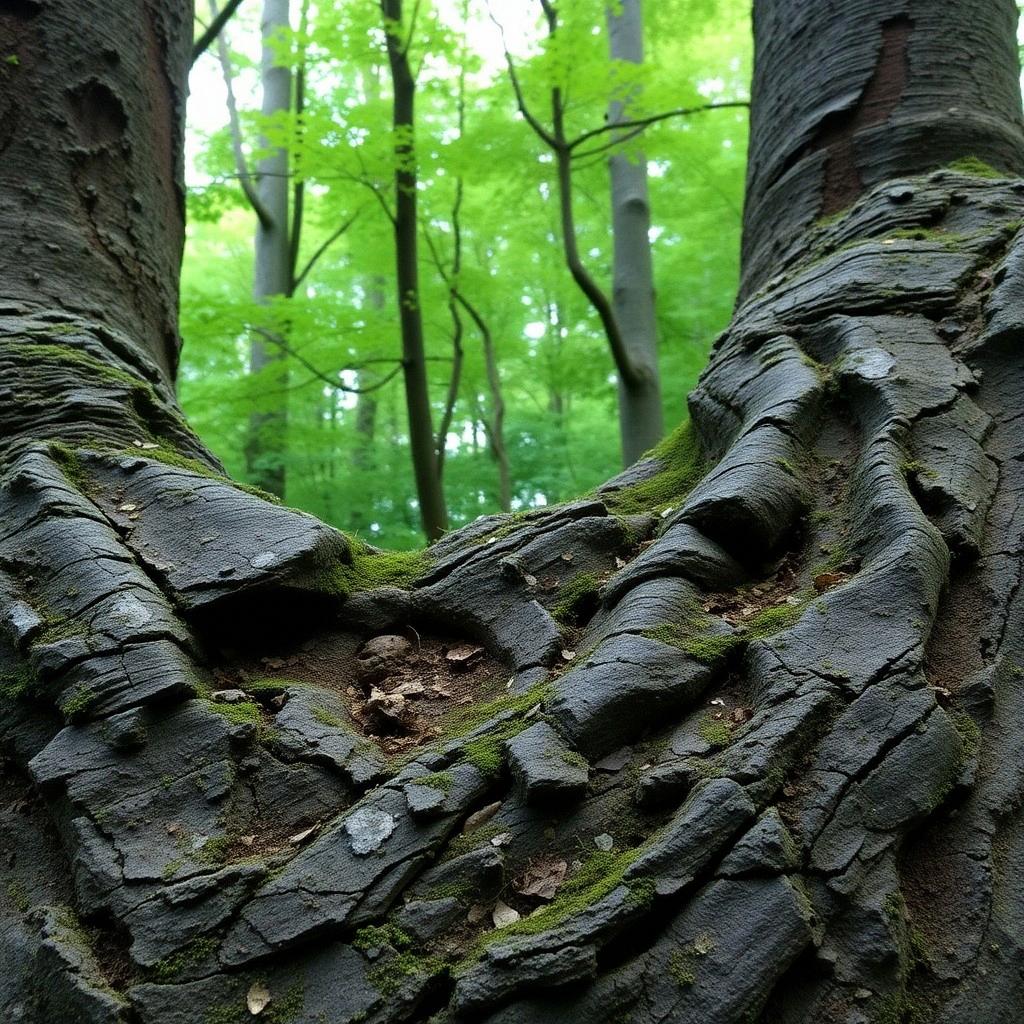
What the authors measured: In 2021 they collected 54 TreM samples spanning 18 TreM-types (3 replicates each) on Fagus sylvatica in the Massane old-growth beech forest and extracted micro-invertebrates using a modified Baermann technique; nematodes were identified to species-level, while other groups were quantified at broader levels. They counted nematodes/rotifers/tardigrades/mites (minimum 200 individuals counted per sample/sub-sample) and used stable isotope analysis (Ξ΄13C, Ξ΄15N) on basal resources and micro/macro invertebrates to infer trophic structure.
What supports the claim: TreMs were reported as high-abundance hotspots (mean 195 individuals per gram dry TreM substrate; range 4β1698) with nematodes dominating (80% of individuals; rotifers 10%, tardigrades 7.5%). The authors report significant TreM-form / TreM-type effects on community composition and nematode functional indices (e.g., maturity and trophic diversity) and report non-overlapping isotopic niches among the three main TreM-forms (cavities, epiphytes, fungi) with form-specific niche metrics.
Most actionable contribution: The study connects TreM typology (structural microhabitat classes) to measurable micro-invertebrate community properties (abundance/diversity) and isotopic niche differentiation among TreM-forms. If replicated across sites and with within-type temporal designs, this strengthens the case for TreMs as biodiversity indicators and as mechanistic βmicrohabitat-functionβ units relevant to conservation/forest management planning.
Know what changed, what holds up, and what remains uncertain. Every Friday. No ads.