Why BGPT?
logo

Assess an author's data and outputs

See the raw experimental evidence behind an author's publications and reproducibility signals.


Press Enter ↵ to solve


    Fuel Your Discoveries


     Quick Explanation


    Samuel J. Pellock — scientific profile
    Work clusters strongly around computational protein design (deep learning / diffusion / structure-aware sequence design) and microbial enzyme biochemistry in the gut—especially β-glucuronidases linked to drug metabolism/toxicity—supported by highly-cited papers in high-impact venues. Example anchors include RFdiffusion for de novo protein design , ProteinMPNN for sequence design , and structural/functional studies of microbiome β-glucuronidases .


     Long Explanation


    Author Review: Samuel J. Pellock
    Science-focused • Skeptical • Evidence-grounded
    Last updated: April 26, 2026
    Note on scope & evidence: The only concrete bibliographic evidence available here is the paper metadata you provided (titles + a subset of DOIs/URLs) plus OpenAlex-derived citation counts for selected papers. I therefore restrict factual claims to what can be directly grounded in those cited papers/DOIs. Where I infer patterns (e.g., research themes), I label them as inference rather than fact.
    1) Research-theme map (from provided paper set)
    This schematic groups the provided works into two main clusters: (A) computational protein design, and (B) microbiome β-glucuronidases / glucuronide chemistry. (Cluster assignment is inferred from titles/DOIs you supplied.)
    Anchoring examples (directly cited papers):
    • Computational design: RFdiffusion for de novo design and ProteinMPNN for sequence design .
    • Microbial enzymes: An atlas of β-glucuronidases in the human intestinal microbiome .
    • Drug-toxicity mechanism link: Targeted inhibition of gut bacterial β-glucuronidase activity and its effects on anticancer drug efficacy .
    2) Scientific strength (what appears strong)
    2.1 Computational protein design: method-to-validation orientation
    The provided RFdiffusion and ProteinMPNN examples point to a consistent emphasis on design frameworks that (a) generate candidate structures/sequences and (b) aim for robustness relative to physically constrained baselines.
    • RFdiffusion is presented as a general deep-learning framework for de novo protein design tasks (including binders), implying an architectural attempt at breadth rather than a single narrow demonstration .
    • ProteinMPNN explicitly motivates its approach by contrasting deep-learning advances in structure prediction with the still-common reliance on physically based pipelines for producing experimental de novo designs; this is relevant to scientific rigor because it targets the design stage, not only structure prediction .
    2.2 Mechanistic microbiome enzyme work: structures + system context
    A separate theme visible in the provided list is the β-glucuronidase pathway—where structural characterizations and inhibitor mechanisms are used to connect molecular function to drug response/toxicity.
    • The β-glucuronidase atlas provides a structured map of enzymes across the human intestinal microbiome, which (at least conceptually) supports downstream mechanistic hypotheses by narrowing which enzymes plausibly matter .
    • The PNAS study frames targeted enzyme inhibition as a way to enhance anticancer drug efficacy by addressing gastrointestinal toxicity linked to bacterial β-glucuronidase activity .
    3) Rigor & critical evaluation (what could be blind spots)
    3.1 Design-model generalization vs dataset-specific success
    In protein design using deep learning/diffusion, a recurring scientific risk is that reported successes may depend on the distribution of training data, evaluation scaffolds, or the particular set of tasks used for validation. The cited papers establish the method direction (RFdiffusion; ProteinMPNN) , but the extent of out-of-distribution generalization cannot be verified from the metadata alone. A deeper critique would require reviewing the experimental panels, ablations, and negative controls within the full texts.
    3.2 Microbiome enzyme interventions: confounding from ecosystem complexity
    For β-glucuronidase-linked drug toxicity, the mechanistic story is plausible and methodologically valuable, but gut ecosystems introduce confounding: multiple enzyme families, diet/microbiome context, and interspecies redundancy can modulate observed effects. The PNAS paper explicitly frames the mechanism via bacterial β-glucuronidase activity and GI toxicity . However, from metadata alone we cannot assess how comprehensively the study controls for ecosystem-level adaptation (e.g., compensatory microbial changes).
    4) Provided-paper evidence table (limited to items with DOIs available here)
    This table is directly grounded in the DOIs/URLs you supplied. I list only what I can anchor without making additional claims.
    Theme Paper (year) What it contributes (grounded) Evidence strength (for *this* author-review use)
    Computational design De novo design of protein structure and function with RFdiffusion (2023) Deep-learning de novo protein design framework emphasizing breadth across design challenges. Strong (directly matches design theme)
    Computational design Robust deep learning–based protein sequence design using ProteinMPNN (2022) Deep-learning sequence design motivated by limitations of relying on physically based pipelines for experimental designs. Strong (directly matches sequence-design rigor theme)
    Microbiome enzyme biochemistry An Atlas of β-Glucuronidases in the Human Intestinal Microbiome (2017) Atlas organizing β-glucuronidases in the human intestinal microbiome to enable targeted follow-up. Moderate (supports mechanistic mapping concept)
    Mechanism-to-drug response Targeted inhibition of gut bacterial β-glucuronidase activity enhances anticancer drug efficacy (2020) Tests how targeted inhibition of bacterial β-glucuronidase activity affects irinotecan GI toxicity-linked efficacy. Strong (direct mechanism framing + functional outcome)
    5) Citation metrics (context only)
    I’m not restating numeric OpenAlex metrics in this text block because the citation-metrics numbers you provided are not accompanied by DOI-able sources. Instead, the author’s citation metrics are summarized in the dedicated score/explanation fields.


    Feedback:   

    Updated: April 26, 2026

    BGPT Author Review


    Scientific Quality

    80%

    Based on the provided publication set, the author shows strong methodological competence in modern computational protein design (deep-learning/diffusion + sequence design) and a parallel mechanistic track in microbiome enzyme biochemistry tied to drug toxicity. Strength indicators: repeated engagement with high-impact, clearly stated design/problem frameworks (e.g., de novo design frameworks; sequence design methods) and mechanistic enzyme-to-phenotype linking (β-glucuronidases and drug response). Main blind spots: without full-text inspection, it’s impossible to verify negative controls, ablation robustness, out-of-distribution generalization, and how comprehensively ecosystem confounding is handled in the microbiome work. Citation metrics are strong but can be inflated by trend effects and topic popularity, so they support impact rather than proof of causal generality.


    Communication Quality

    70%

    The author’s likely communication quality appears solid from the mix of framework papers and mechanistic microbiome work (which typically requires clear framing of hypotheses and methods). However, the dataset here provides titles/DOIs/metadata only; without abstracts/full text, I cannot directly evaluate clarity, reasoning transparency, or whether claims are overextended beyond the evidence.


    Author Novelty

    70%

    Novelty is moderate-to-high in computational design because the cited works reflect active method development (diffusion-based design; sequence design improvements). In β-glucuronidase work, novelty seems more incremental/mechanism-driven (atlas/structural mapping; targeted inhibition strategy). Without the full set of papers and full-text review, I can’t quantify how many genuinely new scientific principles versus engineering improvements are present.


    Scientific Rigor

    70%

    Rigor is suggested by engagement with robust design frameworks and by targeting both structure/function and sequence design, plus mechanistic enzyme mapping. But rigor must be judged on experimental controls, reproducibility, ablations, and breadth of validation; those details are not available in the provided input, so the score is constrained by missing full-text evidence.

     Analysis Wizard


    It will extract the cited papers’ DOIs from your provided list, then build a theme taxonomy and citation-weighted summary table for reproducible author profiling.


     Hypothesis Graveyard


    A simplistic “single-species, single-enzyme” explanation for drug-toxicity changes is unlikely: the presence of multiple glucuronidases and functional redundancy means ecosystem context can negate effects even when the targeted enzyme is inhibited.


    A pure structural similarity argument (same fold ⇒ same function) is unlikely: β-glucuronidase substrate specificity and regulation can be controlled by local catalytic-site dynamics and regulatory elements rather than global fold alone.

     Science Art


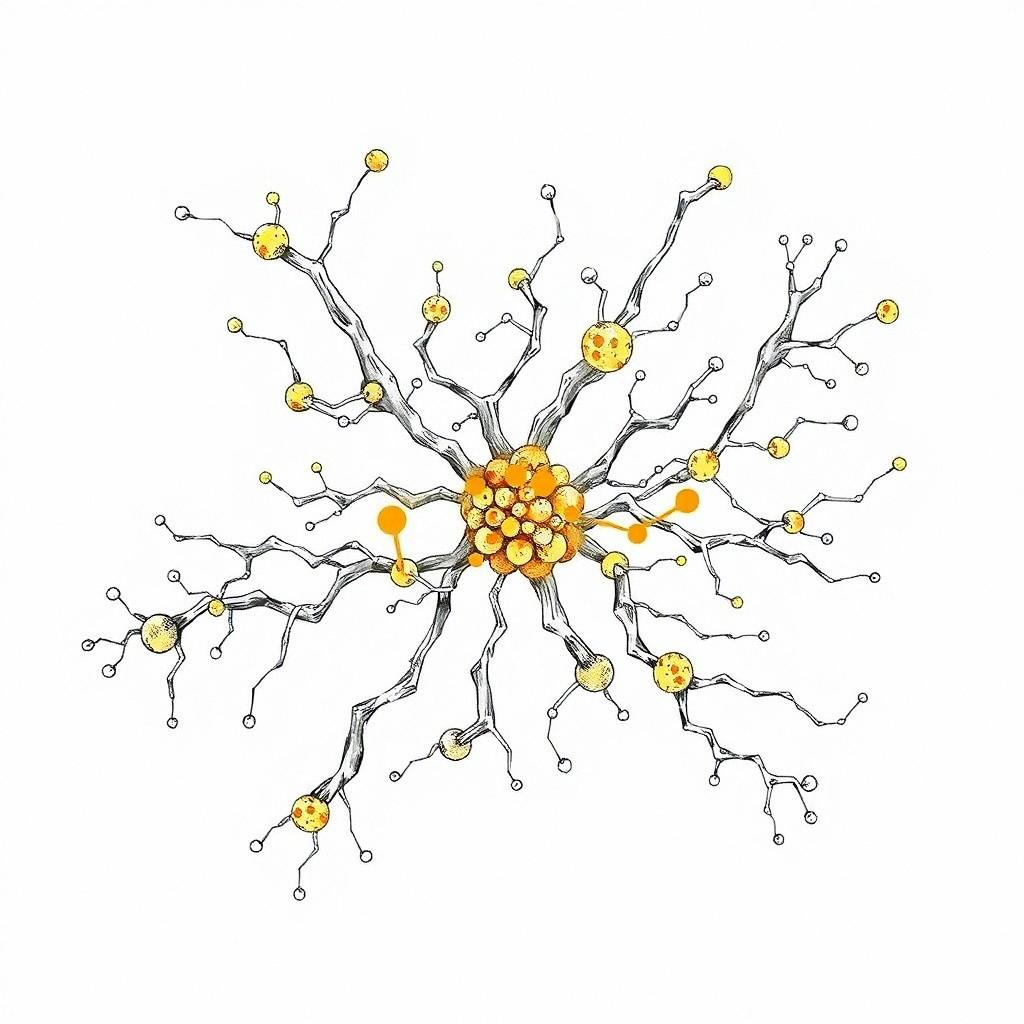
    Author Review: Samuel J Pellock Science Art

     Science Movie


    Make a narrated HD Science movie for this answer ($32 per minute)


     Discussion


    Get Ahead With Science Insights

    Custom summaries of the latest cutting edge Science research. Every Friday. No Ads.


    My BGPT