Ask questions across claims linked to experiments, exact results, limitations, and sources.Know what the science actually supports before you trust the answer.
Press Enter ↵ to search evidence
Explore by Goal
"The goal of science is not to open the door to infinite wisdom, but to set a limit to infinite error."
- Bertolt Brecht
Quick Explanation
Copied
Toe walking is persistent gait on the toes; after age ~2 it is often idiopathic (a diagnosis of exclusion), but in referred children about 62% have a neurological cause, most commonly cerebral palsy, peripheral neuropathy, or autism spectrum disorder . No treatment has proven long-term efficacy .
Long Explanation
What Is Toe Walking?
Toe walking is gait on the metatarsal heads with no heel strike. It is developmentally normal in toddlers learning to walk; persistence beyond early childhood warrants evaluation, and idiopathic toe walking (ITW) is a diagnosis of exclusion after ruling out underlying conditions .
Caution: this retrospective cohort is referral-selected (skewed toward neurological disease) and does not reflect population prevalence .
Objectively Detecting ITW
Because children often modify gait when observed, heel accelerometry can objectively identify toe-walking strides: a dual-axis accelerometer plus automated algorithm distinguished ITW from normal strides with 98.5% accuracy (10 ITW vs 10 normal children, mean age 8 years), with ITW children showing distinct foot-angle behavior during mid-stance (y-acceleration roughly −0.85 to −0.93 g vs ~−1.0 g in normal children) . For clinical triage, the Toe Walking Tool (video-based questionnaire) showed high inter-rater agreement (κ = 0.90, p < 0.001) in 12 children (4 non-toe-walkers, 4 medically caused, 4 ITW), though small sample size and clinician errors limit generalizability .
Treatment: Surgical Outcomes and Evidence Limits
In 15 children (ages 4.2–13.1 years) after bilateral Achilles tendon lengthening, passive dorsiflexion and ankle kinematics improved markedly, and push-off power rose (A2: 2.05 → 2.37 W/kg) but did not normalize by one year; triceps surae strength was not compromised . However, a review of 21 treatment studies found no single treatment with proven long-term efficacy for ITW; surgery, serial casting, and botulinum toxin A show some support, while footwear and orthoses have limited evidence — and no level 1 evidence exists for any option .
Blind Spots and Uncertainty
All surgical data are small, retrospective, and unblinded (n=15); long-term outcomes beyond one year are unknown.
Referral-based neurology data (62% neurological) cannot be extrapolated to the general population of toe-walkers.
Natural history is under-studied; some children improve spontaneously, confounding treatment-attributed improvement .
What would change conclusions: a randomized trial showing durable gait normalization from a specific treatment, or population-based (non-referred) etiology data contradicting the neurological-dominance picture.
We'll email you the results when your analysis is finished.
Hypothesis Graveyard
'All persistent toe walking requires surgery to prevent permanent contracture.' — Unsupported: no level 1 evidence of durable treatment superiority, and spontaneous improvement is documented.

 Explore by Goal
 Quick Explanation
 Long Explanation
 Top Data Sources
 Ask a Follow-Up
 Key Insight
 Keep Exploring
 Hypothesis Graveyard
 Potential Experiments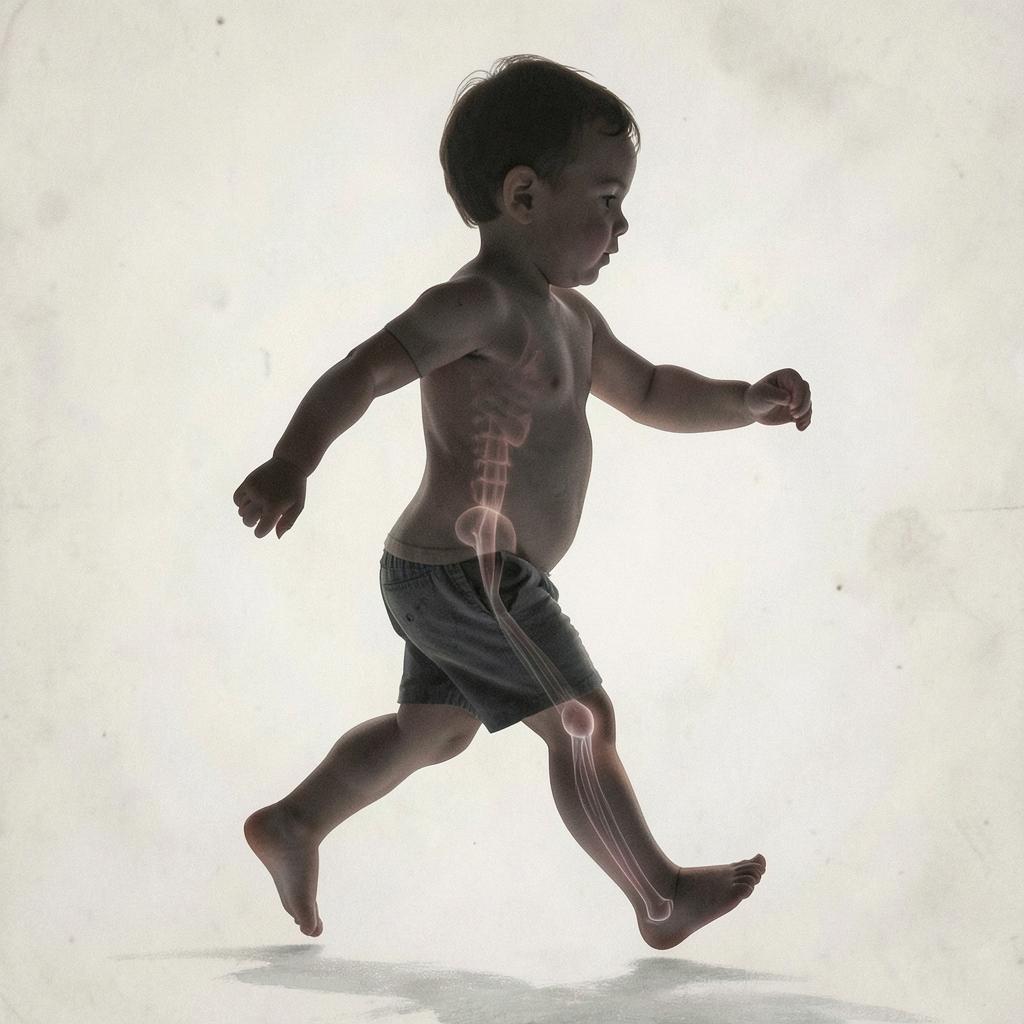
 Discussion