See how your reported results read as versioned evidence records — linked to experiments and limitations.Know what the science actually supports before you trust the answer.
Press Enter ↵ to review claims
Explore by Goal
"The aim of science is not to open the door to infinite wisdom, but to set a limit to infinite error."
- Bertolt Brecht
Low confidence. Please provide more context.
Quick Explanation
Copied
Zhangxu He — evidence strength (from the data you provided): your dataset only includes one raw full-text-derived experimental paper (GCDC effects on rat alveolar epithelial type II cells), plus coarse author-level metrics (h-index, total citations, paper count, list of titles). With only this, I can critique some mechanistic experimental rigor for that single paper, but I cannot reliably reconstruct the author’s full track record across all listed publications.
Long Explanation
BGPT Author Review: Zhangxu He
Skeptical, evidence-based critique using only the information explicitly provided in your prompt.
What BGPT can (and can’t) conclude from your inputs
Known from your prompt: author-level bibliometrics (h-index=5; citations=72; papers=10), and a list of paper titles (10 total).
Known from your provided raw-data object: one experimental mechanistic study about glycochenodeoxycholate (GCDC) effects in primary rat alveolar epithelial type II cells (AECII), including methods, readouts, limitations, and a DOI.
Unknown / not provided: the actual full text (or raw extracted results) for the other 9 papers, year/journal details, study types (clinical vs preclinical vs in vitro vs review), experimental replicates beyond what you included, and whether similar rigor is present across the author’s body of work.
Therefore, any “overall author strength” score should be treated as low-confidence and dominated by the single raw-data paper you supplied.
1) Author-level bibliometric snapshot (provided)
These are descriptive metrics only; they do not guarantee biological correctness or experimental reproducibility.
2) Evidence-backed critique from the single raw experimental paper you provided
The paper reports that glycochenodeoxycholate (GCDC) induces dose-dependent death of primary rat AECII cells, increases ROS, triggers mitochondrial changes (including cytochrome c release), activates caspase-3, and impairs surfactant secretion; rescue by ROS scavengers and caspase inhibitors is presented as support for a ROS–mitochondria–caspase pathway.
3) Rigor check: what strengthens vs weakens the mechanistic claim
Strengths indicated by your raw extraction
Multiple orthogonal readouts: annexin V/PI flow cytometry, ATP release, LDH release, DNA fragmentation, active caspase-3 immunofluorescence, mitochondrial morphology (fragmentation), cytochrome c release (immunoblot), and a functional readout (surfactant secretion) are all reported, consistent with a more complete mechanistic chain than a single assay would provide.
Rescue experiments (ROS scavengers and caspase inhibitors) are presented to support causal links in the proposed pathway (at least within the constraints of the model).
Limitations / blind spots explicitly mentioned in your extraction
Model limitation: the study relies exclusively on an in vitro primary rat AECII model, leaving uncertain whether the same pathway operates in vivo in humans.
Dose relevance: concentrations (200 and 1000 μM) may not match in vivo bile acid levels relevant to the proposed clinical context.
Pathway specificity: rescue by antioxidants/inhibitors is supportive, but it cannot fully exclude alternative mechanisms (e.g., broader stress responses) without additional pathway-anchoring experiments.
4) Cross-publication strength: what we cannot validate from provided data
Your prompt includes 10 paper titles, but only one is accompanied by raw extracted experimental details and a DOI. Without the missing raw details for the other 9 works (sample sizes, controls, statistical approach, replicates, raw readouts, limitations, conflicts of interest), we cannot responsibly claim that the author’s overall scientific rigor matches this one paper’s strengths.
Evidence sufficiency warning: bibliometrics (h-index, citation count) can be influenced by many factors unrelated to rigor (field size, collaboration networks, review prominence, indexing, and citation conventions).
5) What would most improve this author review (BGPT actionability)
Provide the DOIs (or full-text PDFs) for the other 9 listed papers, so BGPT can extract full experimental details and compare rigor across the author’s portfolio.
Include whether the author is first/last/corresponding author and the study type per paper (primary experimental vs computational vs review). Current input lacks those metadata.
Provide raw tables/figures (or BGPT-extracted objects) for each paper so mechanistic claims can be evaluated against the actual evidence.
6) Scored judgments (computed from limited evidence)
Scores below are provisional because only one raw experimental paper was provided.
7) Epistemic humility: what could disprove this review
If the remaining 9 papers include multiple strong primary experimental studies with robust controls/replicates and clean mechanism validation, the provisional rigor/quality scores would rise substantially.
If the remaining papers are mostly low-information reviews, weak correlations, or poorly controlled studies, the scores would likely drop even if bibliometrics remain respectable.
If the raw extracted limitations for the GCDC paper omit key weaknesses (e.g., blinding, randomization, replicate definitions, or statistical handling details), the rigor evaluation would need revision.
Build a citation-and-rigor table from the provided author metrics and the single raw GCDC AECII dataset, then plots a rubric comparison and flags missing DOIs for portfolio-wide scoring.
Get emailed when your analysis is done!
We'll email you the results when your analysis is finished.
Hypothesis Graveyard
“GCDC toxicity is purely necrotic without a ROS–mitochondria link.” This is disfavored by the extracted ROS increase, mitochondrial/cytochrome c findings, and rescue by ROS/caspase interventions in the provided paper.
“Surfactant secretion inhibition is independent of cell death pathways.” This is weakened by the reported association between caspase/ROS-linked death measures and the decreased surfactant secretion readout within the same experimental framework.
Science Art
Science Movie
Make a narrated HD Science movie for this answer ($32 per minute)

 Explore by Goal
 Quick Explanation
 Long Explanation
 Top Data Sources
 Ask a Follow-Up
 Key Insight
 Analysis
  Hypothesis Graveyard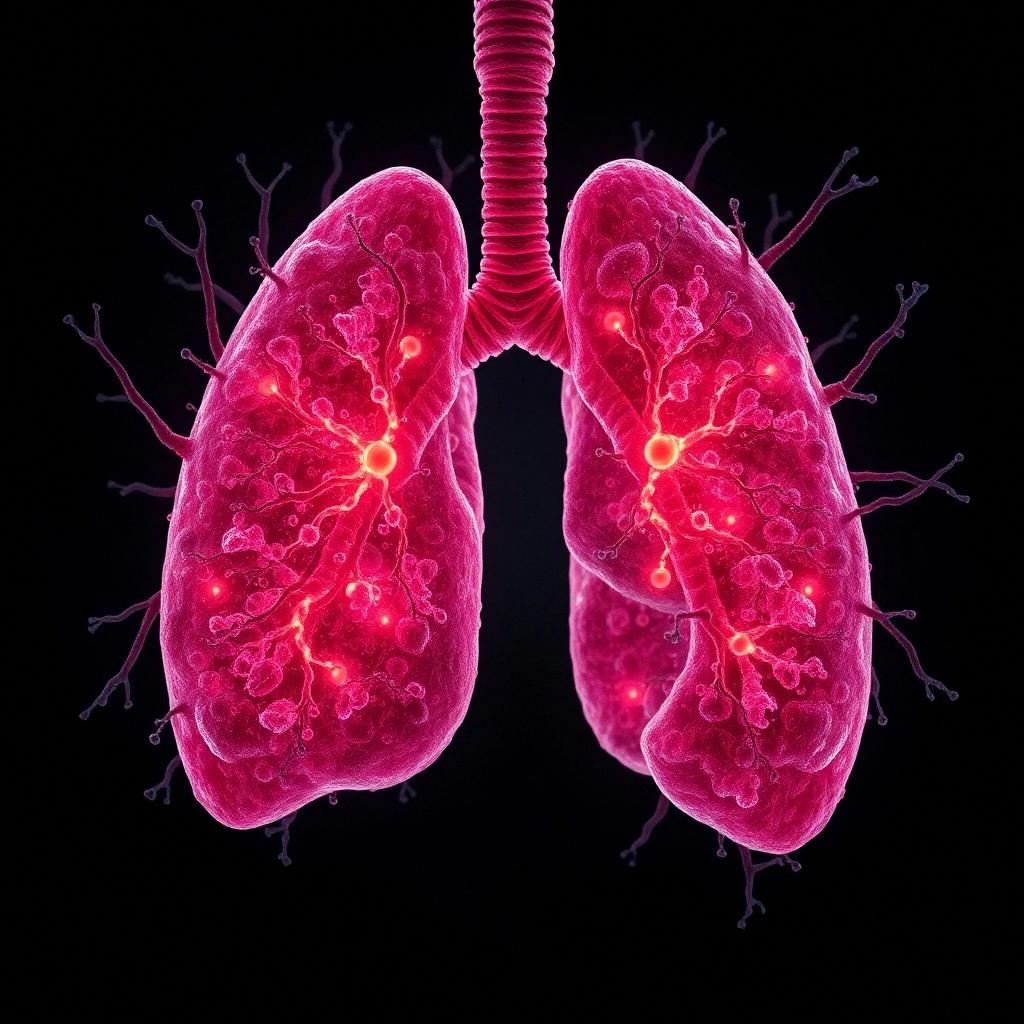
 Discussion