Why BGPT?
logo

Review papers with raw data transparency

Quickly verify claims by accessing the underlying experimental data and figures.


Press Enter ↵ to solve


    Fuel Your Discoveries


     Quick Explanation


    Paper in one breath
    The paper introduces PpgAge, a wearable wrist-PPG (Apple Watch) deep-learning aging clock, trained on “healthy” participants and evaluated in a much larger general cohort. It predicts chronological age (MAE ~2.4–2.5 years in the healthy cohort; ~3.1–3.3 years in the general cohort) and its “age gap” (predicted minus chronological age) associates with prevalent diagnoses and incident cardiometabolic events, and correlates with behavior (smoking, exercise, sleep), with observable longitudinal shifts around pregnancy and major cardiac events.


     Long Explanation


    Paper Review: A wearable-based aging clock associates with disease and behavior
    Authors / affiliations / funding: Apple Inc (multiple authors) and Princeton University (one author); study funded by Apple Inc, American Heart Association, Brigham and Women’s Hospital.
    1) What the authors built (mechanistic core)
    • Signal: Apple Watch consumer wrist PPG; 60-s segments, green channel, 4-channel optical configuration; sampled at 64 Hz or 256 Hz.
    • Representation learning: self-supervised “foundation” encoder trained contrastively on ~19,993,427 segments (172,318 participants) to map each 60-s segment → a 256-d feature vector.
    • Normative aging model: a ridge-regularized linear model trained on a “healthy” subset using average representation(s) over the first 30 days; outputs PpgAge (predicted chronological age).
    • “Age gap” statistic: PpgAge − chronological age, then age-dependence is removed by regressing raw PpgAge gap on chronological age using a spline and retaining residuals (adjusted gap).
    2) Data scale & evaluation design (what’s strong vs what’s fragile)
    Scale: AHMS has 213,593 participants and >149 million participant-days; PpgAge is trained on a healthy subset (n=6,728 initially; train=5,355/test=1,373) and then evaluated both on held-out healthy test participants and a much larger “general” held-out cohort (n=120,235).

    Evaluation fragility to check: this is observational and uses survey-reported diagnoses/behaviors; the “healthy” training definition is restrictive and may induce distribution shift in older or nonrepresentative users; PpgAge is trained on “healthy” physiological patterns and may partly proxy cardiometabolic fitness rather than a universal multi-system aging process.
    3) Visualizations (derived from reported summary numbers)
    Source: MAE values for healthy and general cohorts are reported in the Results section (by sex).
    Source: Cox model hazard ratios for +6-year adjusted PpgAge gap are explicitly stated for ASCVD events and hypertension.
    Source: Pregnancy longitudinal analysis reports a median ~3.56-year increase (IQR 1.65–5.65) in the ~270 days preceding birth in the analyzed subset (n=165).
    4) Evidence quality checklist (skeptical, evidence-weighted)
    Known / directly measured vs inferred:
    • Directly supported: PpgAge predicts chronological age with reported MAEs and CIs in both cohorts.
    • Directly supported (association): Adjusted PpgAge gap stratifies diagnosis rates for multiple conditions and predicts incident ASCVD/hypertension in Cox models adjusting for specified risk factors.
    • Behavior links: Age gap correlates with smoking status/frequency, exercise minutes quintiles, and sleep stage metrics (REM latency, total sleep duration, deep sleep duration, sleep efficiency).
    • Longitudinal physiological sensitivity: Pregnancy and specific adverse cardiac events show detectable increases or changes in participant-level PpgAge time series.
    Uncertain / not established by this paper:
    • Causality: observational cohort + self-report outcomes cannot establish that “age gap” is causal or that behavior changes “drive” biological aging as opposed to reflecting underlying health.
    • Mechanism / attribution: the paper argues PpgAge uses morphological features beyond HR/HRV and relates to vascular aging, but exact physiological mapping from learned waveform features → mechanisms remains unresolved in the presented text.
    5) Potential biases / blind spots (critical but fair)
    • Selection & representativeness: AHMS participants are Apple Watch users and may not generalize; “healthy” training cohort may be biased toward younger/healthier patterns (and the paper acknowledges distribution shift and reduced “healthy” representation above age 75).
    • Information bias: diagnosis rates and behaviors rely on self-reported surveys; missing/under-reported diagnoses would tend to weaken observed associations (directional uncertainty), while differential reporting could also bias strata.
    • Confounding & reverse pathways: PpgAge gap could reflect existing subclinical disease or cardiovascular fitness rather than “aging per se”; the paper controls for several risk factors in incident analyses, but residual confounding and pathway overlap are still possible.
    • Company / device ecosystem incentives: multiple authors are Apple employees, and AHMS is funded by Apple. This does not invalidate results, but it raises the need for transparent external validation independent of the device ecosystem.
    6) What would most strengthen (or falsify) this line of work?
    Highest-impact follow-ups:
    • External replication with independent wearables + data access: demonstrate similar age prediction and disease/incident associations across other sensor models and populations; the paper itself notes data cannot be fully public due to privacy and contractual constraints.
    • Prospective intervention tests: randomized behavior or clinical control trials assessing whether changes in PpgAge gap track mechanistic improvements (not just associations).
    • Mechanistic interpretability: connect learned waveform morphology (e.g., notch/diastolic peak changes noted by the paper) to vascular physiology; at minimum, validate whether perturbations known to affect arterial stiffness alter PpgAge morphology signatures.
    Simple falsification targets (grounded in their claims):
    • Across held-out cohorts, PpgAge should not predict chronological age worse than chance; similarly, the PpgAge gap should show diminished disease association when using a null surrogate that preserves chronological-age dependence only. (The paper includes internal HR/HRV ablation showing worse performance with HR/HRV-only models.)


    Feedback:   

    Updated: April 01, 2026

    BGPT Paper Review


    Study Novelty

    80%

    Novelty is high because it combines a wrist-consumer PPG foundation model + normative linear age gap with very large naturalistic longitudinal wearables data to connect to both prevalent diagnoses and incident cardiometabolic outcomes, plus pregnancy/cardinal cardiac sensitivity; however, “aging clocks” via supervised biomarker prediction and wearable-based biological aging already exist, so it’s not a fully new paradigm.


    Scientific Quality

    80%

    Scientific quality is solid: very large sample size, careful held-out evaluation with subgroup reporting, clear modeling steps (SSL encoder + ridge age head + adjusted age-gap), and multiple analyses including HR/HRV ablations and longitudinal event windows. Main quality concerns are observational/self-report outcome dependence, restricted data availability for full reproducibility with raw cohorts, and incomplete mechanistic interpretability mapping learned waveform features to vascular biology.


    Study Generality

    70%

    Generalization is moderate: internal cohorts show cross-sex/race/BMI stratification stability and general-population performance, but the model is trained in an Apple Watch user ecosystem and uses a conservative healthy definition with limited examples beyond age 75; external replication across other devices and populations is not shown here.


    Study Usefulness

    90%

    High usefulness for biomarker development and wearables aging research: it provides a scalable passive measurement route, includes incident prediction for cardiometabolic endpoints, and reports links to modifiable behaviors and physiological states (smoking/exercise/sleep, pregnancy, cardiac events). The key limitation for clinical utility is the lack of randomized validation and missing mortality endpoints.


    Study Reproducibility

    70%

    Reproducibility is partly supported because code for analyses is available and the paper provides methodological detail plus figure source data; however, the core AHMS data are not publicly shareable, so independent reproduction with raw data is constrained.


    Explanatory Depth

    70%

    Explanatory depth is moderate: the paper demonstrates that PpgAge leverages waveform morphology beyond HR/HRV and visualizations resemble known age-related PPG features, but it still acknowledges limited understanding of the precise physiological mechanisms underlying learned representations and the downstream interpretation of the “age gap.”


    🎁 Authors: Collect 395 Free Science Tokens (≈ $39.5 USD)

    Claim My Author Tokens

    Use for 98 days of free BGPT access (4 tokens = 1 day) or trade/sell (≈ $39.5 USD)

     Top Data Sources ExportMCP


     Analysis Wizard


    No code: this request is a paper review and requires no new bioinformatics computations from raw datasets.


     Hypothesis Graveyard


    Aging gap effects on disease are purely an artifact of chronological-age prediction error magnitude (i.e., PpgAge gap is just “how wrong the model is”), because the authors explicitly adjust PpgAge gap to remove age dependence; thus, at least some age-structure component is controlled, weakening this “trivial prediction-error-only” explanation.


    Associations would disappear if the waveform morphology were irrelevant and only HR/HRV mattered, because HR/HRV-only models show substantially worse age prediction and weaker disease association.

     Science Art


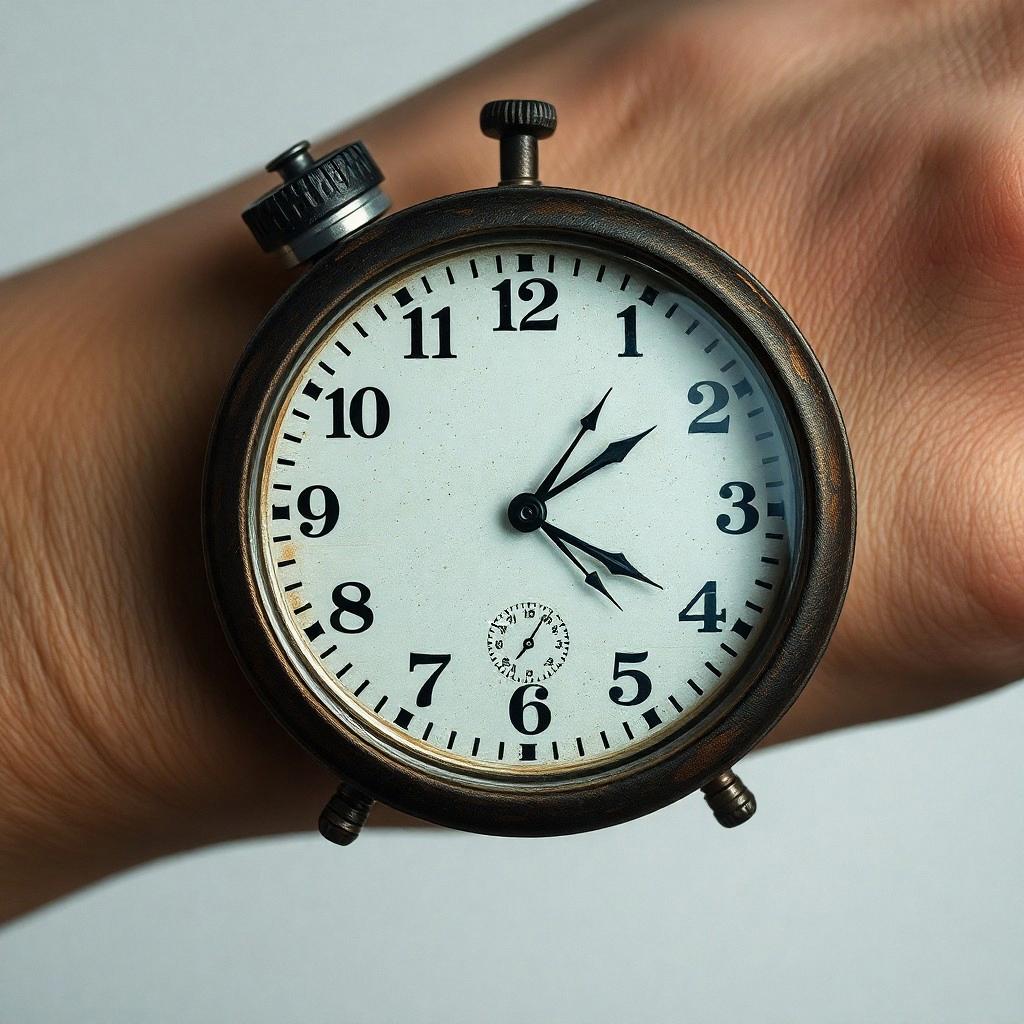
    Paper Review: A wearable-based aging clock associates with disease and behavior Science Art

     Science Movie


    Make a narrated HD Science movie for this answer ($32 per minute)


     Discussion


    Get Ahead With Science Insights

    Custom summaries of the latest cutting edge Science research. Every Friday. No Ads.


    My BGPT