Check each claim against its linked experiments, results, and falsification criteria.Know what the science actually supports before you trust the answer.
Press Enter ↵ to check claims
Explore by Goal
"If you thought that science was certain - well, that is just an error on your part."
- Richard Feynman
Quick Answer
Copied
This bioRxiv preprint (Wu & Reiner, DOI 10.1101/2025.08.28.672893) delivers credible in vivo genetic and structure-guided evidence that RAL-1 directly regulates the metazoan Exocyst in C. elegans, filling a long-standing mechanistic gap, though as unreviewed work with model-organism scope it should be read as strong but preliminary.
Long Answer
What the paper shows
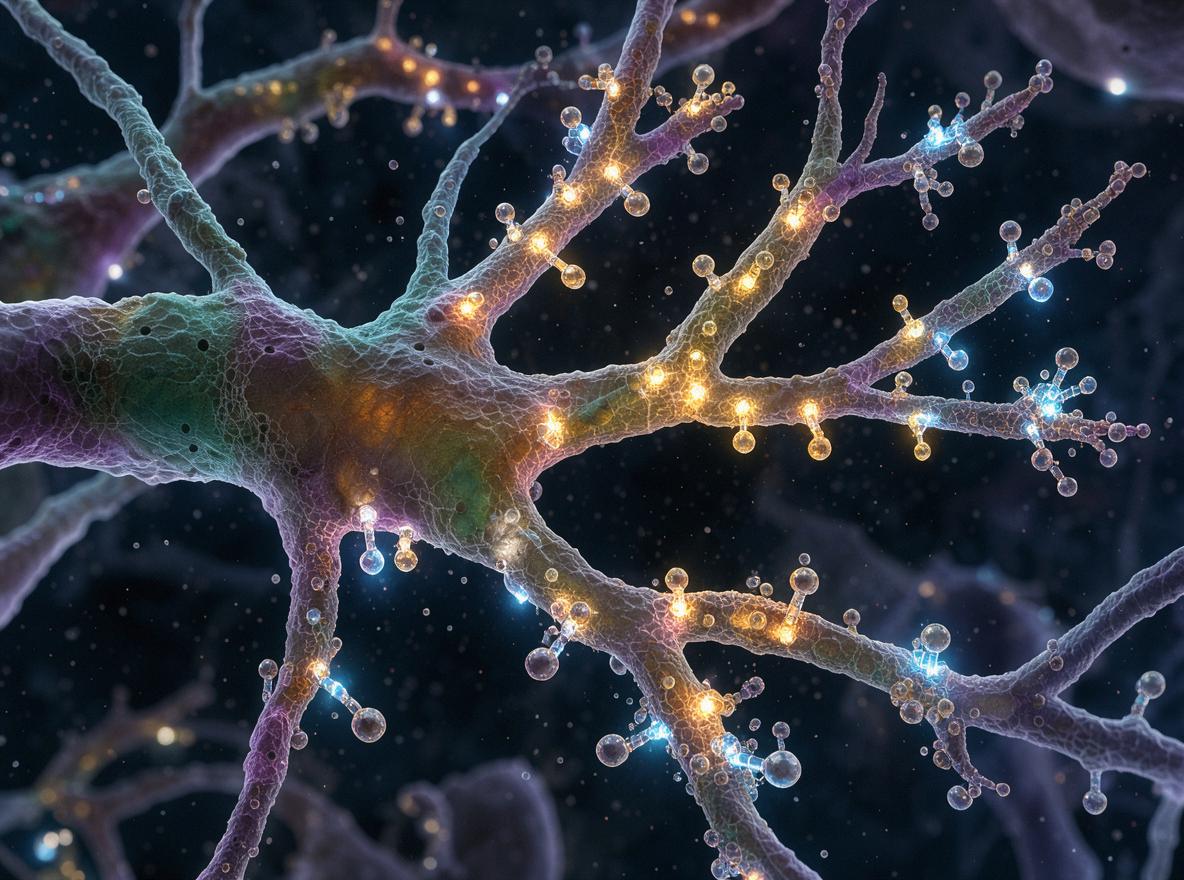
Using endogenous C. elegans RAL-1, the authors demonstrate direct engagement of the heterooctameric Exocyst through conserved binding sites on subunits, and show that loss of RAL-1 disrupts PVD sensory neuron dendritic arborization, vesicle trafficking, and broad development, with both cell-autonomous (neuronal) and non-autonomous (epithelial) effects. Crucially, structure-guided genome editing of the RAL-1–Exocyst interfaces produced synthetic phenotypes, a key control strategy that links the physical binding surfaces to physiological function rather than relying on overexpression (10.1101/2025.08.28.672893). This establishes Ral as a bona fide in vivo Exocyst regulator in metazoans — a role long proposed biochemically but poorly supported genetically.
How it fits the field
The paper contrasts sharply with yeast, where Exocyst is regulated by Rabs and Sec1/Sec4 rather than Ral, and where overproduction of Sec1p or Sec4p can bypass specific exocyst subunit requirements (10.1083/jcb.200408001). The Ral–Exocyst axis therefore appears to be a metazoan-specific regulatory layer operating in parallel with other secretory pathways. This is clinically relevant: RalA is consistently overactivated in NF1-driven malignant peripheral nerve sheath tumors and its suppression reduces proliferation, invasion, and tumor growth (10.1128/MCB.01153-08), so a validated endogenous effector mechanism strengthens Ral's candidacy as a therapeutic node. Quantitative exocyst dynamics are also now accessible in yeast via single-particle tracking with exocyst lifetimes of ~13.4 s (SD 6.6 s) and Sec1 recruitment lagging ~5.1 s behind exocyst clustering (10.64898/2026.02.27.708581) — an analytical framework the authors could adapt to measure RAL-1–dependent exocyst residency in C. elegans.
Reported values from the cited yeast SPT study, shown as reference benchmarks for what RAL-1–Exocyst perturbation analysis could quantify in worms.
Strengths and skeptical caveats
Strength: Endogenous tagging/editing avoids overexpression artifacts; synthetic phenotypes from interface mutations are the paper's most convincing causal evidence.
Caveat: bioRxiv preprint — not yet peer reviewed; statistics, replicates, and figure-level rigor cannot be independently verified from this text.
Caveat: C. elegans has a single Ral and single RalGEF (vs. four RalGEFs and two Rals in vertebrates), so vertebrate-specific redundancy (RalA vs. RalB) remains untested.
Caveat: The claim that Ral-Exocyst interactions operate "in parallel with other secretory pathways" is an interpretation; the genetic architecture (e.g., epistasis with Rab11/Sec1-type regulators) is not fully resolved here.
Blindspot: Whether human RalA/B regulate human Exocyst through the same interfaces — the key translational question for Ral-targeted therapy (10.1128/MCB.01153-08) — is unaddressed and would require mammalian cell validation.
Confidence note: The core in vivo findings appear well-controlled and mechanistically grounded; the broader generalization to metazoans/humans is inference, not demonstrated.
Feedback:
Updated: October 31, 2026
BGPT Paper Review
Study Novelty
70%
Ral-Exocyst binding has been known biochemically for two decades, but direct endogenous in vivo genetic demonstration in a metazoan, with structure-guided interface editing, is genuinely new.
Scientific Quality
80%
Strong genetic controls, endogenous tagging, and structure-guided synthetic phenotypes; quality deduction because it is an unreviewed preprint and key statistics are not independently verifiable here.
Study Generality
70%
Establishes a conserved metazoan regulatory principle, though demonstrated in one invertebrate with a single Ral; vertebrate applicability is untested.
Study Usefulness
80%
Positions C. elegans as a tractable system for Ral-Exocyst dissection and provides mechanistic grounding for Ral as a therapeutic target in Ral-dependent cancers.
Study Reproducibility
60%
Structure-guided editing and C. elegans genetics are reproducible in principle, but no data/code repository links are provided in the supplied text and it is unreviewed.
Explanatory Depth
70%
Mechanistic depth comes from mapping conserved binding sites and synthetic-phenotype validation; however, how Ral-GTP loading state regulates Exocyst assembly/disassembly temporally remains unresolved.
Compiling C. elegans ral-1 and exocyst subunit sequences and extracting conserved Ral-binding motifs to map predicted interface residues for future structure-guided editing designs.
Get emailed when your analysis is done!
We'll email you the results when your analysis is finished.
Hypothesis Graveyard
RalBP1 as the canonical Ral effector mediating Ral biology: genetic analyses cited by the paper show RalBP1 functions are mostly Ral-independent, demoting it in favor of Sec5/Exo84 (Exocyst) as the primary effectors.
Ral regulates secretion only indirectly via cytoskeletal remodeling: the direct conserved binding sites and structure-guided synthetic phenotypes argue for a physical tethering-level role instead.

 Explore by Goal
 Quick Answer
 Long Answer
 Top Data Sources
 Ask a Follow-Up
 Key Insight
 Keep Exploring
 Analysis
 Hypothesis Graveyard
 Potential Experiments
 Discussion
